B2B eSIM is splitting into 2 different markets
First, we had roaming.
Expensive, confusing, quietly painful roaming. The kind that made business travellers turn off mobile data the second the plane landed, hunt for airport Wi-Fi, or come home with a bill that finance did not enjoy approving.
Then came travel eSIMs, and they changed the conversation. Suddenly, connectivity could be bought before the trip, activated in minutes and used without visiting a mobile shop or swapping a plastic SIM card.
After that came business eSIM products. Companies started asking for the same convenience, but with a little more structure: one dashboard, one invoice, centralized management and fewer roaming surprises for employees on the move.
Now the market is moving again.
B2B eSIM is no longer one simple category. It is splitting into two different markets: business travel eSIM and enterprise connectivity.
And that difference matters.
Business travel eSIM is the cleaner story. A company has employees flying to conferences, client meetings, site visits or temporary projects abroad. Finance wants one invoice. Employees want data that works when they land. Nobody wants to collect receipts for random SIM cards bought at an airport kiosk.
That is where products like Ubigi for Business, Airalo for Business and similar team eSIM offers make sense. Holafly for Business, for example, positions its Business Center around centralized corporate eSIM management, plan assignment, tracking, automated billing, multilingual support and coverage across 160-plus destinations. It is practical for companies that need to stop treating roaming as an expense-report lottery.
A dashboard is not an enterprise layer
A travel eSIM with a dashboard can be excellent for a sales team, a consultancy or a small company with frequent international trips. But that does not automatically make it an enterprise connectivity platform.
Enterprise buyers ask different questions. Who approves a plan? Can usage be controlled by role, region or department? Can procurement set rules before an employee travels? Can connectivity be linked to device ownership, mobile device management, security policies or employee lifecycle events? What happens when someone leaves the company, changes devices, loses access, or needs a new profile pushed without touching a QR code?
This is where many travel-first products still feel light. They reduce roaming pain, but they do not always solve governance.
READ MORE: Enterprise eSIM: Why Mobile Provisioning Still Lags
That distinction matters because enterprise connectivity is not only about people travelling. It can include tablets, field teams, logistics devices, healthcare staff, retail equipment, temporary workforces and IoT-style deployments. At that point, the eSIM stops being a travel accessory and becomes operational infrastructure.
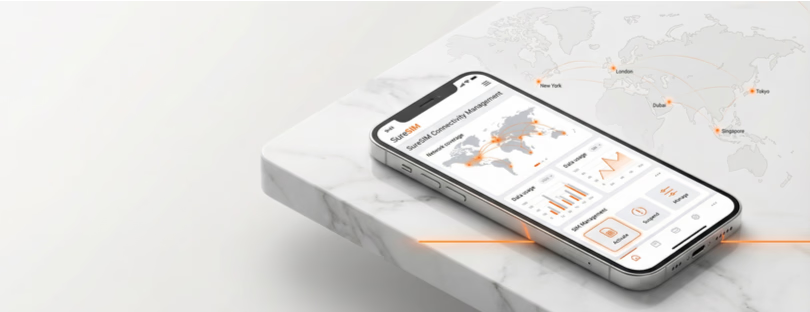
The buyer changes
In business travel eSIM, the buyer is often a travel, finance, HR, operations or a founder who is tired of mobile bills looking ridiculous.
In enterprise connectivity, the buyer may be IT, procurement, compliance, security, telecom expense management or regional operations. That buyer does not just want “cheap data abroad.” They want auditability, policy and controls that survive growth.
READ MORE: How Airalo Is Rethinking Enterprise eSIM Billing
This is why players such as 1GLOBAL or Gigs sit in a different conversation. Its enterprise proposition talks about mobile and tablet plans, centralized management of eSIMs, users, administrators and alerts, plus deployment methods including MDM and zero-touch provisioning. Vodafone Business is another useful reference point, especially on the IoT side, where the language is about managed platforms, visibility, reporting, role allocation and control of connected assets.
These are not prettier versions of travel eSIM. They are closer to telecom infrastructure wrapped in software.
The middle is crowded
The interesting fight is in the middle.
Airalo for Business talks clearly to companies that want roaming cost reduction, employee onboarding, SSO, flexible purchasing, centralized billing and visibility across usage and spend. Holafly for Business leans into simplicity, unlimited data positioning, centralized control and predictable corporate travel costs. GigSky has long experience in global mobile data and also speaks to enterprise and IoT use cases through carrier partnerships and orchestration.
READ MORE: Gigs Cuts Branded Mobile Launches to Six Weeks
These products may be exactly right for many companies. A 40-person consultancy does not need a heavy telecom procurement project. A marketing team going to Gitex probably needs fast activation and one invoice, not a six-month integration cycle. Some businesses should avoid overbuying enterprise complexity when their real issue is unmanaged roaming.
But larger organizations will quickly outgrow a travel-style setup if the admin layer is shallow. They need permissions, approval flows, spend policies, device status, regional controls, reporting by cost center and integration with tools they already use. A nice dashboard is a start. It is not the finish line.
Standards push deeper into the market
The technology direction supports this split. GSMA’s SGP.32 specification for IoT eSIM remote provisioning points to a future where eSIM management is less about one traveller scanning one QR code and more about scalable profile control across fleets of devices.
That matters because enterprise connectivity will not be won by whoever has the nicest checkout flow. It will be won by providers that combine network access, provisioning, policy, security and lifecycle management without making every deployment feel like a custom telecom project.
The travel eSIM brands understand simplicity. The enterprise connectivity players understand procurement, deployment and operational risk. The next generation of winners may be the ones that borrow from both sides.
Control is the real product
B2B eSIM is not one market anymore. It is splitting into convenience and control.
Business travel eSIM is about making employee trips easier, cheaper and less chaotic. Enterprise connectivity is about making mobile access governable at scale. Both are valid. But they should not be sold as the same thing.
The danger for travel-first providers is assuming that a dashboard, invoices and team seats are enough to satisfy enterprise buyers. Sometimes they are. Often, they are only the entry ticket.
The better framing is simple: business travel eSIM solves roaming. Enterprise connectivity solves control.
As more companies move away from traditional roaming agreements and look for software-led mobile connectivity, the strongest providers will not just sell data. They will sell visibility, policy and trust.