World Cup 2026 Telecom: How Operators Can Win Fans
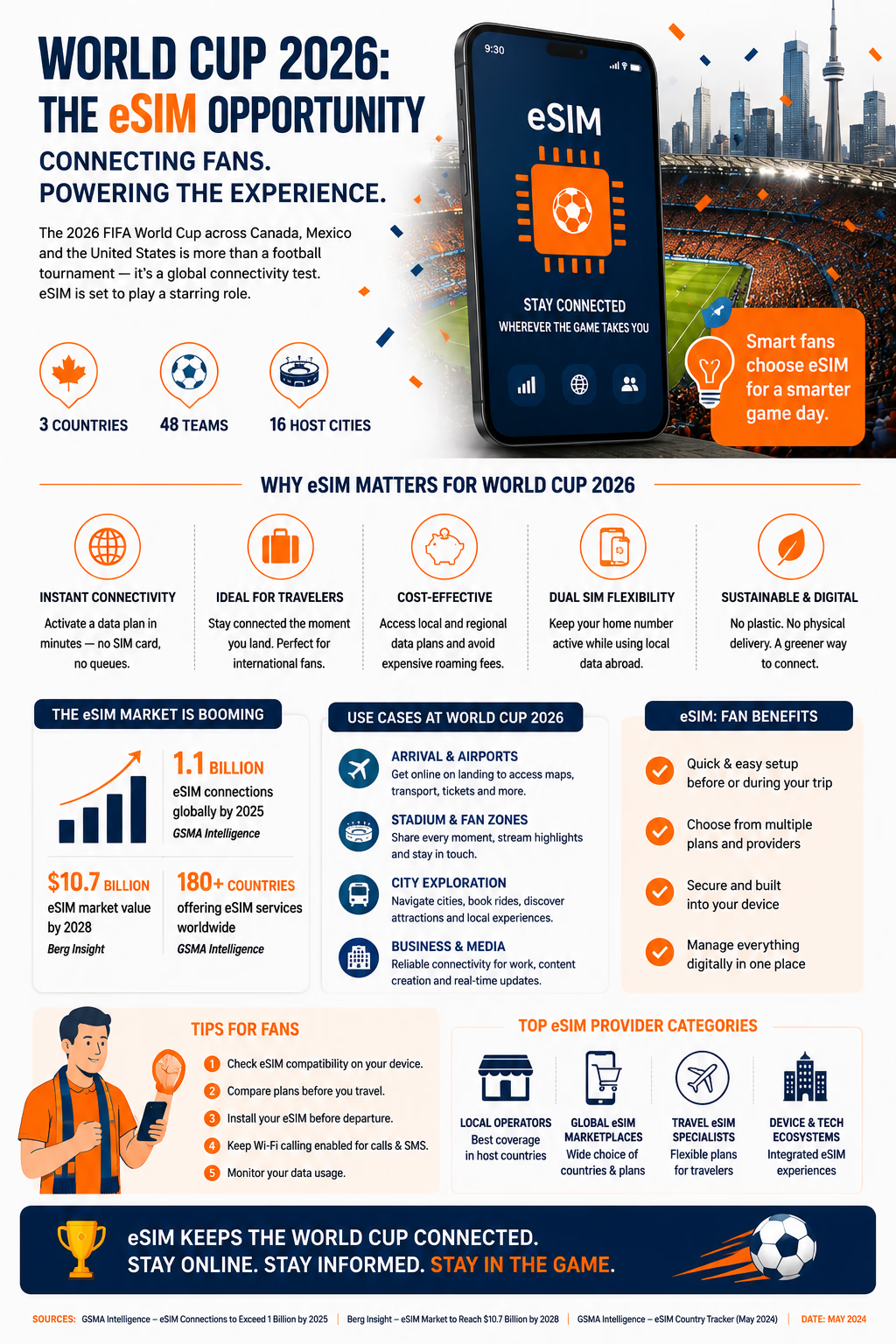
The 2026 FIFA World Cup will be remembered for three host countries, 16 host cities, 48 teams and a month of football across Canada, Mexico and the United States. But behind the spectacle, another competition is taking shape. It is technical and, for anyone landing with a phone in hand, surprisingly important. World Cup 2026 telecom connectivity
GSMA Intelligence frames the tournament as a microcosm of operator strategy: infrastructure performance, customer experience and service innovation coming together under pressure. That sounds corporate, but the reality is simple. When thousands of fans try to upload the same goal, scan tickets, book rides, message friends and stream clips from one place, the network either works or becomes part of the problem.
Networks under pressure
Operators in the US, Canada and Mexico are not treating the World Cup like a normal traffic spike. GSMA Intelligence points to network densification across stadiums, fan zones, airports and host cities, including 5G radios, small cells, distributed antenna systems, mmWave, Wi-Fi access points, temporary cell sites, stronger backhaul and spectrum upgrades.
Verizon, the Official Telecommunication Services Sponsor, has positioned 5G and fibre as part of the tournament infrastructure. Rogers has invested in Canadian venue capacity, while AT&T has been linked to thousands of upgrades across US host cities.
That matters because the World Cup is a moving crowd, spread across airports, city centres, hotels, transit routes, stadiums and fan festivals. The pressure will happen when fans arrive, leave, get lost, share videos, call home and look for the next train.
Travel eSIM gets serious
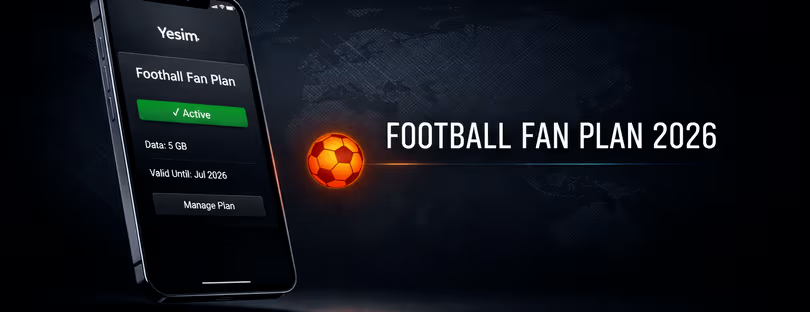
The eSIM angle is especially interesting for Alertify readers. GSMA Intelligence says 12% of consumers who took international trips used eSIM while travelling abroad, and more than 70% of those used travel eSIM from a telco. Reminder: while digital eSIM brands get much of the consumer attention, operators still have trust, billing relationships, local services and brand recognition on their side.
For AT&T, Telcel, Bell and other regional players, the opportunity is not just selling data. It is helping visitors feel connected from the airport to the stadium. A fan does not care whether the product is called roaming, travel eSIM, visitor plan or premium pass. They care whether Maps opens, tickets load, WhatsApp works and uploads do not freeze.
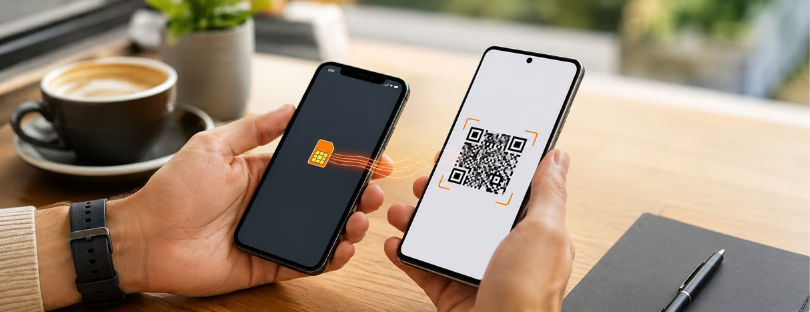
 This is where operators need discipline. If they compete only on cheap data, they risk cannibalising roaming and losing to leaner travel eSIM providers. If they package eSIM with voice, support, priority access, local information or fan perks, they can defend value instead of racing to the bottom.
For travellers who only need a few gigabytes and want the cheapest option, a dedicated travel eSIM marketplace may still make more sense. But for families, business travellers, media teams or fans crossing multiple host cities, operator-backed products could feel safer if the experience is explained before departure.
Beyond bars of signal
The more advanced story is private 5G, edge computing and IoT. GSMA Intelligence highlights use cases such as VAR support, broadcasting, public safety, digital signage, CCTV, drones, body cameras, crowd management and connected ambulances. This is where the World Cup becomes a telecom showcase.
The fan-facing version is changing too. Operators can test performance-led tariffs, including guaranteed upload speeds, priority network access, speed boosts and low-latency options. GSMA Intelligence notes that 45% of mobile contract subscribers are interested in speed-based tariffs. That shows customers may pay for performance they can actually feel.
READ MORE: World Cup 2026 eSIM Deals: Stay Connected Across 3 Countries
Still, the industry needs to make this less confusing. “5G+ Ultimate,” “Turbo Live,” priority access and network slicing may mean something inside a telecom boardroom, but fans need plain language. Tell them what works better: uploads after a goal, live translation, video calls, ticket access, rideshare, navigation. That is the product.
A bigger service plays
Operators usually do not own World Cup content rights, but they are not outside the media economy. They can bundle broadcast access, distribute adjacent content, support XR experiences and create location-aware fan services.
There are useful comparisons. Ooredoo Qatar’s Hayya Card app during the 2022 World Cup connected stadium access, public transport and travel information. NTT’s Kirari! Technology at the Tokyo Olympics showed how high-resolution event viewing could become part of future live sports experiences.
READ MORE: World Cup eSIM Offers Rise Ahead of FIFA 2026
The better operators will not ask, “How do we sell more data?” They will ask, “Where does the fan journey break, and can we fix it?”
Conclusion about World Cup 2026 telecom connectivity
World Cup 2026 will not make every operator a game-changer. Some will add capacity, sponsor a few moments and hope the network holds. Useful, yes. Strategic, not necessarily.
The real winners will treat the tournament as a live test of modern connectivity: eSIM onboarding before arrival, reliable uplink inside crowded venues, private 5G for operations, edge for media, APIs for enterprise partners and simple fan services that remove friction.
This is where operators can separate themselves from pure travel eSIM providers. Airalo-style marketplaces, Holafly-style unlimited offers and other digital-first brands are strong at convenience and price clarity. Telcos should not copy them blindly. Their advantage is trust, local depth, customer service, voice, network control and the ability to connect the whole event ecosystem.
The World Cup will expose the difference between selling connectivity and owning the connected experience. For telecom, that may be the bigger match.