Who Should Launch a White-Label eSIM and Who Shouldn’t
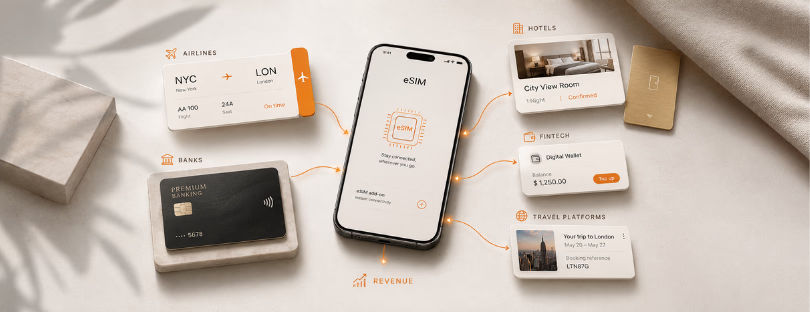
White-label eSIMs are everywhere right now. Airlines hint at them. Banks flirt with them. Travel brands quietly test them in the background. On paper, it looks irresistible: global mobile data, recurring revenue, zero physical logistics, and a product every traveler already needs.
But here is the uncomfortable truth most vendors do not say out loud.
White-label eSIMs are not for everyone. In fact, for some companies, launching one is a distraction at best and a brand risk at worst.
This piece is not a sales pitch. It is a reality check. If you are considering a white-label eSIM, this is who it actually makes sense for, who should think twice, and why platforms like Yesim are becoming reference points in how this is done properly.
Why white-label eSIMs suddenly matter
eSIMs moved fast from niche tech to mainstream infrastructure. Apple removed SIM trays. Android followed. Roaming costs stayed stubbornly high. Travelers learned the word eSIM faster than most telecom executives expected.
For businesses, this created a new opportunity. You no longer need spectrum, towers, or telco licenses to sell connectivity. You need distribution, trust, and a solid backend.
That is where white-label comes in. Instead of building an eSIM stack from scratch, companies plug into an existing platform and sell connectivity under their own brand.
Sounds simple. It rarely is.
Who should seriously consider launching a white-label eSIM
White-label eSIMs work best when they extend an existing relationship, not when they try to create one from nothing.
Travel brands with a loyal audience
Airlines, OTAs, tour operators, travel media platforms, and loyalty programs are natural fits. They already speak to users before, during, and after trips. Connectivity feels like a service upgrade, not a random add-on.
If your users already trust you with bookings, payments, or recommendations, asking them to activate your eSIM does not feel strange. It feels helpful.
Digital banks and fintech apps
Fintechs understand wallets, balances, in-app UX, and compliance. Adding mobile data as a travel feature aligns well with their existing value proposition, especially for international users.
The key advantage here is integration. eSIMs work best when activation, balance, and support live inside the app users already open daily.
B2B platforms serving mobile teams
Companies with international staff, gig workers, journalists, consultants, or logistics teams benefit from centralized connectivity. White-label eSIMs allow them to bundle data into a broader service, not sell it as a standalone product.
In these cases, the eSIM is infrastructure, not the hero. That is exactly where it belongs.
Established telecom resellers and MVNO adjacents
Some players already sell SIMs, roaming bundles, or connectivity hardware. For them, white-label eSIMs are not a leap but an evolution.
They understand support tickets, coverage complaints, and the reality of mobile networks. That experience matters more than branding.

Who probably should not launch a white-label eSIM
This is where the hype does real damage.
Pure affiliate sites chasing margins
If your only relationship with users is SEO traffic and comparison tables, launching a white-label eSIM is risky. Support, refunds, failed activations, and angry travelers do not scale like affiliate links.
Margins look good until the first wave of customer service issues arrives.
Brands without customer support capacity
An eSIM is not a PDF or a discount code. Things break. Phones behave differently. Networks vary by country. If you cannot offer responsive, knowledgeable support, your brand will take the hit, even if the platform is solid.
White-label does not mean white-responsibility.
Companies expecting passive income
This is not dropshipping. You are effectively selling telecom services. Even with a strong API, there is onboarding, UX testing, pricing strategy, and ongoing optimization.
If the plan is to launch and forget, it will fail quietly and then painfully.
What separates good white-label platforms from bad ones
Not all white-label eSIM offers are equal. Many look similar on slides and very different in production.
The strongest platforms share a few traits.
First, real API depth. Not just issuing eSIMs, but managing lifecycle, balances, usage, top-ups, and analytics programmatically.
Second, global coverage that is actually usable, not just a country count headline. Local network quality matters more than maps.
Third, transparent pricing logic. Hidden throttling and vague fair use policies destroy trust fast.
Fourth, user-ready apps or SDKs. Building everything from scratch is expensive and slow.
This is where Yesim stands out in practice. Their partner API focuses on letting brands integrate connectivity without pretending to be a telco. OneBalance, centralized management, no platform fees, and coverage across 200-plus destinations make it usable for both B2C and B2B cases without forcing a single model.
That matters because white-label eSIM success is less about branding and more about operational sanity.
White-label vs reseller vs full telco ambitions
A common mistake is confusing white-label eSIMs with becoming a telecom operator.
White-label means you control the customer relationship, pricing, and distribution, but you do not own the network. That is a feature, not a weakness.
Compared to classic reselling, white-label gives better margins and UX control. Compared to becoming an MVNO, it avoids regulatory overhead, long timelines, and capital burn.
Most successful players today deliberately stay in the middle. They focus on product and audience, not infrastructure ownership.
Market trends worth paying attention to
A few shifts are shaping the next phase of white-label eSIMs.
B2B demand is growing faster than consumer hype. Companies want predictable costs and centralized control more than flashy marketing.
APIs are replacing dashboards. Serious partners want automation, not manual portals.
Bundles beat standalone data. eSIMs sell better when packaged with travel insurance, banking perks, or corporate tools.
Regulation will tighten. Data protection, KYC expectations, and transparency requirements are increasing, especially in Europe.
Industry bodies like GSMA and analyses from firms such as Analysys Mason consistently point to eSIM enablement as a platform play, not a retail one. The winners are not the loudest brands but the best integrators.
Conclusion: a strategic filter, not a trend chase
White-label eSIMs are neither a gold rush nor a trap. They are a strategic filter.
If you already own trust, distribution, and support, launching one can deepen your relationship with users and open a serious revenue stream. Done right, it feels invisible, reliable, and valuable. That is the best compliment connectivity can get.
If you are chasing margins without infrastructure or hoping telecom complexity magically disappears behind a logo, it will backfire.
Platforms like Yesim show that white-label eSIMs work when they respect reality. Connectivity is still telecom, just delivered through APIs instead of plastic.
The real question is not whether white-label eSIMs are a good business.
It is whether your business is ready to carry connectivity without breaking what already works.
For many, the smartest move in 2026 will be saying yes.
For others, the smarter one will be knowing when not to.