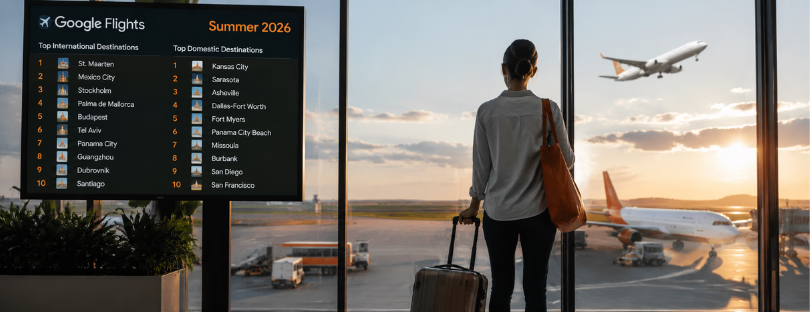
Where Americans Are Looking for Summer 2026 Travel
Google Flights has dropped a fresh set of search data, and it gives a surprisingly clear early signal of where US travelers are thinking about going this summer. summer 2026 travel trends Google Flights
The data tracks year-over-year growth in flight searches for trips departing US airports between June 1 and August 31, 2026. In other words, this is intent. Curiosity. The moment before decisions get made.
At the top of the list internationally sits St. Maarten. Domestically, Kansas City leads the pack.
Neither is an obvious headline destination. That’s what makes this interesting.
International picks feel less predictable
The international list is a mix that doesn’t follow a single narrative. You’ve got classic leisure alongside cultural and even slightly unexpected long-haul plays.
There’s a pattern if you look closely. Travelers aren’t clustering around just one type of experience.
Caribbean islands like St. Maarten are still pulling strong demand, which isn’t surprising given post-pandemic travel habits. But alongside that, you see European cities like Stockholm and Budapest gaining traction, and even destinations like Guangzhou making the list.
That mix suggests something more nuanced. People are no longer defaulting to “safe” travel. They’re exploring again. And importantly, they’re searching widely before deciding.
Domestic travel goes beyond the usual hubs
On the US side, the list moves away from the predictable gateways.
• Kansas City
• Sarasota
• Asheville
• Dallas-Fort Worth
• Fort Myers
• Panama City Beach
• Missoula
• Burbank
• San Diego
• San Francisco
Some of these are expected. California and Florida always show up.
But others stand out. Asheville and Missoula, for example, point to something that’s been building for a while: sustained demand for nature, slower travel, and less crowded destinations.
US travel idea
From city breaks to national landmarks
Think Grand Canyon views, Golden Gate walks, Florida beaches, mountain towns and big-city weekends. The domestic map is getting broader, and travelers are clearly looking beyond the usual airport-to-hotel routine.
Explore US travel connectivity →
This isn’t just a pandemic hangover anymore. It’s becoming a structural shift.
People are still traveling, but they’re more selective about where and how.
Why search data matters more than bookings
Google is careful to point out that this is search data, not confirmed travel. But that’s exactly why it’s valuable.
Search is the earliest signal you can get at scale.
“Search trends frequently serve as an early indicator of demand, particularly during peak periods such as the summer season.”
By the time bookings show up, pricing has already adjusted, inventory is tighter, and the opportunity to react is smaller.
For airlines, hotels, and travel platforms, this is where strategy should start. Not when tickets are sold, but when intent begins.
What this means for travel companies
If you’re in travel, this data is less about destinations and more about behavior.
The big takeaway is fragmentation.
There’s no single dominant trend anymore. Beach, city, long-haul, regional, outdoor. It’s all happening at once.
Compare this with data from Expedia or Booking.com, which often highlights similar diversity in traveler intent, especially post-2023. Even the International Air Transport Association has pointed to sustained demand across both leisure and emerging secondary routes, not just major hubs.
In other words, the market didn’t “return to normal.” It expanded.
That has real implications. Pricing models get more complex. Inventory planning gets harder. And distribution becomes more valuable.
Because when demand spreads out, whoever captures attention earliest wins.
Where connectivity quietly comes in
This is the part most players still underestimate.
Search is where travel starts. But connectivity is what shapes the experience once the trip begins.
A traveler going to Stockholm, then hopping to Palma, then working remotely from Dubrovnik isn’t thinking in single-country terms anymore.
They’re thinking in continuity.
And that’s exactly where the current travel stack still breaks.
Conclusion: the signal is clear, the response isn’t
What Google Flights is showing here isn’t just a list of trending destinations. It’s a shift in how people approach travel.
More options. Less predictability. Higher expectations.
The companies that win won’t just follow demand. They’ll anticipate it and build around it.
Right now, most of the industry still reacts at the booking stage. That’s already late.
The smarter move is earlier. At search. At intent. At the moment someone types “Stockholm” or “St. Maarten” and starts imagining the trip.
Because that’s where decisions are shaped.
And increasingly, that’s where the real revenue is decided too.