Philippines Travel: The Anti-Crowd Alternative to Bali
For years, Southeast Asia travel has been dominated by a familiar shortlist: Bali for the digital-nomad-meets-beach-club crowd, Phuket for resort comfort, Thailand’s islands for easy movement, and Vietnam for the fast-rising culture-and-coast combination. The Philippines was always there. But it often sat outside the first-click travel conversation, partly because it is more fragmented and asks travelers to move with intention.
That may now be its advantage.
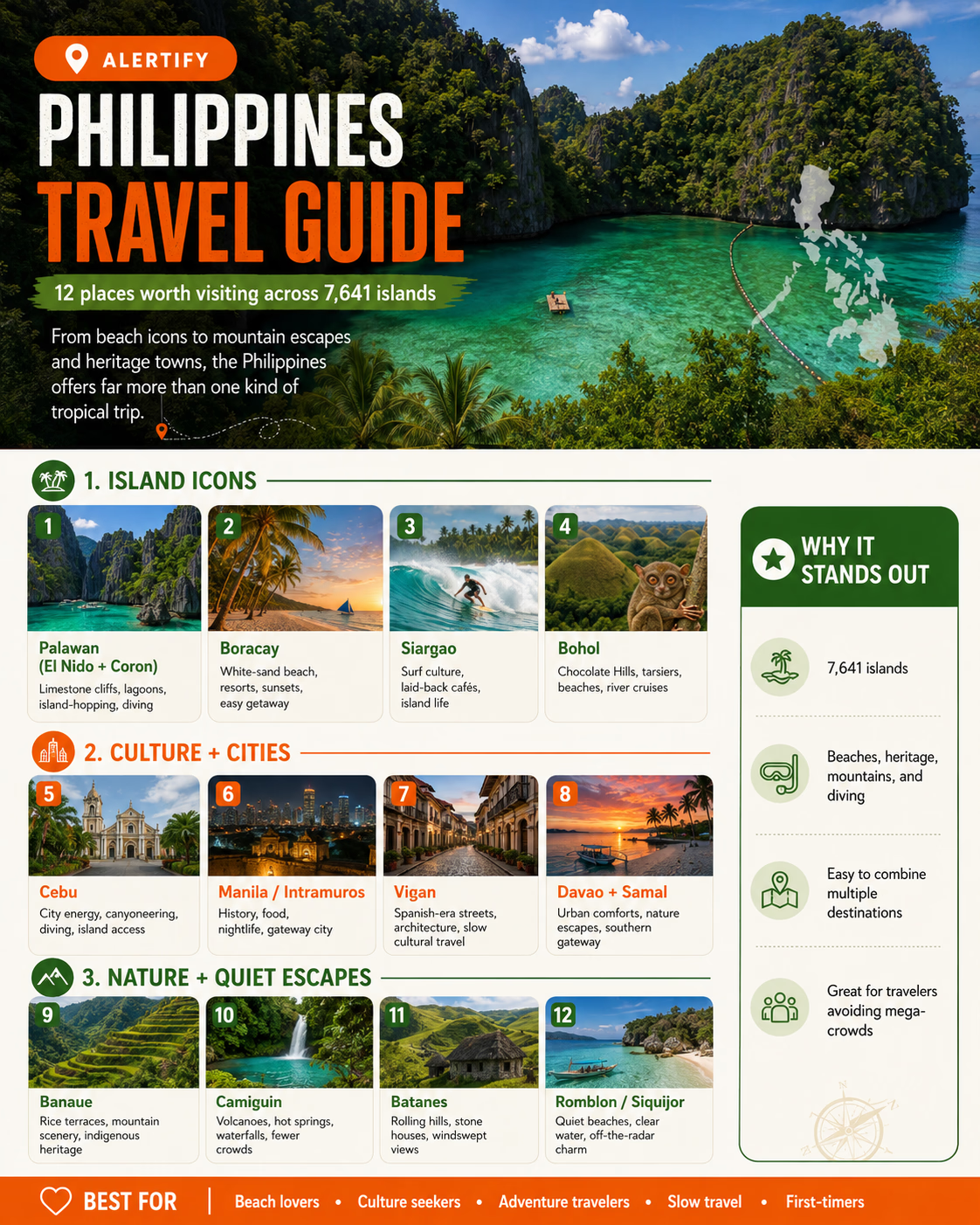
As travelers become more sensitive to overcrowding, rising prices, and destinations that feel over-processed, the Philippines is starting to look less like an alternative and more like the smarter choice for people who still want Southeast Asia’s tropical pull without joining the same itinerary as everyone else. The Department of Tourism promotes the country with around 7,641 islands, and that number matters because it explains why the travel experience changes from one place to the next.
Space Is the Product
The first thing the Philippines sells well is space. Not empty space, exactly, but room to choose your own rhythm.
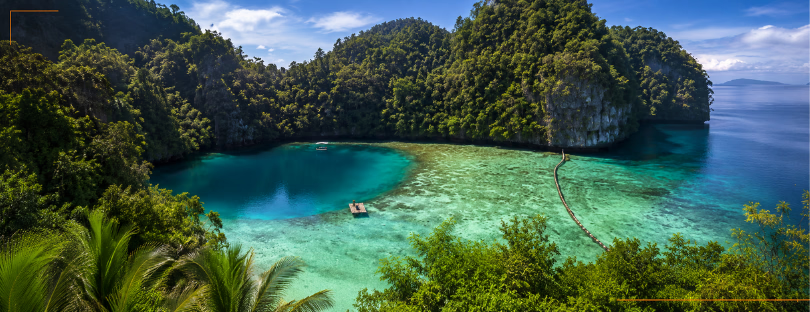
Boracay remains the obvious entry point, especially for travelers who want soft white sand, polished hotels, restaurants, nightlife, and an easy holiday structure. Palawan is the cinematic one, with limestone cliffs, lagoons, island-hopping routes, and scenery that still looks almost suspiciously perfect in real life. Siargao brings a different mood: surf culture, slow mornings, cafés, motorbikes, and a crowd that is less interested in luxury polish than atmosphere.
Then there are places like Camiguin, Romblon, Bohol, Siquijor, and parts of Mindanao that still feel more personal. These are not “hidden gems” in the lazy marketing sense. People know about them. But they have not been flattened into one global travel template yet.
This matters because the modern tropical traveler is changing. Many still want comfort, but they also want texture: a food market, a local ferry, a heritage street, a mountain road, and a trip that does not feel staged only for tourism.
More Than Beaches
The biggest mistake is to reduce the Philippines to beaches. That is understandable, because the beaches are world-class, but it undersells the country.
Vigan brings Spanish colonial architecture and cobblestone streets. Banaue and the Cordilleras offer mountain landscapes and rice terraces far away from the usual island-holiday mood. Cebu mixes urban energy, diving, heritage, food, and access to surrounding islands. Manila, often treated too harshly by first-time visitors, has its own restless cultural gravity, especially for travelers who like cities with layers.
This is where the Philippines differs from some better-packaged rivals. Bali is easier to understand quickly. Phuket is easier to sell as a resort product. The Philippines is harder to summarize, but richer when done properly.
Access Is Improving
The old criticism was simple: beautiful country, but harder to move around. That is still partly true. Weather, ferries, airport transfers, and domestic connections can shape the trip more than they would in a single-island destination. But accessibility is improving.
Manila remains the main long-haul gateway, while Philippine Airlines has continued to build North American links, including nonstop services to New York, Los Angeles, San Francisco, Vancouver, Toronto, and Seattle. Cebu is also becoming more important as a regional and domestic connector. For travelers, this matters because the Philippines is not a one-stop beach destination. It works best as a multi-stop journey, and connectivity decides whether that feels exciting or exhausting.
READ MORE: Philippines Airlines: A Comprehensive Guide to the National Carrier
Digital access matters too. A country built around islands needs practical travel tech: mobile data, maps, ride-hailing, ferry updates, translation, payments, and backup plans. For Alertify readers, this is the quiet layer of the trip. A beautiful island feels less romantic when your phone does not connect or your hotel transfer is unclear.
The Crowding Question
The Philippines is not untouched, and it should not pretend to be. Boracay already had its hard lesson in overtourism, closing for rehabilitation in 2018 after environmental pressure became impossible to ignore. That episode showed the cost of selling paradise without managing capacity.
But compared with Bali or Phuket, the Philippines has one structural advantage: dispersion. Its geography naturally spreads visitors across many islands, provided infrastructure, marketing, and local governance support that spread. That gives the country a chance to avoid concentrating demand into a few overloaded places.
READ MORE: Ant Group Brings Alipay+ to the Philippines with Three New Mobile Wallets, AlipayHK, Kakao Pay and Touch ‘n Go eWallet
UN Tourism has pointed to continued recovery across Asia and the Pacific, while Philippine tourism data shows 2025 visitor arrivals at about 6.48 million, including returning overseas Filipinos. That is not saturation on the scale of Southeast Asia’s busiest hotspots, and it gives the country room to grow more intelligently if it chooses quality over volume.

Why It Matters
The Philippines should not market itself as “the new Bali.” That would be too small, and unfair to what makes it interesting. Bali is a highly evolved tourism machine. Phuket is a resort powerhouse. Vietnam is becoming one of Asia’s sharpest all-rounders. The Philippines has a different opportunity: to become the destination for travelers who still want beauty, but no longer want the same polished, crowded version of it.
Its challenge is execution. Better domestic connections, clearer information, stronger sustainability rules, and reliable digital infrastructure will decide whether the promise holds. The reward is big. In a travel market tired of copy-paste tropical escapes, the Philippines offers something more flexible and more human: not one perfect island, but thousands of possible versions of a trip.