Lifecell Expands 5G Roaming to 67 Countries
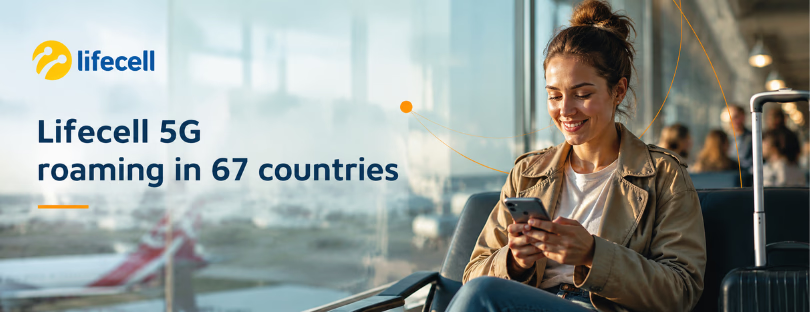
Lifecell has pushed its 5G roaming footprint to 67 countries, giving Ukrainian subscribers faster mobile data abroad without a separate 5G roaming fee. For users with a 5G-capable smartphone, the service works in supported destinations, including major travel and relocation markets such as Germany, Poland, the United Kingdom, the United States and Japan.
That may sound like a technical network update, but for Lifecell customers outside Ukraine, it is more practical than that. Roaming is no longer only about “will my phone work?” It is now about whether maps load quickly, banking apps open without stress, video calls hold up, and remote work can happen without hunting for Wi-Fi.
What actually changes
The key point is that Lifecell is not presenting 5G roaming as a premium add-on with hidden conditions. Where 5G is available through its roaming partners, customers can use it as part of their existing roaming setup, with data charged according to the relevant plan or package rather than a separate 5G surcharge.
That matters because roaming is still one of the least trusted parts of mobile service. Travelers have learned to fear unclear rates, automatic data use and surprise bills. A 5G label means little if the pricing underneath is confusing. Lifecell’s move is stronger because the message is simple: if your phone supports 5G and the destination network supports it, you get a better network experience without changing settings or paying extra just because the icon says 5G.
The operator has also expanded VoLTE roaming to 41 countries, which matters for voice calls. In markets where 2G and 3G networks are being reduced or switched off, voice over LTE is not just a nice upgrade. It can be the difference between a clean call and a clumsy fallback to older networks.
Why it matters for Ukrainian users
For Ukrainians living, working or moving between countries, roaming is unusually sensitive. It is not only vacation connectivity. It can mean staying reachable for family, work, banks, government services and verification messages. That makes predictable roaming more valuable than flashy speed claims.
Lifecell’s broader roaming offers also show this direction. Its “Gigabytes without borders” promotion allows eligible customers to use tariff data in more than 30 countries without extra charges, while additional roaming packages cover popular destinations. The 5G expansion sits neatly on top of that: first make roaming usable, then make it faster.
READ MORE: Lifecell offers VoLTE in Canada
Still, this is not a universal replacement for a travel eSIM. Visitors who are not Lifecell subscribers, people who need a local number, or travelers comparing the cheapest data-only option for one short trip may still prefer a dedicated travel eSIM from providers such as Airalo, Ubigi, Nomad eSIM, GigSky or Yesim. The difference is intent. Travel eSIMs are built for quick trip-based buying. Lifecell’s offer is built around continuity for its own customers.
The bigger roaming shift
Across the market, the trend is clear. Operators are trying to make roaming feel less like a penalty and more like an extension of the domestic plan. GSMA Intelligence has also pointed to the rise of travel eSIM as a successful roaming use case, with both telecom operators and non-telco brands now competing for the traveler relationship.
That puts pressure on mobile operators. If a customer can buy a travel eSIM in two minutes, the home operator has to justify why staying with them abroad is easier, safer or better value. Lifecell’s answer is not “we are cheaper than everyone.” It is: your existing number, your existing plan logic, better network access and fewer surprises.
Final take
Lifecell’s 5G roaming expansion is a smart operator move because it competes where travel eSIMs are weakest: continuity, identity and trust. Dedicated travel eSIM providers still win on flexibility, destination shopping and instant purchase. But for existing Lifecell customers who need their Ukrainian number to keep working smoothly abroad, 5G roaming in 67 countries is a serious quality upgrade.
The market is moving toward a split. Travel eSIMs will keep winning spontaneous tourists and price-checkers. Operators like Lifecell will win when roaming feels invisible, predictable and tied to the customer’s real digital life. That is the part many eSIM-only brands still struggle to copy.