Waldorf Astoria Rabat-Salé Redefines Luxury
Waldorf Astoria has officially arrived in Morocco, and it has chosen a very visible stage.
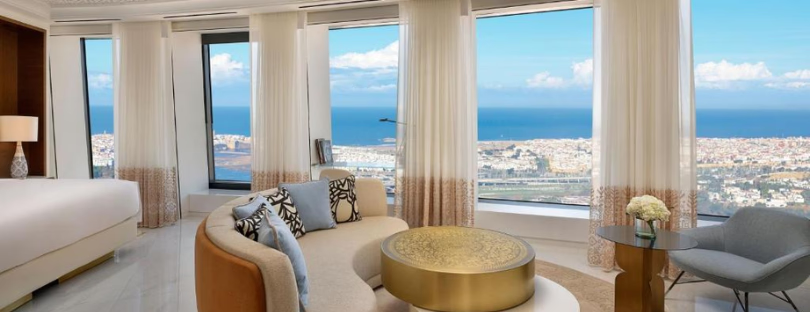
The newly opened Waldorf Astoria Rabat-Salé sits inside the Mohammed VI Tower, Morocco’s tallest building and one of the most ambitious architectural statements on the African continent. The 55-room hotel occupies 18 levels between the 29th and 49th floors of the 55-storey tower, placing guests high above the meeting point of Rabat and Salé, with views stretching across the Bouregreg River, the Atlantic Ocean and the wider capital region.
This is not just another luxury hotel opening. It is a signal. Morocco is no longer positioning luxury hospitality only around Marrakech riads, desert retreats and coastal resorts. Rabat, the political and cultural capital, is being pushed into a more international hospitality conversation.
And Waldorf Astoria’s arrival makes that shift harder to ignore.
Why Rabat matters now
For years, Rabat was often treated as the quieter Moroccan capital, elegant and important, but rarely the first city international luxury travellers talked about. Marrakech had the global lifestyle pull. Casablanca had the business energy. Tangier had the revived coastal glamour.
Rabat, meanwhile, has been steadily building something more measured: culture, diplomacy, infrastructure and heritage.
That is exactly why this opening feels well timed. The hotel sits within close reach of UNESCO World Heritage sites, including the Kasbah of the Udayas, Hassan Tower and the historic medinas of Rabat and Salé. It is also near newer cultural landmarks such as the Grand Theatre of Rabat, giving the property a useful balance between old Morocco and modern Morocco.
Hilton is clearly reading the market in that direction.
Guy Hutchinson, president, Middle East and Africa, Hilton, said,
“Morocco represents one of the world’s most rapidly evolving destinations, welcoming more than 18 million tourists in 2025, with Rabat playing a growing role in the national ambition to reach 20 million by 2030. We are proud to bring the iconic Waldorf Astoria brand to Rabat-Salé, setting a new benchmark for refined luxury in Morocco’s capital.”
The tourism numbers support the optimism. Morocco welcomed a record 19.8 million tourists in 2025, according to the country’s tourism ministry, while Reuters reported that the sector continues to play a major role in GDP, employment and foreign currency income. Morocco is now targeting 26 million tourists by 2030, when it will co-host the FIFA World Cup with Spain and Portugal.
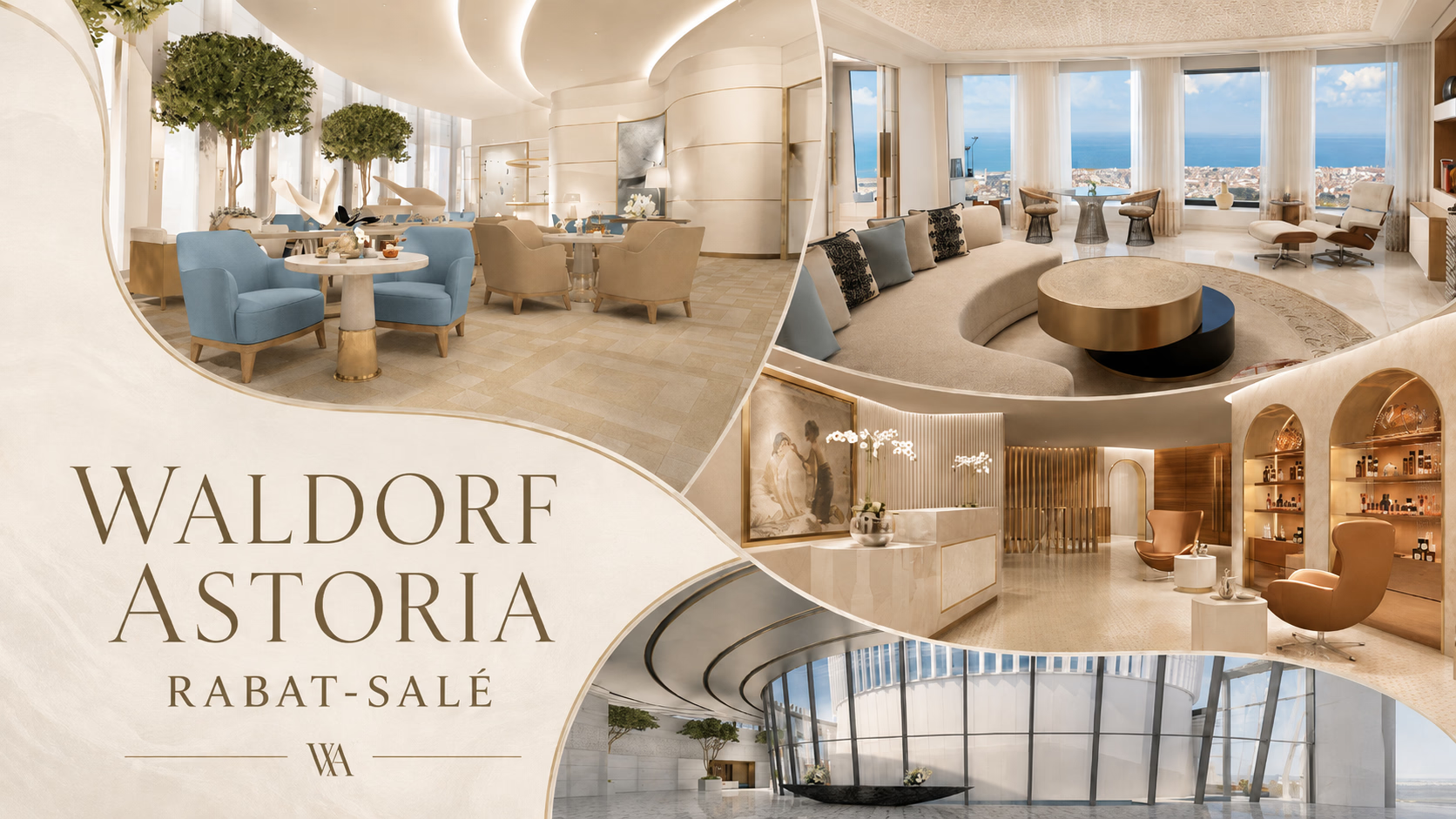
A hotel built around art and altitude
Inside, Waldorf Astoria Rabat-Salé takes a deliberately cultural route. The rooms and suites use sun-warmed marbles, Moroccan motifs and landscape-inspired details rather than the cold, anonymous luxury style that still appears too often in global hotels.
There are only 55 rooms and suites, which is important. This is not a mega-hotel hiding inside a skyscraper. It is more intimate, almost like a private club in the sky. Accommodation ranges from deluxe rooms to three-bedroom suites, with a personal concierge service offered to shape each guest’s stay.
The art programme is one of the stronger parts of the story. The hotel houses nearly 7,000 works, described by Hilton as one of North Africa’s largest private art collections. That matters because luxury hospitality is moving away from “expensive room plus nice spa” and toward stronger cultural storytelling. Guests increasingly want a property to feel located, not just decorated.
Here, the art is doing some of that work.
Dining with global polish
Food is another clear statement of intent.
Peacock Alley, one of the signature ideas associated with Waldorf Astoria, sits on the 30th floor and acts as the hotel’s social heart. Its clock, inspired by a planetarium, gives the space a celestial theme while linking back to Moroccan time and craft. Afternoon tea, coffee and cocktails are positioned less as add-ons and more as part of the property’s identity.
The headline restaurant is Aldabaran by Alain Ducasse. That name alone gives the hotel immediate international culinary credibility. The menu follows Ducasse’s familiar language of seasonality, restraint and precision, with dishes such as line-caught sea bass with artichokes and radicchio, Wagyu beef tenderloin with polenta and pepper jus, and roasted lamb saddle with vegetable caponata.
Brasserie Magnolia, led by chef Lahcen Hafid, adds a Mediterranean layer, while future openings include The Sapphire Room, a pan-Asian bar, and Après, a coffee bar focused on artisanal treats.
It is a broad offer for a small hotel, but that is clearly the point. Waldorf Astoria Rabat-Salé is being built as a destination within the tower, not just a place to sleep.

Wellness above the Atlantic
The spa leans into Morocco’s wellness traditions, especially the hammam, while adding the kind of high-end technology now expected in serious luxury properties. There are six treatment rooms, a detoxifying Iyashi dome, a heated quartz sand table, ice room and sauna.
Guests also have access to an indoor pool, ocean-facing infinity pool, 24-hour gym and relaxation lounge. Again, the altitude matters. A spa overlooking the Atlantic from one of Africa’s most recognisable towers is not a small selling point.
For events, the hotel offers almost 1,300 square metres of space, including a grand ballroom and three meeting rooms. That gives it a natural role in diplomatic, business and high-end private events, which fits Rabat’s profile better than a purely leisure-led resort concept.
The real significance
The Waldorf Astoria Rabat-Salé opening is bigger than one hotel. It shows how Morocco’s luxury market is becoming more layered.
Marrakech will remain the emotional luxury icon. Casablanca will continue to serve business demand. Resorts along the coast will benefit from leisure growth. But Rabat now has a serious flag in the ground: a globally recognised luxury brand, inside a landmark tower, tied to culture, diplomacy and national ambition.
Compared with regional luxury openings in places like Dubai, Doha or Riyadh, this feels less about spectacle for its own sake and more about repositioning a capital city. The Mohammed VI Tower gives the drama, yes, but the hotel’s smaller room count, art collection, Ducasse restaurant and cultural references make the proposition more curated than oversized.
That is the smarter play. Morocco does not need to imitate Gulf luxury. Its advantage is heritage, geography, craft, hospitality and a strong sense of place. Waldorf Astoria Rabat-Salé works best if it amplifies that, not if it tries to outshine it.
For travellers, it gives Rabat a new reason to be part of the luxury itinerary. For the hotel industry, it confirms something already visible: Morocco is moving from tourism growth to hospitality sophistication. And that is where the next competition begins.