Vodafone Global Roaming Explained: Costs, Zones and Limits
Vodafone Global Roaming is not a new idea, but it has become much more interesting again because roaming is back in the consumer spotlight.
For UK travellers, the old assumption was simple: take your phone to Europe, use it as normal, forget about the bill. Brexit changed that rhythm. UK operators are no longer bound by EU “Roam Like at Home” rules, while EU operators remain covered by roaming protections extended until 2032.
That is the context Vodafone is now operating in. Its Global Roaming proposition is less about “free roaming everywhere” and more about packaging roaming into zones, daily charges, passes and selected inclusive plans. In other words, Vodafone is trying to make roaming predictable again, but not always invisible.
How Vodafone Global Roaming works
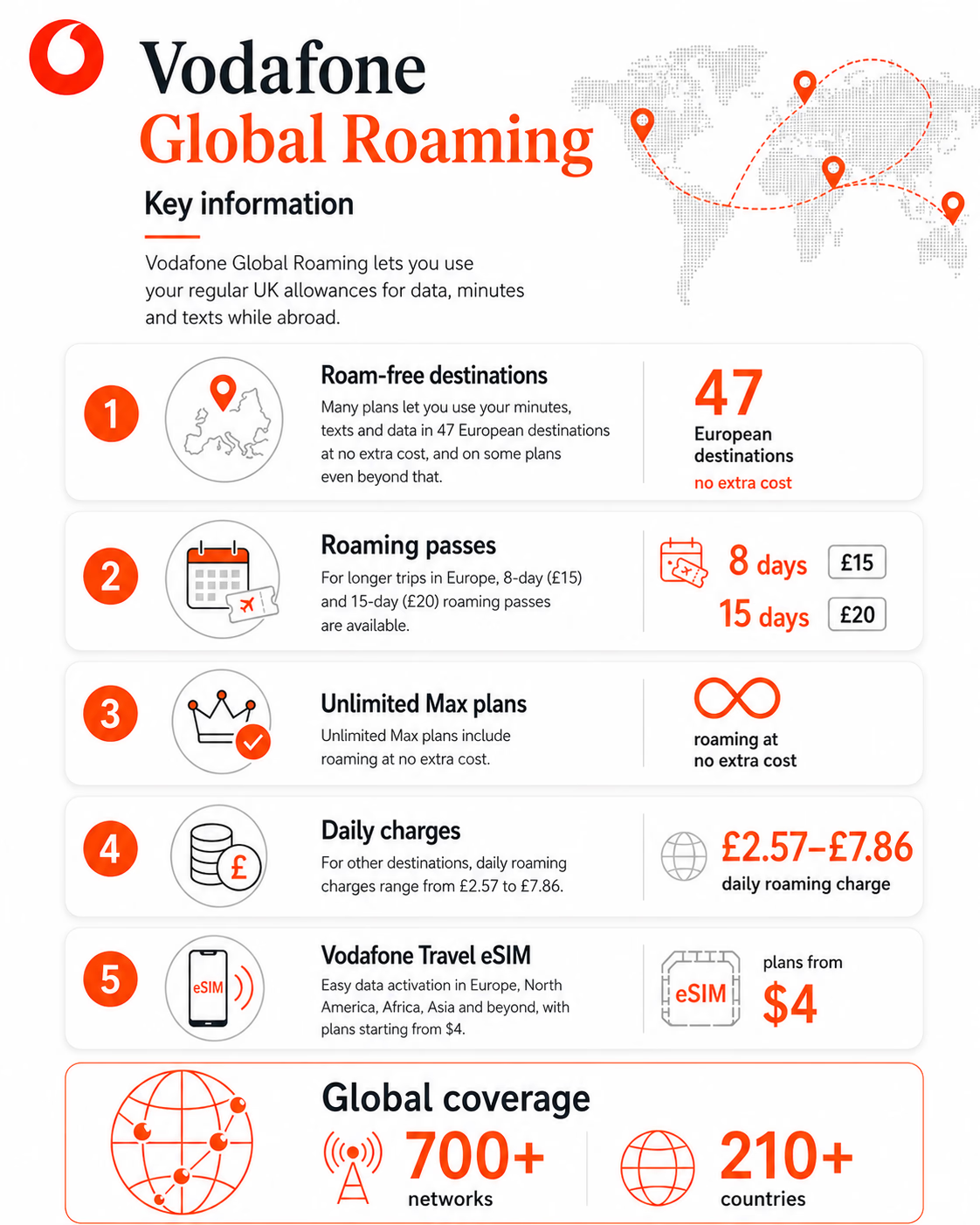
Vodafone UK divides roaming into different zones. For Pay Monthly customers, Zone A is included in all plans and covers the Republic of Ireland, Isle of Man, Iceland and Norway. Vodafone’s Euro Roam covers 52 destinations across Zone A and Zone B, including major holiday markets such as France, Spain, Greece and Portugal. The rest of the world is split into additional roaming zones, with different prices depending on the customer’s plan.
The important detail is that Vodafone roaming is not one single product. It behaves differently depending on whether a customer is on Pay Monthly, Pay As You Go, Pay As You Go Plus, or a roaming-inclusive plan. Vodafone also sells roaming extras, including an 8-day European Roaming Pass for £15 that lets customers use their plan allowance in 52 destinations.
From 14 April 2026, Vodafone’s out-of-bundle roaming charges changed: Zone B roaming increased to £2.75 per day, while Zone C or D roaming moved to £8 per day. Picture messages in roaming zones also increased to 75p.
That sounds small on a single-day trip. But for a family holiday, a two-week workation, or a business traveller moving across several countries, it adds up quickly.
The good part
Vodafone’s biggest advantage is familiarity. Customers do not need to download a new app, scan a travel eSIM QR code, check APN settings, or explain to a parent why mobile data suddenly needs a second line. They use their existing number, their existing plan, and in many cases their existing allowance.
That matters more than the eSIM industry sometimes admits.
A travel eSIM is often cheaper and more flexible, but it also introduces an extra decision to make. Vodafone removes that friction. For many mainstream travellers, that convenience is still powerful. You land, your phone connects, and you move on.
Vodafone also has brand trust on its side. In roaming, trust is not just about network coverage. It is about billing confidence. People want to know what happens when they cross a border, open Google Maps, receive WhatsApp photos, or tether their laptop in a hotel room with terrible Wi-Fi.
The less comfortable part
The weakness is transparency. Vodafone explains the zone structure, but the average traveller still has to work harder than they should to understand what they will actually pay. Zone A, Zone B, Euro Roam, Rest of the World, passes, inclusive plans, Pay Monthly differences, Pay As You Go rules. It is all logical once you study it, but most people do not study roaming terms before a trip.
That is where travel eSIMs have changed customer expectations. Airalo, Holafly, Nomad, Saily, Yesim and others have trained travellers to think in clear destination bundles: “Italy 10GB”, “Europe unlimited”, “Global 30 days”. Not always perfect, not always cheaper in every case, but usually easier to compare at first glance.
Vodafone’s roaming model is built around the home operator relationship. Travel eSIMs are built around the trip. That difference is becoming important.
How it compares
Compared with EE and Three, Vodafone’s current roaming pricing sits in a familiar UK operator pattern: Europe is usually a lower daily charge, wider international roaming is more expensive, and customers can avoid some fees by choosing the right plan or pass. EE lists roaming add-ons and travel data options, while Three’s Go Roam pricing includes £2.75 per day for Europe and £8 per day for Go Roam Around the World destinations from April 2026.
O2 remains the more interesting UK contrast because it still includes EU roaming, with a fair usage limit of 25GB. That gives O2 a simpler consumer message for Europe: use your phone like at home, within the rules.
Against travel eSIM providers, Vodafone wins on continuity: same number, same account, no extra setup. eSIM providers win on trip-specific pricing, multi-country bundles and the psychological comfort of buying a separate data plan before travel. For frequent travellers, digital nomads and people who use lots of data, that second model is often easier to control.

Why this matters now
Vodafone is not just any roaming provider. It is also operating during a major UK telecom reshaping. Vodafone recently agreed to buy CK Hutchison’s 49% stake in VodafoneThree for £4.3 billion, giving it full control of what has become the UK’s largest mobile operator, pending approval.
That matters because roaming is no longer a side feature. It is part of the broader customer retention battle. If VodafoneThree wants to keep high-value travellers, families and business users, roaming will need to feel less like a hidden charge and more like a clear benefit.
Final thoughts
Vodafone Global Roaming shows where traditional operators still have real power: trust, scale, billing relationships and the comfort of one familiar mobile account. But it also shows where the market is moving away from them.
Travellers do not want to decode zones. They want to know one thing before they fly: “Will this work, and what will it cost me?”
That is why Vodafone’s biggest competition may not be another UK network. It may be the new travel connectivity habit itself. eSIM providers have made roaming feel like a product you choose, not a fee you discover. Vodafone can still win a lot of those travellers, especially mainstream users who value simplicity over squeezing every euro out of data pricing. But the offer has to become clearer, more visual and more trip-based.
The future of roaming will not be won only by the cheapest gigabyte. It will be won by whoever makes mobile data abroad feel boring again. For Vodafone, that is both the opportunity and the warning.