Dutch MVNO 50+ Mobiel Now Supports eSIM
50+ Mobiel has officially moved into eSIM, and while this may not sound dramatic at first, it matters more than it looks. The Dutch MVNO is doing something practical: removing the annoying delay that still exists when customers have to wait for a physical SIM card in the post.
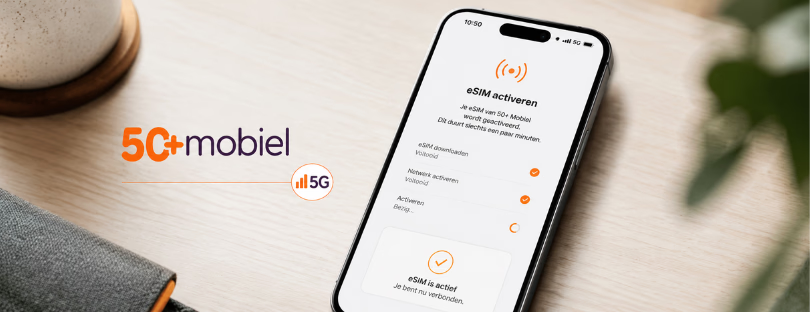
For new customers, the change means an eSIM can be selected during ordering and then activated through the Mijn 50+ Mobiel account or app. For existing customers, it opens the door to switching from a plastic SIM to a digital one without changing providers. That is useful when buying a newer phone or replacing a lost SIM.
Why this update matters
50+ Mobiel runs on Vodafone’s network in the Netherlands, with access to 5G. That gives the eSIM launch more weight, because customers are not just getting faster activation. They are getting that digital SIM experience on a mainstream national network.
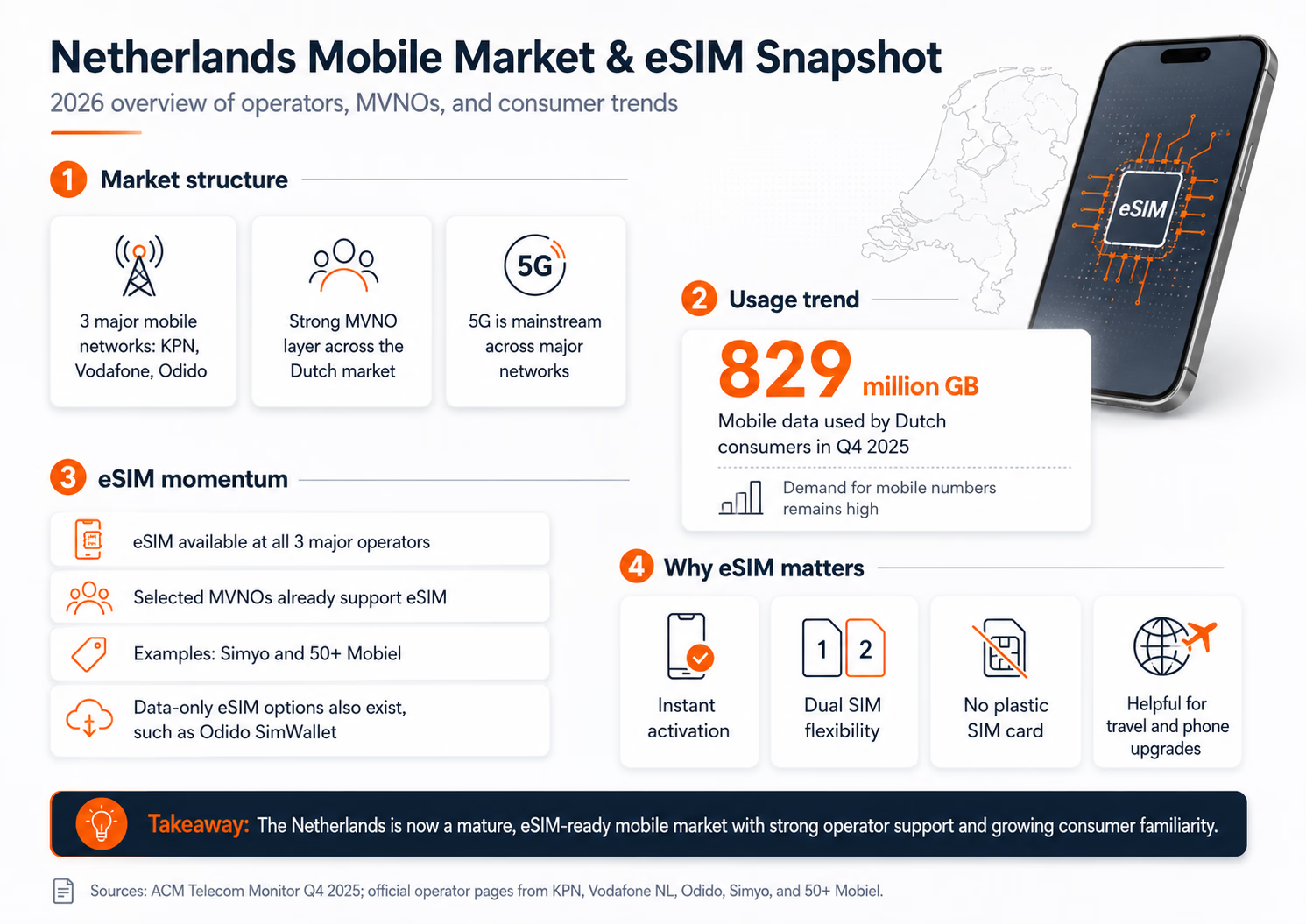
The timing also feels right. Dutch mobile users are consuming more data every quarter, and the ACM’s telecom monitoring shows how quickly mobile data demand keeps rising. Against that backdrop, eSIM is no longer just a travel feature. It is becoming part of normal mobile hygiene: easier switching, less waiting, fewer plastic cards, and cleaner onboarding.
READ MORE: Traditional Telcos vs eSIM-First MVNOs: Who Wins in the New Connectivity Paradigm?
For a provider aimed at a slightly older, value-conscious audience, this is interesting. eSIM is often marketed with digital nomads, airport panic, and app-first travel brands. 50+ Mobiel’s move shows the technology is maturing. When a practical consumer MVNO adds eSIM, the message is clear: digital SIMs are becoming ordinary.
The useful details
The service is available for eSIM-capable smartphones, including modern iPhones, Samsung Galaxy, and Google Pixel devices. That covers most of the market, but customers should still check compatibility before switching. Some older phones, budget models, and imported devices may not support eSIM properly.
There is also a small but important limitation. 50+ Mobiel says its eSIM is for mobile phones, not smartwatches or other connected devices. That will not bother most users, but it matters for people who want a cellular Apple Watch, tablet, or backup device. In those cases, a direct network operator plan, or another provider with broader device support, may still be a better fit.
The strongest part of the launch is the activation experience. No waiting for the post. No tiny plastic tray. No “where did I put the SIM eject tool?” moment. Order, activate, connect. For customers who are not especially technical, that simplicity is probably more important than the eSIM label itself.
A small MVNO signal
This is not happening in isolation. Vodafone already offers eSIM swaps through its own app, and other Dutch providers have been moving in the same direction. The difference is that MVNO adoption makes eSIM more accessible beyond premium operator plans.
Travel eSIM providers made consumers comfortable with instant mobile data. Traditional operators then had to make eSIM reliable for everyday phone numbers, voice, SMS, and customer support. MVNOs now sit between those worlds. They need app-based activation, but they also need to reassure customers who simply want their phone to work.
READ MORE: Traditional Telcos vs eSIM-First MVNOs: Who Wins in the New Connectivity Paradigm?
50+ Mobiel has taken a logical step. What could still improve is transparency around edge cases: exact SIM swap steps, recovery options if activation fails, and clearer guidance for less confident users. eSIM is simple when everything works. When it does not, support quality matters quickly.
Final thoughts
The 50+ Mobiel eSIM launch is not a headline-grabbing telecom revolution, and that is exactly why it is worth watching. The Dutch market is moving from “Does this provider support eSIM?” to “How painless is the eSIM experience?”
Vodafone’s network gives 50+ Mobiel a solid technical base. The MVNO’s challenge is to make the process feel calm, clear, and reversible for users who do not want to troubleshoot mobile settings on a Sunday afternoon.
For customers who want a simple Dutch SIM-only plan, 5G access, and faster activation, this update makes 50+ Mobiel more relevant. For smartwatch users, heavy multi-device households, or people who need advanced international flexibility, alternatives may still make sense. But as a signal for the Dutch MVNO market, this is a good one.