The technical foundation is solid. The consumer remote provisioning architecture defined under GSMA SGP.22 works. Secure elements are robust. SM-DP+ infrastructure is mature. Profile downloads are encrypted and certificate-controlled.
The pipes are not the problem.
The market behavior on top of those pipes is.
The travel eSIM space has scaled rapidly — aggregators, white-label storefronts, MVNO-backed brands, airline bundles, affiliate-led distribution, API-first platforms. On the surface, it looks competitive and dynamic.
Underneath, it lacks alignment.
And fragmentation at the commercial layer is beginning to erode trust.
The Fragmentation Is Commercial, Not Technical
It’s important to be precise.
This is not a standards failure at the GSMA level.
It is a lack of harmonization in how retail travel eSIM products are packaged, labeled, disclosed, and supported.
There is no cross-market alignment on:
Regional definitions
Plan validity logic
Activation timing
Data measurement disclosure
Fair usage explanation
Reinstallation rules
Support commitments
In telecom, ambiguity at scale creates friction. In travel, friction kills adoption.
“Europe” Means Something Different Everywhere
A consumer sees “Europe 10GB.”
They assume geographic clarity.
In reality:
One provider includes 30 EU countries. Another includes EU + UK + Switzerland. Another adds Turkey. Another excludes the Balkans.
There is no standardized regional taxonomy for travel eSIM bundles.
In aviation, geography is regulated. In roaming regulation, geography is defined. In travel eSIM retail, geography is marketing.
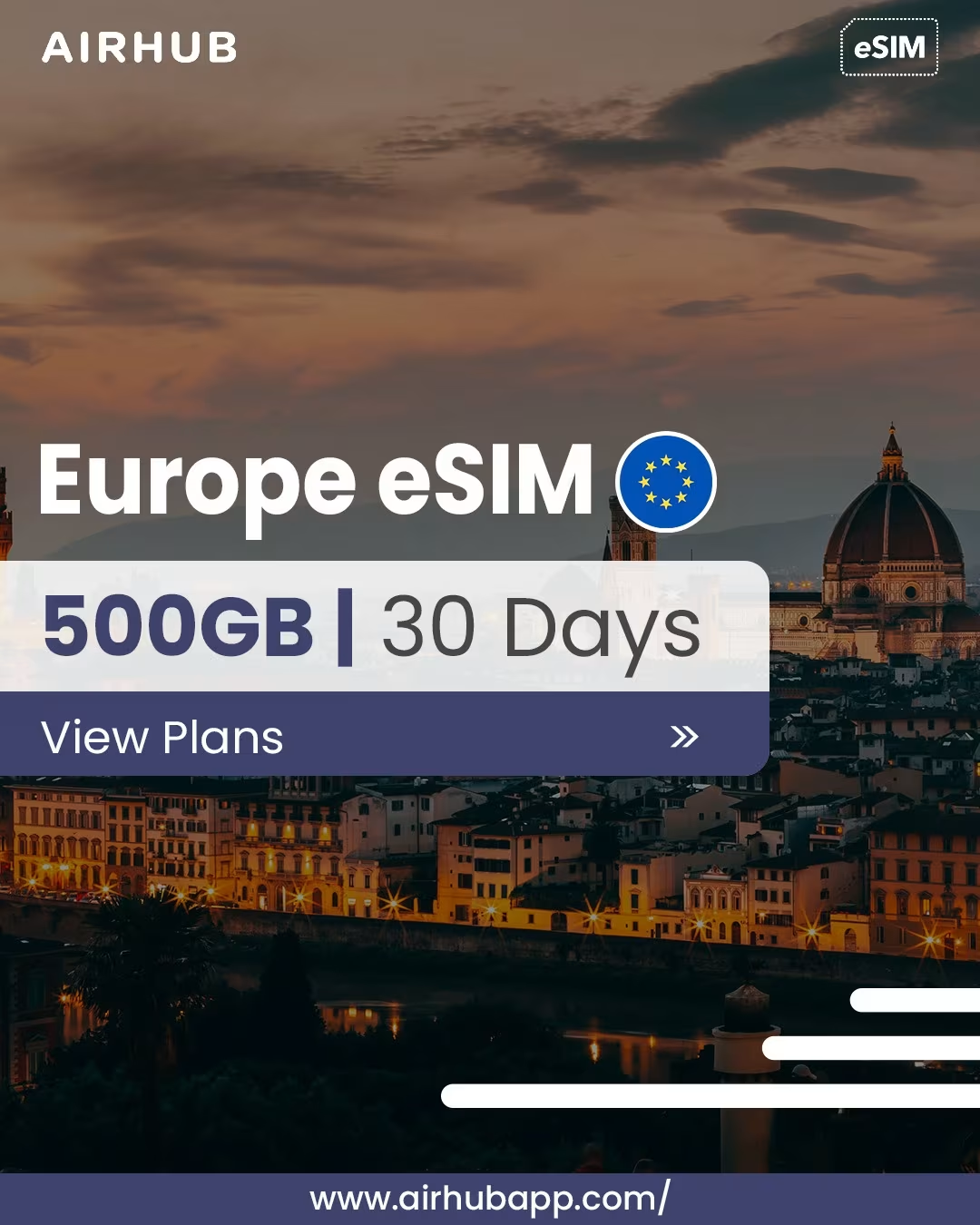
That disconnect creates comparison fatigue. Comparison fatigue leads to distrust. Need the best Europe eSIM? Check out.
Data Labeling Is Inconsistent
Data volume itself is straightforward.
Disclosure is not.
You’ll see:
500MB vs 0.5GB Daily high-speed caps presented as “unlimited” Fair usage thresholds hidden in FAQs Hard cut-offs framed as “policy” Traffic shaping described vaguely
Traffic management is not unethical. Every telecom network manages capacity.
The issue is labeling consistency.
Without standardized terminology around “high-speed allowance,” “throttled speed,” or “fair usage cap,” consumers cannot perform rational comparison.
In financial products, APR disclosure is standardized. In connectivity, high-speed data is not.
That gap slows maturity.
Activation Rules Differ More Than Users Realize
The installation experience varies across vendors:
App-native provisioning vs QR-only
Validity from purchase vs first attach
Single installation vs multiple reinstalls
Profile lock after device change
Manual APN configuration required vs automatic
None of these policies are dictated by GSMA technical standards. They are commercial decisions.
But to a traveler, they feel arbitrary.
Predictability is the foundation of telecom trust. In travel eSIM, predictability is inconsistent.
Pricing Transparency Is Structurally Uneven
Fragmentation appears again at checkout.
Some platforms auto-localize currency. Some charge exclusively in USD. Some include VAT. Some add it later. Some display the total cost clearly. Some show the base price until the final screen.
Then there’s validity timing:
Is it seven calendar days? 168 hours from activation? Seven days from the purchase timestamp?
These distinctions materially change value. Yet they are rarely standardized in presentation.
When pricing mechanics are unclear, perceived fairness declines.
And fairness determines retention.
Support Has No Universal Baseline
Travel eSIM is often purchased in transit, under time pressure, or in unfamiliar environments.
Driven by wanderlust and a passion for tech, Sandra is the creative force behind Alertify. Love for exploration and discovery is what sparked the idea for Alertify, a product that likely combines Sandra’s technological expertise with the desire to simplify or enhance travel experiences in some way.