The 3 Moments That Turn Travelers Into eSIM Buyers
Most eSIM articles talk about adoption as if people wake up one morning and decide to “go digital.” That is not how eSIM converts.
Travelers do not buy connectivity because they love telecom innovation. Companies do not integrate eSIM because it sounds modern. Conversion usually happens at very specific moments, when the cost of poor connectivity becomes obvious, immediate, and slightly annoying.
That is why the eSIM market is becoming less about “selling data” and more about showing up at the right touchpoint. The brands that understand this will win more than the ones shouting about coverage maps and discount codes.
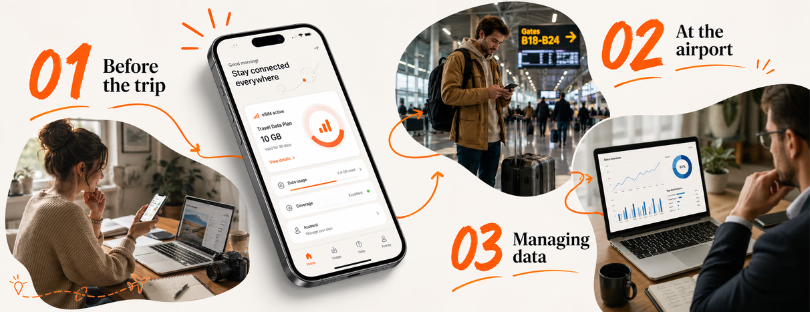
Before the trip
The first real conversion point happens before departure, usually when someone is already planning the trip.
This is where airlines, online travel agencies, hotels, banks, business travel platforms, and loyalty apps have an advantage. They already own the travel planning moment. The customer is booking a flight, confirming accommodation, checking insurance, downloading a boarding pass, or preparing documents. Connectivity fits naturally into that flow.
The problem is that many travel brands still treat eSIM as an add-on, not as part of the travel experience. A generic “buy travel data” banner is easy to ignore. A properly timed message is different: “You are flying to Turkey tomorrow. Avoid roaming charges. Install data before you land.”
That is where eSIM starts to convert.
READ MORE: Yesim B2B Strategy: API vs Enterprise Play
For B2B players, this is also where Yesim becomes interesting. Its Partner API and white-label options allow travel companies, fintech apps, OTAs, and other digital platforms to add globaI eSIM connectivity directly into their own customer journey. The customer does not need to leave the app, search Google, compare ten providers, and hope the plan works. The offer appears at the moment when the need is already forming.
This is not for every company. A small brand with low travel volume may not need a full eSIM integration yet. But for companies that already serve mobile, international, or frequent-travel audiences, connectivity is starting to look less like a side product and more like a retention layer.
At the airport
The second conversion point is the airport, and it is probably the most emotional one.
Airports expose bad connectivity decisions fast. People suddenly remember they did not check roaming prices. They are about to board. They need WhatsApp, maps, email, ride-hailing, banking apps, and maybe a hotel confirmation. Nobody wants to start comparing telecom products at Gate B14 with 18 minutes before boarding.
This is why airport-stage eSIM offers convert differently. The buyer is not casually browsing. They are solving a near-term problem.
But this touchpoint is also risky. If the purchase flow is too slow, if activation feels confusing, or if the instructions are buried in email, conversion can collapse. The airport traveler has little patience. A good eSIM experience here needs clear pricing, fast installation, and simple plan logic.
READ MORE: Yesim Rethinks Unlimited With Its Global Unlimited Day Pass
Yesim’s consumer offer can fit this moment because it focuses on quick digital access across many destinations, while its B2B layer gives companies a way to serve the same need under their own brand. For example, an airline could offer destination data after check-in. A banking app could offer travel connectivity before cardholders arrive abroad. A hotel group could include data as part of a premium guest package.
This is also where the wider market is moving. Apple’s eSIM-first direction and the growth of eSIM-compatible smartphones have made the airport eSIM purchase more normal. GSMA Intelligence has also pointed to travel eSIM as one of the forces pushing consumer eSIM adoption forward. The market is no longer waiting for users to become telecom experts. It is built around moments when users simply need data now.
What still needs improvement is transparency. Too many offers still hide the practical details travelers care about: hotspot use, fair usage limits, network partners, expiry rules, and what happens when speeds drop. The airport buyer may convert quickly, but trust is built after activation.
 After something goes wrong
The third touchpoint is the most underestimated: after the traveler has already had a bad connectivity experience.
This might be a roaming bill shock. A hotel guest who could not get online after landing. A business traveler who missed a video call. A family that burned through data because one person used a hotspot for everyone. A finance team that realized employee roaming costs are impossible to control properly.
This is where eSIM stops being a convenience product and becomes a risk-control product.
For companies, this matters even more. A corporate travel manager does not usually wake up thinking, “We need eSIM.” They think, “Why are our roaming invoices unpredictable?” or “Why do employees keep buying random data plans?” or “Why can’t we see who is using what?”
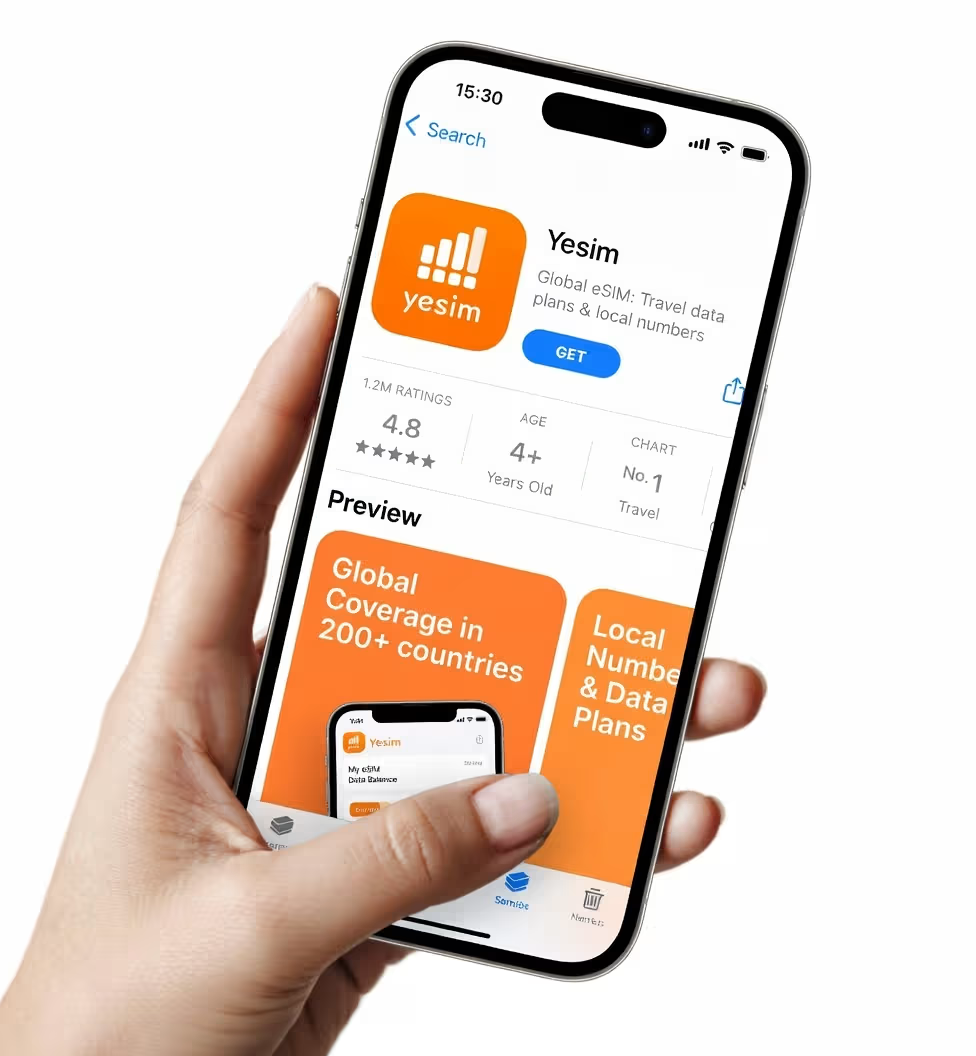
That is where Yesim’s OneBalance platform makes sense. It gives companies a centralized way to distribute, monitor, and control mobile data for global teams. Instead of every employee solving connectivity alone, the company can manage usage and costs from one place. This is not just cheaper roaming. It is visibility.
Alternatives are still valid. Traditional roaming can work for companies with strong operator agreements. Local SIMs may still suit longer stays, local numbers, or travelers who want a physical backup. Other travel connectivity options still have a role, especially for travelers who only need a simple one-off plan or already have a roaming arrangement that works for them. But as travel becomes more digital, conversion is shifting toward platforms that can meet users inside the workflows they already use: booking, banking, check-in, expense management, and corporate travel planning.
Final take
The eSIM market will not be won only by the provider with the most countries or the cheapest 5GB plan. Those things matter, but they are not the whole story.
The real question is: who owns the moment?
Before the trip, the winner is the brand that appears while the traveler is already preparing. At the airport, the winner is the one who removes panic quickly. After something goes wrong, the winner is the one who turns connectivity from a personal workaround into a managed business solution.
This is why Yesim’s B2B direction is worth watching. Its value is not only in selling eSIM data. It is in helping other companies place connectivity where it actually converts: inside travel, finance, hospitality, and corporate mobility journeys.
That is also where the broader market is heading. eSIM is becoming less of a telecom product and more of an embedded travel service. The next growth phase will belong to brands that stop asking travelers to come looking for connectivity and start offering it exactly when the need appears.