Shanghai Tower: Inside China’s Vertical Icon
Shanghai Tower is not new, but it still feels current. In a travel market obsessed with “what’s next”, the 632-metre tower in Lujiazui keeps doing something more interesting: it reminds visitors that a landmark can be both a tourist attraction and a piece of urban strategy.
For travellers arriving in Shanghai, the tower is usually sold as a view. Go up, take the photo, look down at the Huangpu River, spot the Oriental Pearl Tower, then leave. That is the simple version. The better version is that Shanghai Tower is one of the clearest expressions of how China wanted Pudong to be seen: not only as a financial district, but as a confident, engineered city brand.
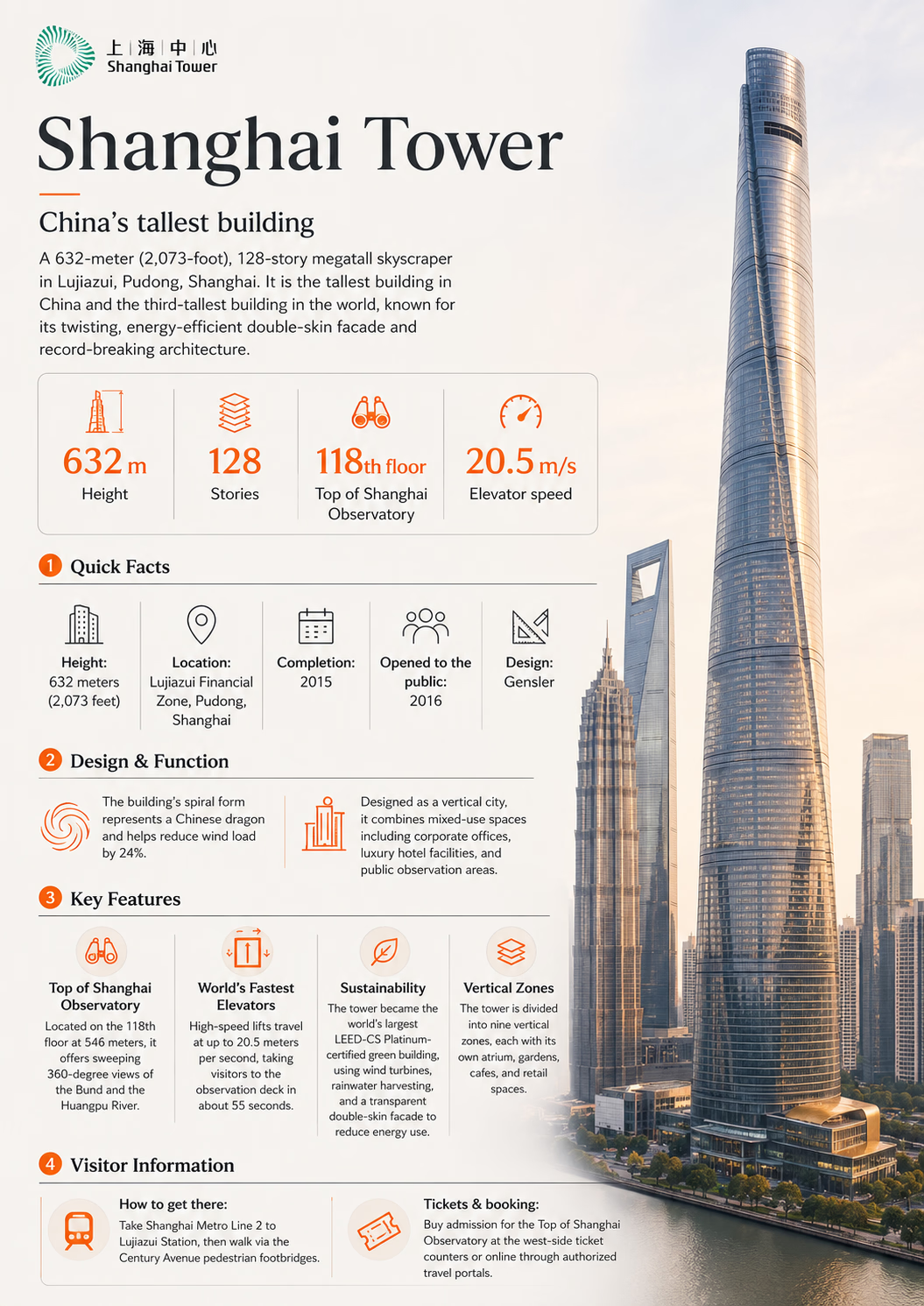
It is currently China’s tallest building and among the tallest buildings in the world. Gensler designed it, and the Council on Tall Buildings and Urban Habitat has long treated it as a major reference point in the supertall category. But what makes it worth discussing now is not just height. Height is the headline. The real story is how the building tries to make extreme density feel managed, efficient and almost calm.
More than a viewing deck
The obvious reason to visit the Shanghai Tower is the observation experience. The “Top of Shanghai” deck gives visitors the kind of city view that makes maps suddenly make sense. At street level, especially around Lujiazui, glass, traffic, malls and office towers all compete for attention. From above, the city becomes easier to read.
That said, this is not the most intimate Shanghai experience. Anyone looking for old lanes, street food, small galleries or neighbourhood texture should not make this their only stop. Shanghai Tower is polished, controlled and corporate. It is impressive rather than charming. For many visitors, that is exactly the point: this is Shanghai as a global business postcard, not Shanghai as a lived-in backstreet.
READ MORE: J Hotel Shanghai Tower: China’s Highest Luxury Stay Welcomes a New Era of Tourism
The lift ride is part of the theatre. So is the scale. But the best moment is usually not the bragging-rights photo at the window. It is the slow recognition that the tower sits inside a cluster. Besides Jin Mao Tower and the Shanghai World Financial Center, it completes a three-building story of ambition across different eras.
The clever twist
Shanghai Tower’s twisting form is not just aesthetic drama. Its rounded, tapering shape helps reduce wind loads, which matters in a city exposed to typhoons. The Institution of Civil Engineers notes that this design reduced the need for structural steel compared with a conventional building of similar height. That is the kind of detail that separates a serious supertall from a vanity object.
The building also uses a double-skin façade, sky gardens and stacked internal zones, creating what Gensler has described as a vertical city. In plain English, it tries to break down a huge tower into smaller neighbourhood-like sections. That idea has become more relevant as cities wrestle with density, climate pressure and the awkward reality that office towers must now justify themselves beyond square metres.
 Still, there is room for improvement. Like many supertall buildings, Shanghai Tower can feel easier to admire than to emotionally connect with. The public experience is strong at the top, but the building’s deeper innovations are not always obvious to casual visitors. A better interpretive layer around sustainability, engineering and urban design would make the attraction feel richer, especially for travellers who care about architecture, not just skyline photos.
What it says about travel now
For Alertify readers, the tower is also a useful travel-tech signal. Modern landmarks are becoming infrastructure stories. Airports, rail hubs, observation decks and mega-malls increasingly function as digital touchpoints: ticketing, crowd management, payments, translation, connectivity, navigation and content all shape the visitor experience.
Shanghai is particularly good at this because the city understands scale. A landmark like Shanghai Tower does not operate in isolation. It sits inside a district where mobility, retail, hospitality, finance and tourism overlap. For international visitors, that also means practical friction: app ecosystems, mobile payments, maps, language support and roaming can affect the experience as much as the attraction itself. A great view is still a great view, but the journey around it is now part of the product.
READ MORE: Shanghai to launch all-in-one app for international travelers
Alternatives depend on the mood of the trip. Jin Mao Tower has a more architectural, old-Shanghai-meets-new-China personality. Shanghai World Financial Center offers another high-rise perspective with its famous “bottle opener” silhouette. Oriental Pearl Tower is more playful and touristy, and often better for first-time visitors who want recognisable Shanghai rather than pure height.
The real takeaway
Shanghai Tower belongs in the same conversation as Burj Khalifa in Dubai and Merdeka 118 in Kuala Lumpur, but it plays a different role. Burj Khalifa is a spectacle first, a global icon built around extreme verticality. Merdeka 118 is part of Kuala Lumpur’s newer push to signal ambition through skyline identity. Shanghai Tower feels more integrated into a district-level story. It is less lonely, less theatrical and in some ways more useful as an urban statement.
That is why it still matters. Landmark travel will not be decided only by who builds the tallest tower. It will be decided by which cities turn landmarks into smarter, more connected, more understandable places. Shanghai Tower gets much of that right. It is not perfect, and it is not the whole city, but as a symbol of engineered urban confidence, it remains one of Asia’s important buildings to visit.