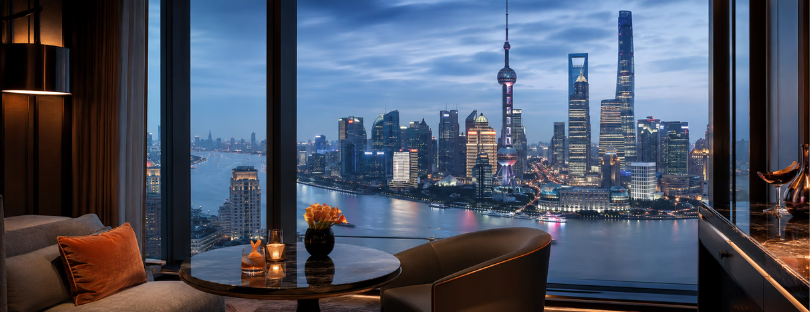
Shanghai Hotel Market: Luxury, Business & Beyond
Shanghai has always been a city where hotels do more than provide a bed. They signal where the city is moving next. In the 2000s, that meant Pudong towers, river views and big-brand luxury. Then came the boutique wave around the Former French Concession, with design hotels tucked into heritage buildings and stays that felt more like a neighbourhood.
Now the Shanghai hotel story is changing again. The city is rebuilding its hospitality map around business travel, inbound tourism, lifestyle luxury and domestic demand. Shanghai has more choices than ever, and not every hotel that looks impressive online will suit the way people use the city.
Demand is back
The strongest signal is demand. Shanghai’s inbound tourism rose sharply in 2025, with travel industry outlets reporting more than 9 million inbound visits for the year. Hotel performance followed, with stronger occupancy across star-rated hotels and five-star properties performing well.
Shanghai is not a pure leisure destination in the way Bangkok, Bali or Dubai often are. It is a business city first, then a culture city, then a shopping and food city. Guests want polish, but they also want transport, reliable Wi-Fi, smooth payments, and staff who can help when apps, language and local systems become messy.
READ MORE: J Hotel Shanghai Tower: China’s Highest Luxury Stay Welcomes a New Era of Tourism
A strong property here is not only about marble bathrooms and skyline shots. It is about how quickly you can get from Hongqiao to a meeting, whether breakfast works before an early train, and whether the room feels calm after a day inside one of the world’s biggest urban machines.
The luxury reset
JLL’s hotel market reporting noted that Shanghai added thousands of new upscale and luxury rooms in 2025, including supply in Hongqiao, Qiantan and Houtan. The centre of gravity is no longer The Bund, People’s Square or Lujiazui.
The Bund still carries the romance: river lights, historic facades and the feeling that old and new China are staring at each other across the Huangpu. Prices are high, traffic can be annoying, and some travellers may find the area better for one memorable night than a full working week.
Lujiazui remains the obvious pick for finance, views and big international hotel brands. It is polished, efficient and a little corporate. It suits business travellers, conference guests and anyone who wants the skyline without thinking too hard about logistics. What it can lack is street texture. If you want cafés, lane-house energy and casual wandering, you may feel slightly sealed off.
Then there is the newer Shanghai: Qiantan, Houtan, Hongqiao and other fast-developing districts. Hongqiao works for rail and airport convenience. For repeat visitors, these districts can make more sense than chasing the same river-view room everyone has already photographed.
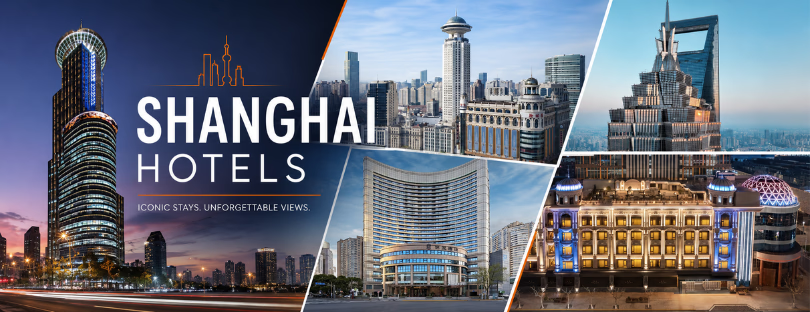
Beyond the tower
One of the more interesting shifts in Shanghai hospitality is that the best experience is not always the tallest or most expensive hotel. The city has a growing audience for quieter, design-led stays that lean into local architecture, better coffee and a more residential feel.
This is especially true for travellers who already know Shanghai. They may prefer a hotel near independent shops, galleries, metro lines and late-night noodles. For them, Jing’an, Xuhui and the Former French Concession area often feel more human than the financial districts.
READ MORE: Shanghai to launch all-in-one app for international travelers
But there is a trade-off. Some boutique and lifestyle hotels are better at mood than operations. A beautiful lobby does not help much if soundproofing is weak, English-language service is inconsistent, or the room has nowhere sensible to open a suitcase. Shanghai rewards style, but it punishes inconvenience quickly.
Choose by purpose
The smartest way to choose a Shanghai hotel is to start with the trip, not the brand. First-time visitors will probably get more value from The Bund, People’s Square or parts of Lujiazui because they reduce decision fatigue and keep the classic sights close. Business travellers should be more ruthless. Hongqiao, Lujiazui and Jing’an are usually stronger choices, depending on where meetings are.
Repeat travellers have more room to experiment. Xuhui, Jing’an and newer lifestyle districts may be more rewarding, especially if the goal is to feel the city’s everyday rhythm rather than tick off the trophy view.
The bigger trend
Shanghai now sits in the same hospitality conversation as Tokyo, Singapore, Bangkok and Dubai. Tokyo is strong on service ritual and design restraint. Singapore sells efficiency and premium consistency. Bangkok competes on lifestyle hospitality and value. Dubai goes big on spectacle and branded residences.
Shanghai has a different edge: contrast. Heritage and hyper-modernity. Business travel and youth culture. Luxury malls and alleyway food. Hotels that understand that contrast will age better than properties that simply copy the international luxury template.
15 Shanghai Hotels Worth Knowing
A practical shortlist across luxury stays, business-friendly hotels and smarter budget options.
Prices and room value in Shanghai change quickly around trade fairs, holidays and major events. For the best result, choose by district first, then compare hotel category.
Conclusion
The Shanghai hotel scene is becoming more competitive, but also more intelligent. The city no longer needs to prove it can host luxury travellers. It already can. The next phase is about matching hotels to more specific reasons for travel: short business trips, design-led city breaks, longer China itineraries, rail-connected meetings and repeat visits from travellers who want something less obvious.
For Alertify readers, the practical takeaway is simple. Do not book Shanghai only by star rating or skyline photo. Book by district, mobility and trip purpose. The most expensive hotel may not be the smartest one, and the trendiest boutique stay may not be the easiest one. In a city this layered, the best hotel is the one that lets the city work better around you.