Virgin Media O2 Secures UK’s First Satellite-to-Smartphone Licence
The UK has officially moved satellite-to-smartphone services from concept to reality.
Ofcom has approved the country’s first licence variation allowing satellite connectivity directly to standard smartphones. Virgin Media O2 is the first operator to receive the green light.
This is not about specialised satellite phones. It is about ordinary SIM-enabled devices connecting to satellites when terrestrial coverage drops away.
And importantly, the regulatory framework is now live.
What Has Actually Been Approved
On 16 February 2026, Ofcom made the Wireless Telegraphy (Direct to Device Satellite Communications) Exemption Regulations 2026, which came into force on 25 February 2026.
The key change is this: mobile handsets and other SIM-enabled devices connecting to authorised Direct to Device, or D2D, satellite services are now exempt from needing their own wireless licence.
That exemption only applies once a mobile network operator has had its spectrum licence formally varied to include D2D services.
Virgin Media O2, via Telefonica UK, is the first to secure that variation. Ofcom has approved the specific frequencies on which it can provide satellite-to-device services.
So this is not a trial. It is a regulated, authorised service framework.
Why This Is Bigger Than a Rural Coverage Story
Yes, the immediate benefit is obvious. Ofcom states that D2D services will improve connectivity in rural and hard-to-reach areas, enhance resilience during power outages, and support better access to emergency services.
But the structural shift is more important.
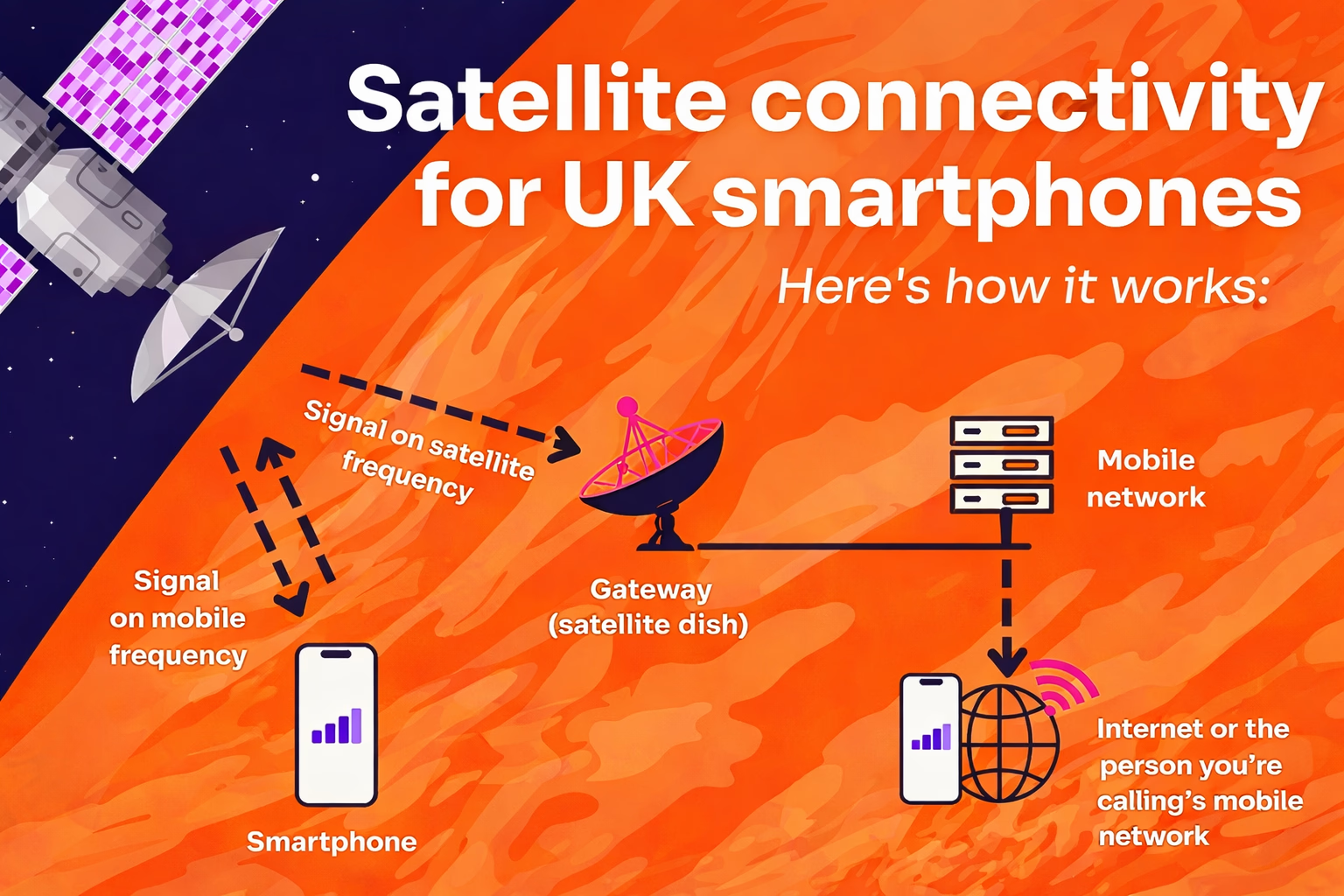
This framework allows UK mobile network operators to use parts of their existing licensed spectrum for satellite Direct to Device services.
That means satellite connectivity is no longer a parallel ecosystem. It becomes an extension of the mobile operator’s network.
Instead of building more towers to eliminate every coverage gap, operators can overlay satellite connectivity on top of their terrestrial infrastructure.
The network is no longer just ground-based. It becomes a hybrid.
Resilience Is the Real Strategic Angle
Coverage expansion is politically attractive. Network resilience is commercially strategic.
Ofcom explicitly highlights D2D’s potential to provide backup connectivity during localised network faults or extreme weather events.
In an era where infrastructure resilience is under increasing scrutiny, this matters.
Satellite-to-smartphone services offer a redundancy layer that does not rely on local base stations. For operators, that strengthens continuity. For enterprise customers, it adds risk mitigation. For consumers, it reduces the likelihood of total signal loss.
This is infrastructure thinking, not marketing hype.
The Regulatory Process Was Deliberate
This approval is the result of an 18-month regulatory process.
Ofcom launched a Call for Input in July 2024, followed by formal consultations in 2025. In December 2025, it finalised the authorisation framework for D2D services. The Regulations were formally made in February 2026 after reviewing Virgin Media O2’s licence variation request.
The Regulatory Impact Assessment concludes that enabling D2D services is likely to generate a net benefit for UK citizens, consumers, and businesses.
In telecom, regulatory certainty unlocks deployment. The UK now has that certainty.
What Happens Next
The Regulations come into force on 25 February 2026.
Other UK mobile network operators can submit licence variation requests if they want to offer their own D2D services. Once approved, Ofcom will update the Regulations to reflect additional authorised frequencies.
Virgin Media O2 is simply first.
Globally, similar initiatives are underway in the United States and parts of Europe, where operators are partnering with satellite providers to enable direct-to-device connectivity. What distinguishes the UK is that the regulatory pathway is now clearly defined and operational.
The Real Shift
This is not just a licence approval. It marks the formal integration of satellite connectivity into the UK’s mobile network architecture.
For years, satellite connectivity sat at the edges of telecom. Special devices. Niche use cases. Emergency-only messaging.
With Ofcom’s framework in place, satellite becomes a native layer of mainstream mobile infrastructure.
The next competitive question will not be whether satellite-to-smartphone works.
It will be how quickly operators integrate it into their coverage strategy, enterprise propositions, and resilience positioning.
Virgin Media O2 has taken the first step. The rest of the market now has a clear regulatory map to follow.