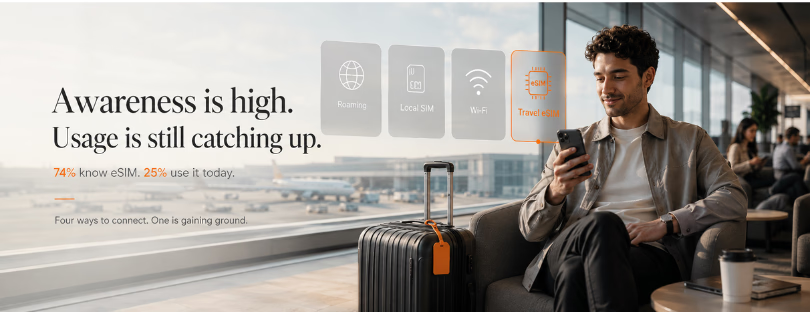
N26 Adds Travel eSIMs to Its Banking App in Italy
N26 is pushing deeper into travel, and this time the move is not about another card perk or insurance add-on. The European digital bank has expanded its travel offer in Italy with a new Travel eSIM, giving customers access to mobile data plans directly inside the N26 app.
On paper, it sounds simple: open the app, choose a data plan, install the eSIM, and connect abroad without changing a physical SIM card or downloading another app. But the bigger story is more interesting. N26 is not just selling mobile data. It is trying to turn the banking app into a travel control centre.
According to N26, the Travel eSIM gives users access to data plans in more than 100 countries, with country-specific, regional, and global options available. The service is data-only, which means it does not include a phone number, SMS, MMS, voicemail, or smartwatch/tablet use, according to N26’s own support information. That distinction matters because many travellers still assume “eSIM” means a full mobile subscription. In most travel use cases, it simply means mobile internet abroad.
Why Italy matters
Italy is a smart market for this launch. Italian consumers travel heavily across Europe, but also increasingly outside the EU for leisure, work, family, and long-haul holidays. Inside the EU, roaming is already relatively frictionless thanks to “Roam Like at Home.” Outside Europe, however, the old problem returns quickly: unpredictable roaming costs, weak transparency, and the familiar airport Wi-Fi scramble.
This is exactly where embedded eSIM offers make sense. Travellers do not necessarily want another app, another account, another login, and another card payment just to get online after landing. If the bank already has the customer relationship, the payment method, and the app installed, adding connectivity becomes a logical extension.
N26 says customers can buy plans in advance and activate them when they connect to a local network at their destination. That is the right kind of convenience for last-minute travel, especially for people who do not think about connectivity until the plane door opens.
Banking is becoming a travel layer
The Travel eSIM also sits neatly beside N26’s wider travel proposition. The bank already promotes foreign spending benefits, competitive exchange rates, travel insurance on Go and Metal plans, free ATM withdrawals abroad for eligible plans, and access to more than 1,300 airport lounges through selected accounts. N26 is also offering 1% cashback on in-person purchases made outside the EEA, UK, and Switzerland for Go and Metal subscribers, with no minimum spend or cashback cap, according to its travel benefits pages and press release.
Daniel Lappas, VP of Business at N26, framed the move around giving travellers a more complete package: transparent pricing, better rates, protective insurance, convenient data solutions, and incentives for global spending.
READ MORE: eSIM Technology and Fintech: Convenience or Control?
That positioning is important. N26 is not claiming to become a telecom operator in the traditional sense. It is doing something more fintech-like: bundling useful travel utilities around the financial relationship.
And it is not alone.
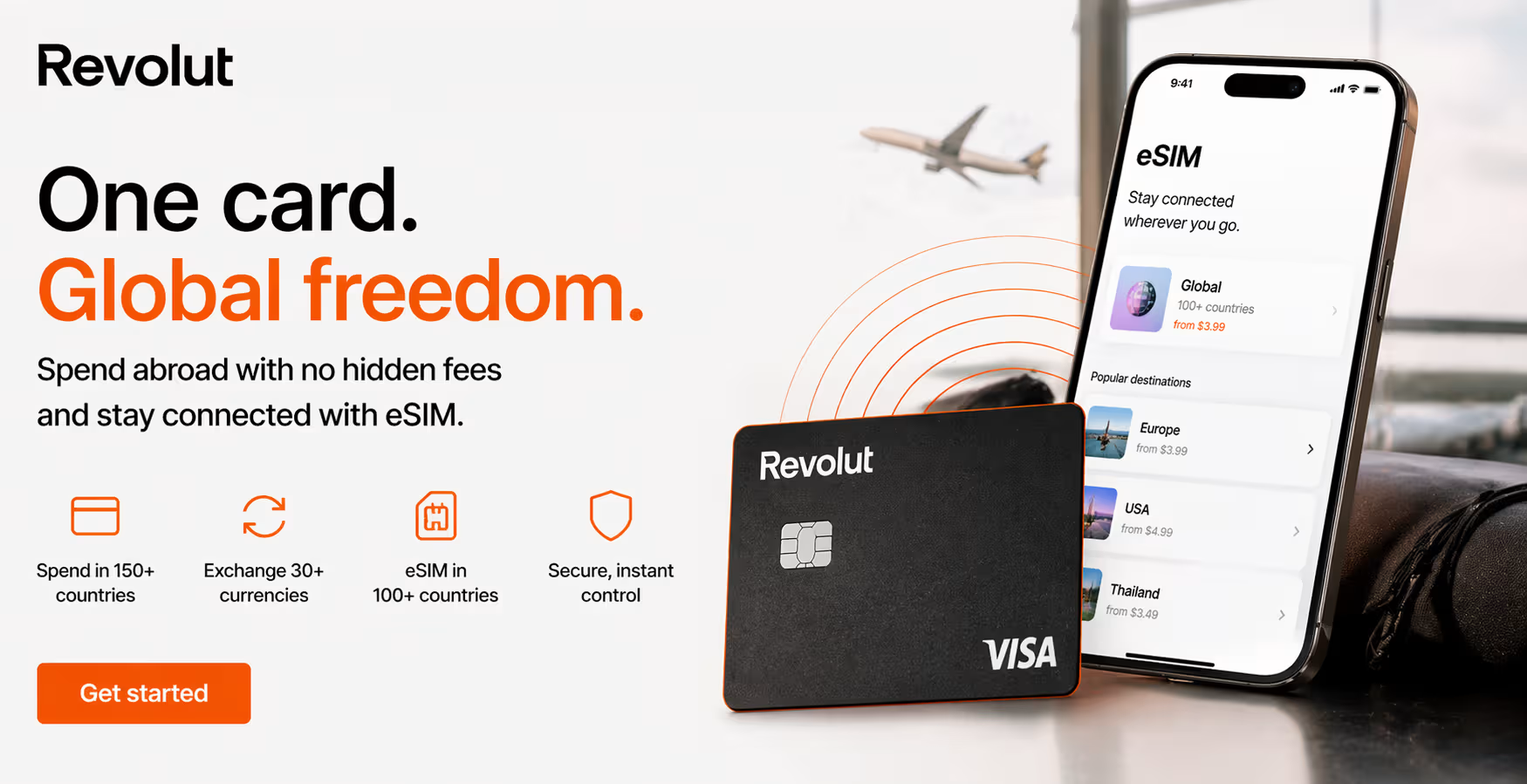
Revolut already offers eSIM data plans in more than 100 countries, with 3GB of global data included monthly for Ultra customers, while bunq also promotes eSIM connectivity directly inside its banking app, including global data benefits for higher-tier users.
This is the broader trend: banking apps want to own more of the travel moment. Not just the payment. The whole experience around the payment.
The real competition
For dedicated travel eSIM brands such as Airalo, Holafly, Ubigi, Nomad eSIM, Saily, and GigSky, the rise of bank-embedded eSIMs is both a validation and a warning.
It validates the category because banks do not add features unless customers already understand the problem. Roaming pain is real. Mobile data abroad is now a mainstream travel need, not a niche product for digital nomads.
READ MORE: Beyond Roaming Charges: How eSIM Unlock Global Connectivity for Fintech Users
But it is also a warning because distribution is shifting. If a traveller can buy data from the banking app they already trust, the standalone eSIM app has to work harder. It needs better pricing, stronger coverage clarity, better unlimited policies, stronger support, or a more differentiated experience.
That does not mean banks will replace specialist eSIM brands. In many cases, specialists will still win on plan depth, destination range, unlimited options, local expertise, or telecom infrastructure quality. But banks have one powerful advantage: timing. They appear at the exact moment the traveller is already thinking about money abroad.
Final thoughts
N26’s Travel eSIM launch in Italy is not just another fintech feature. It is a sign that connectivity is becoming part of the travel finance stack.
The interesting question is not whether N26 has the “best” eSIM plan on the market. The smarter question is whether travellers increasingly expect their bank, airline, hotel app, or booking platform to solve connectivity before they go looking for a separate provider.
That is where the market is heading. eSIM is no longer just a telecom product. It is becoming a travel utility, embedded wherever the customer already has trust, payment, and intent.
For eSIM specialists, the message is clear: distribution is getting crowded. For banks, the opportunity is equally clear: the next valuable travel perk may not be points or lounge access. It may simply be making sure the customer’s phone works the moment they land.