LotusFlare: The Platform Behind Digital Telcos
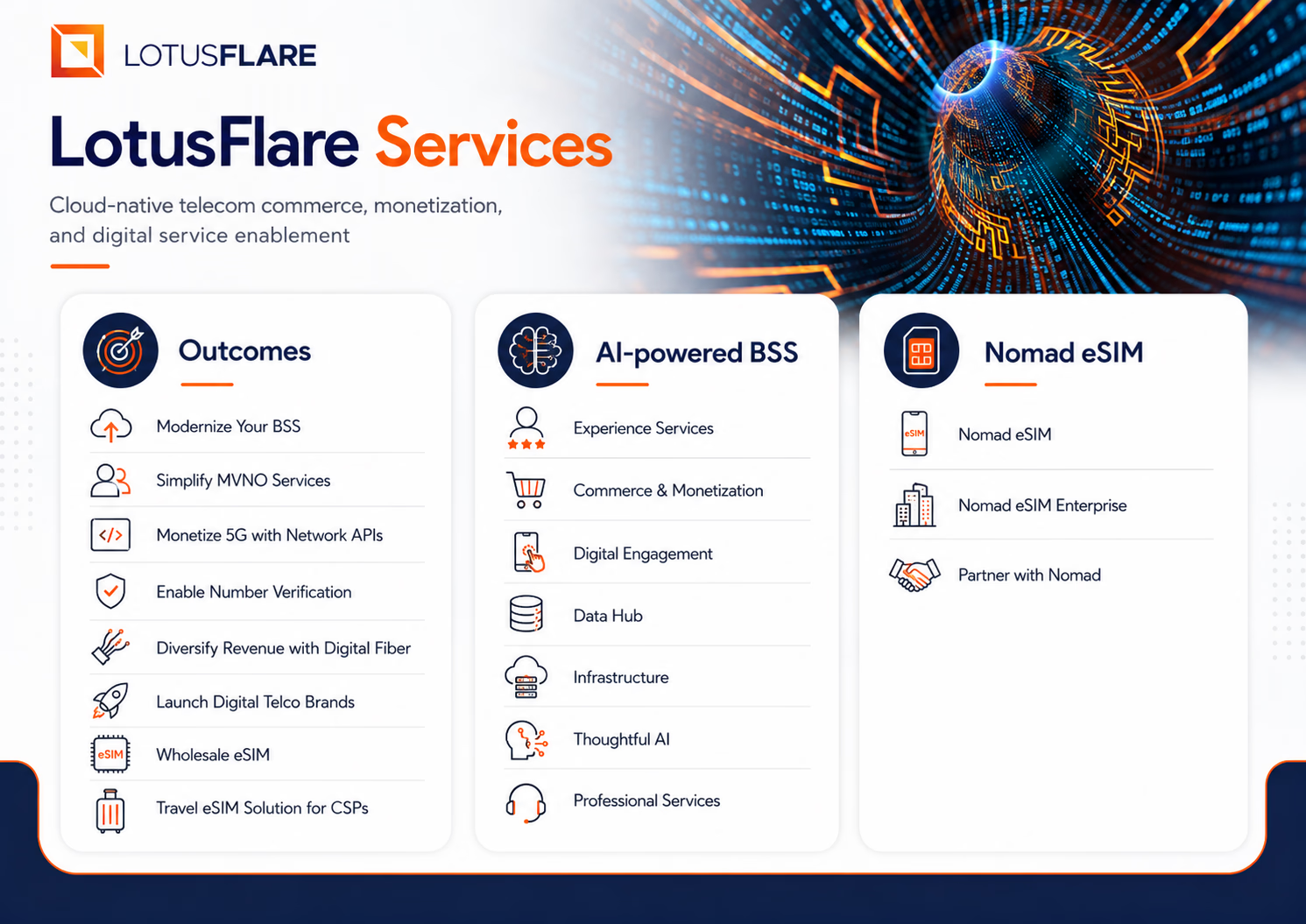
For years, telecom software was treated like plumbing. Important, expensive, rarely loved, and usually discussed only when something broke. LotusFlare is one of the companies trying to change that conversation. Instead of selling digital transformation as a vague promise, it positions DNO Cloud as an AI-powered business support system built around one practical idea: make it easier for communications service providers to launch, sell, manage, charge for, and scale digital services.
That sounds technical, and it is. But the market problem is easy to understand. Operators are no longer just selling minutes, data bundles, and roaming passes. They are launching digital sub-brands, eSIM journeys, fiber, API marketplaces, 5G services, and enterprise connectivity, often at the same time. Legacy BSS stacks were not designed for that rhythm. They were built for stability first, change later.
LotusFlare’s pitch is that change can become the normal operating mode.
Why LotusFlare matters now
The timing is important. Telecom operators are under pressure from two sides. Consumers expect app-first activation, instant plan changes, clear pricing, and no call-center drama. Enterprises are moving toward network APIs, programmable connectivity, private networks, identity verification, and richer monetization models. The operator’s network is still valuable, but value is harder to capture if the commercial layer is slow.
That is where LotusFlare becomes interesting. DNO Cloud is not presented simply as billing software. It covers digital commerce, product catalog, order management, charging, billing, eSIM orchestration, and API monetization. In plain language, it helps operators package network capability into something customers or partners can buy.
The Ericsson investment and strategic partnership sharpened this story. Ericsson did not back LotusFlare because the world needed another dashboard. The stronger signal is that network API monetization is moving from conference language into commercial infrastructure. If operators want developers, enterprises, banks, travel platforms, and identity providers to use network capabilities, they need consent management, exposure layers, productization, and settlement. It is not glamorous work, but it is where money is captured or lost.
Pi shows the model in action
The MTN South Africa and Pi example makes LotusFlare easier to understand. Pi is positioned as a fully digital brand where customers can access 5G mobile, fixed wireless, and travel eSIM services through an app-first experience, with no contracts, no credit checks, and no call centers as the default entry point. That sort of model is exactly where a modern BSS platform becomes visible to the customer, even if the customer never sees the vendor name.
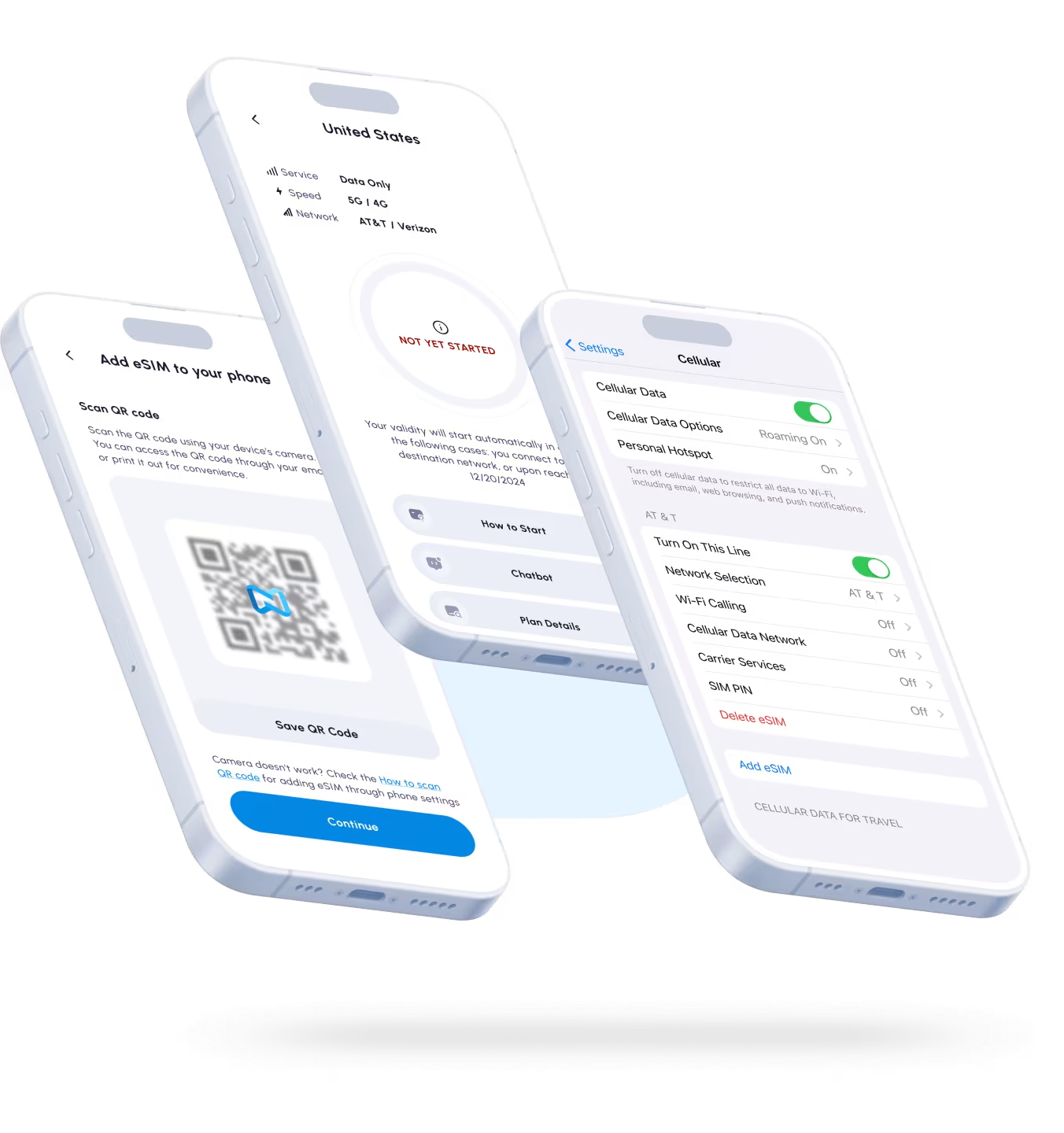
For Alertify readers, the travel eSIM element is especially telling. eSIM is no longer just a travel add-on. It is becoming part of broader telco commerce. Operators want to bundle, resell, personalize, and manage digital connectivity across mobile, broadband, travel, and enterprise use cases. The winners will not be the companies with the loudest “digital” language. They will be the ones who reduce friction across the full journey, from onboarding to charging to support.
Not every operator needs this kind of platform
There is a quiet caveat here. LotusFlare is not a light tool for a small reseller that only needs a simple storefront and a handful of travel data plans. It is also probably not the fastest fit for organizations that are not ready to rethink internal processes. A cloud-native BSS platform can simplify the customer experience, but it does not magically simplify decision-making inside a legacy operator.
That is the part many telecom transformation stories underplay. Software can be modern. Procurement, compliance, product ownership, and commercial politics may not be. LotusFlare’s value is strongest when an operator has a real mandate to launch new brands, modernize monetization, or expose network assets commercially. Without that mandate, even good platforms can become another layer in an already crowded stack.
What could be clearer is the implementation path. CSPs want to know how quickly they can start, what must be replaced, what can be integrated, and how migration risk is managed.
The competitive picture
LotusFlare sits in a busy but changing field. Traditional BSS and telco IT players such as Amdocs, Netcracker, CSG, Ericsson, and Comarch still matter, especially with large operators that prefer established transformation partners. Smaller cloud-native and API-oriented platforms are pushing from the other side, promising faster launches and more flexible monetization. The distinction is no longer “old vendor versus new vendor.” It is whether a platform can support real digital commerce without forcing operators into years of integration fatigue.
Compared with heavier legacy transformation programs, LotusFlare feels more product-led and outcome-led. Compared with lightweight MVNO or eSIM enablement tools, it is clearly more ambitious. That middle position is powerful, but demanding. It has to prove that it can be fast without being shallow, and enterprise-grade without becoming slow.
The real signal
LotusFlare matters because telecom is entering a more commercial phase of digitalization. The industry has spent years talking about 5G, APIs, eSIM, AI, and customer experience as separate themes. They are now converging into one question: can operators turn network capability into products people understand and buy?
That is where LotusFlare’s story feels relevant. Not as a shiny software brand, but as part of the machinery behind the next telecom business model. If the next wave of connectivity is app-first, programmable, partner-driven, and increasingly invisible to the end user, then the back office is no longer the back office. It is the product.