ING’s New Banking Subscriptions Show Why eSIM Is Becoming a Lifestyle Perk
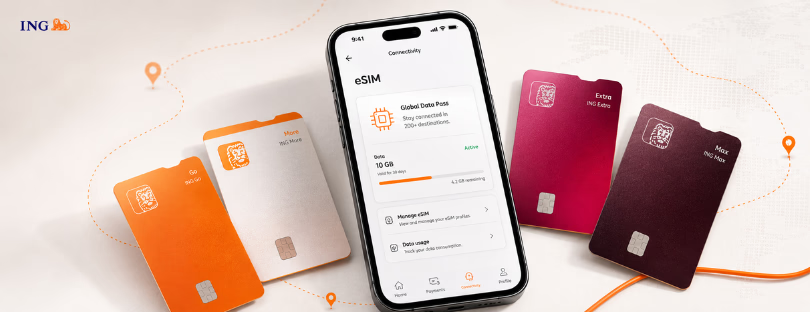
ING is giving everyday banking the subscription treatment. The bank is rolling out a new global model built around four plans: ING Go, ING More, ING Extra and ING Max. Customers start with the basics, then upgrade for more comfort, protection or travel benefits.
A current account is no longer just a place where your salary arrives and bills leave. It is becoming a lifestyle bundle, somewhere between a fintech app, a travel wallet, an insurance product and a loyalty platform.
The plans include current accounts, debit cards, credit cards, savings benefits and foreign exchange transfers. But the more interesting layer sits around the core account: zero ATM fees abroad, airport lounge access, travel protection, purchase protection, cyber protection, loyalty cashbacks, partner discounts and, importantly for the travel connectivity market, eSIM data plans.
The eSIM signal ING ESIM
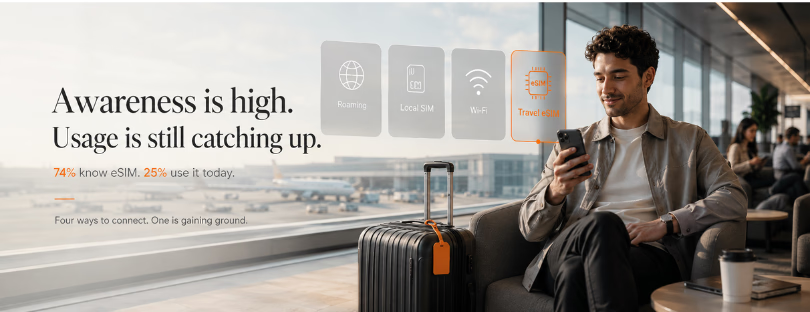
For years, eSIM was treated as a travel add-on. You bought a plan before a trip, scanned a QR code, used data abroad and forgot about it until the next journey. That model still works, but the category is clearly moving beyond standalone travel apps.
ING’s decision to include eSIM data plans inside a banking subscription shows how quickly mobile connectivity is becoming a packaged lifestyle benefit. It is not being sold only as telecom. It is being positioned as convenient.
Banks, fintechs, airlines and travel platforms increasingly want to own more of the customer journey. If a customer already trusts a banking app for payments, cards and currency exchange, adding travel data feels logical. The user may not care who powers the connectivity. They care that the service is easy, visible in one app and ready when they land.
READ MORE: Banks That Ignore eSIM Will Depend on Someone Else’s Network
For eSIM providers, this is both an opportunity and a warning. The opportunity is distribution through huge customer bases. The warning is that the eSIM brand can disappear behind the bank unless the provider brings real value.

Why ING is doing this now ING ESIM
ING says the new model responds to customer demand for simpler choices, clearer pricing, more value and flexibility as needs change. Consumers are tired of fragmented services: one app for banking, one for insurance, one for investment, one for lounges, one for eSIM, one for rewards.
ING Go covers the essentials, including a current account and debit card. Higher plans add credit cards, better savings and investment conditions, protection services and lifestyle extras. The model is global in design, but local in execution, so exact benefits, including streaming services or partner offers, can vary by country.
“Customers told us they want everyday banking to be simpler, more flexible, and designed around their lifestyle. That’s what we’re offering with subscription plans: banking that adapts to life, not the other way around, and plans that bring customers more value from everyday banking,”
said Sali Salieski, global head of Private Individuals at ING.
The rollout has already taken place in Belgium, Poland and Romania. ING says subscriptions are expanding to all its retail markets, covering 41 million customers. More than three million customers are already on the new plans. The Netherlands is the latest market to go live, with Spain next.
Your customers will buy connectivity. The question is: from you, or from someone else?
We help airlines, banks, and travel platforms turn that demand into a built-in product — not a missed opportunity.
Revolut already showed the direction
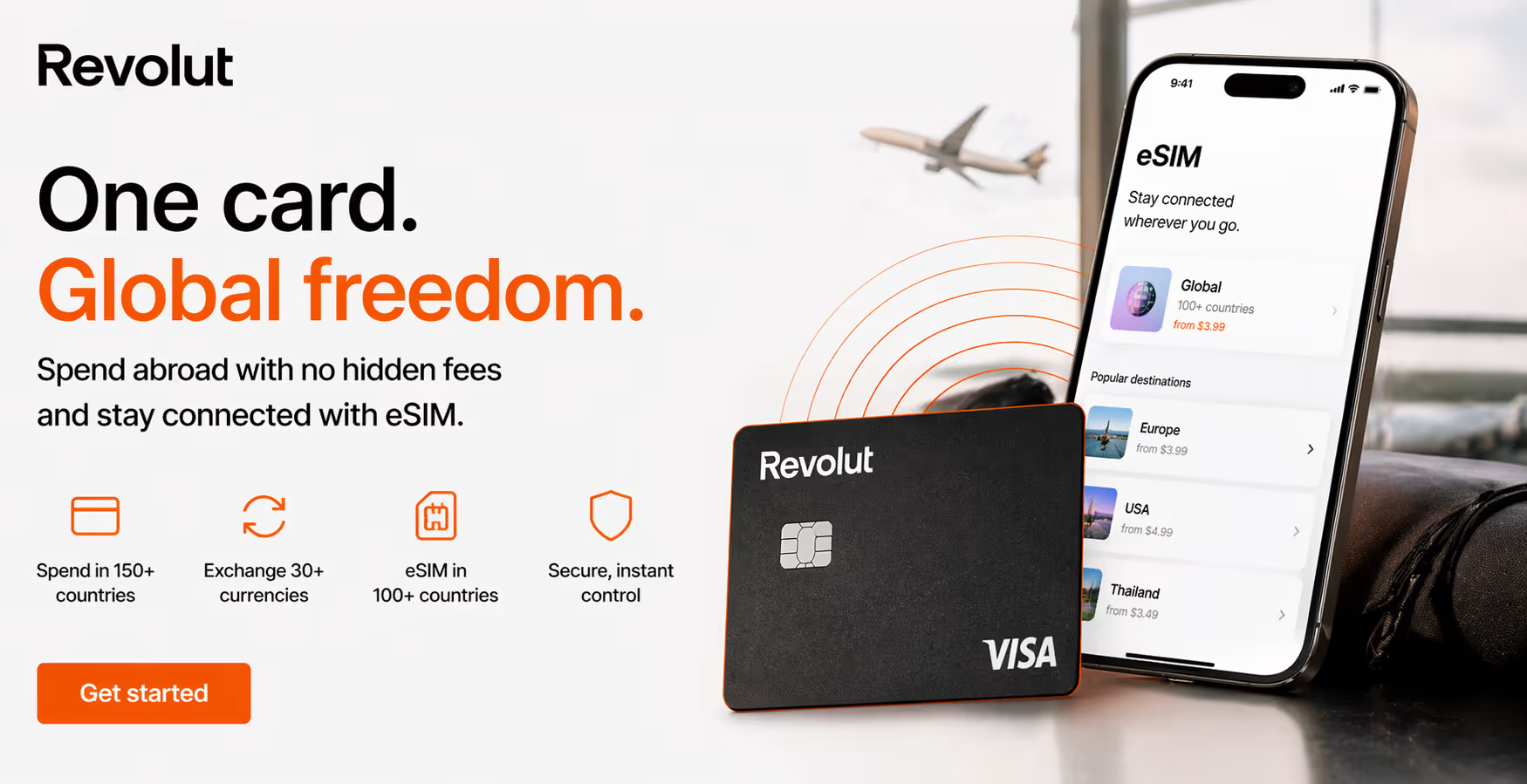
ING is not moving in a vacuum. Revolut has been turning financial services into lifestyle tiers for years, and the Netherlands is a useful comparison. Revolut’s Dutch plans already connect financial services with travel insurance, lounge access, subscriptions and eSIM data. Its Premium plan includes 1 GB of global data, while higher tiers can include more monthly global data.
That makes the ING move especially interesting. Traditional banks are no longer just defending against fintechs on app design or card fees. They are adopting the subscription logic that made fintechs feel more modern.
READ MORE: eSIM for Banks: Control the Experience or Lose It
The difference is trust and scale. Revolut feels faster, more flexible and more travel-native. ING has the advantage of an established banking relationship and a large mainstream customer base. For many customers, that may be enough. They want a familiar bank that packages useful extras clearly.
Still, the model will not suit everyone. A light banking user who rarely travels may not need airport lounges, eSIM data or bundled protection. For that customer, a simple low-cost account can still be smarter. The risk with subscription banking is the same as with streaming: people pay for perks they like the sound of but rarely use.
ING eSIM – The real shift
ING’s new subscriptions are not just about banking packages. They show how financial services are absorbing travel convenience, digital protection, loyalty and connectivity into one paid relationship.
For Alertify readers, the eSIM angle is the real signal. Connectivity is no longer sitting outside the travel journey. It is being pulled into banks, fintechs and lifestyle platforms because staying connected has become part of modern mobility.
Revolut helped normalize this model for digital-first customers. ING now brings it closer to the mainstream banking audience. That does not mean standalone eSIM providers lose relevance. They need to decide where they want to play: as consumer brands, infrastructure partners, embedded benefits or all three.
The winners will not be the companies that add “free data” to a list of perks. The winners will be the ones who make connectivity feel invisible, useful and properly timed. When a traveler lands abroad, they are thinking: can I open maps, message my driver and get on with the trip?