How Does Airalo Work? eSIM Setup Explained
Most travelers discover Airalo at the same moment: they are planning a trip, checking roaming prices, and suddenly realize their mobile operator still treats international data as a luxury.
Airalo’s proposition is simple. Instead of buying a physical SIM card at the airport or paying your home carrier’s roaming rates, you buy a prepaid eSIM for the country, region, or global route you need, install it on your phone, and connect when you arrive. Airalo says it offers eSIM packages for 200+ countries and regions, including local, regional, and global options. Some packages are data-only, while others may include calls and texts, depending on the destination and plan.
That simplicity is the reason Airalo became one of the best-known names in travel eSIMs. It turned connectivity into something that feels closer to booking a train ticket than dealing with a telecom contract.
The basic process
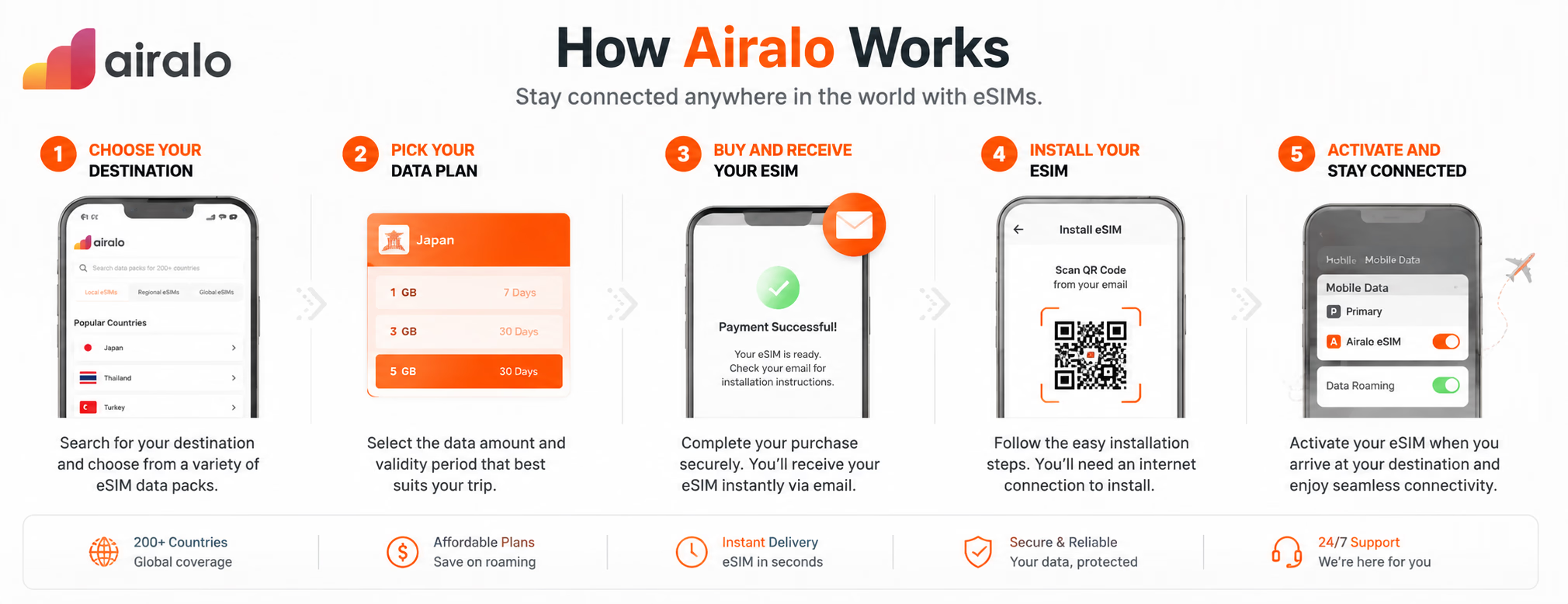
Airalo works through three steps: choose a destination, select a package, and install the eSIM.
The traveler starts by searching for a country, region, or global plan. A weekend in Japan, a business trip across Europe, a backpacking route through Southeast Asia, or a multi-country itinerary can all lead to different plan types. The package usually defines three things: destination coverage, data allowance, and validity period.
After purchase, the user installs the eSIM on a compatible unlocked phone. This part matters. The phone must support eSIM, and it must not be locked to a single carrier. Airalo’s own installation guidance also stresses that installation requires an internet connection, usually Wi-Fi, before travel or before activating the plan abroad.
Once installed, the eSIM profile sits on the device. When the traveler reaches the destination, they turn on the Airalo eSIM line, enable mobile data for that line, and activate data roaming if required by the plan instructions. From there, the phone connects to a local partner network.
In plain English: Airalo is not magic. It is a prepaid mobile data profile delivered digitally. The clever part is removing the airport counter, the plastic SIM, and the awkward “which plan do I need?” conversation in another language.
What happens behind the screen
Airalo does not usually operate like your home mobile operator. It aggregates access to mobile networks through partnerships and wholesale arrangements, then packages that access into consumer-friendly travel plans.
That is why two things can be true at the same time. You may be using a strong local network in the destination. However, your plan experience may still differ from a local SIM or another travel eSIM provider in the same country. Routing, network priority, roaming agreements, latency, fair usage rules, and support all shape the final experience.
READ MORE: Airalo Promo Codes: How to Save on Travel eSIMs
This is where travelers sometimes misunderstand eSIMs. Seeing “4G” or “5G” on the phone does not tell the whole story. Speed depends on the local network, but also on how the provider routes traffic and what commercial agreement sits behind that plan.
Airalo is strong because it makes the buying process easy. But easy buying does not automatically mean every plan is the fastest or best-value option in every country. That is true for the whole travel eSIM market, not just Airalo.
Why travelers like it
The appeal is obvious. You can buy before departure, install at home, land with connectivity, and avoid hunting for a SIM card after a long flight. Apple also highlights some practical eSIM travel advantages: no physical SIM to swap or lose, the ability to keep a home number and travel eSIM active on supported iPhones, and better security because an eSIM cannot simply be removed from a lost phone.
For many people, Airalo works best as a low-friction travel data solution. City breaks, short holidays, remote work trips, conferences, and multi-country itineraries are natural use cases. The app model also helps because users can track usage and, in many cases, buy top-ups when they run low. Airalo’s own explanation says the app allows users to monitor data and purchase top-up packages where available.
There is also a psychological benefit. Travelers do not want to become telecom analysts before every trip. Airalo gives them a familiar app, visible prices, prepaid control, and enough choice without needing to understand roaming architecture.
What to check before buying
The first check is device compatibility. Not every phone supports eSIM, and some phones are sold without eSIM support in specific markets. The second check is whether the device is unlocked. A locked phone can block third-party eSIM use, even if the device technically supports eSIM.
The third check is the plan detail. Look at the validity period, data amount, countries included, whether calls or texts are included, and when the validity starts. Some plans activate when installed, others when they connect to a supported network. This small detail can matter if you are buying several days before departure.
READ MORE: Airalo App: What Travelers Should Know Before Buying
Also, check whether the plan is truly suitable for your usage. A 1 GB plan can be fine for maps, messaging, and light browsing. It is not fine for TikTok, hotspot use, cloud backups, video calls, and uploading event content all day. Business travelers should be especially careful here. Running out of data between a hotel, taxi, and client meeting is exactly the kind of “small” problem that becomes very annoying very fast.
|
New users
Try Airalo eSIMUse the discount code NEWTOAIRALO15 and get |
Existing users
Already have Airalo?Use the discount code AIRALOESIM10 and get 10% off your next Airalo eSIM purchase. |
Where Airalo fits in the market
Airalo sits in the convenience-first part of the travel eSIM market. Its biggest strengths are brand awareness, broad coverage, app usability, and simple prepaid buying. That makes it an easy recommendation for mainstream travelers who want data abroad without roaming drama.
But the market is no longer just Airalo. Holafly has leaned heavily into unlimited-style travel plans. Ubigi benefits from Transatel’s telecom background and is often strong in markets where network experience matters. Nomad, aloSIM, Saily, Orange Travel, Yesim, GigSky, and others all compete around different mixes of pricing, coverage, unlimited data, regional plans, app experience, and support.
This is also why the category is becoming more serious. GSMA Intelligence has pointed to travel eSIM as a clear consumer use case, while also noting that mobile operators face pressure because low-cost travel eSIMs challenge traditional roaming revenues. The broader eSIM shift is moving from early adoption into mainstream smartphone behavior, with GSMA reporting that global eSIM smartphone penetration is expected to continue rising in 2026.
In other words, Airalo did not just sell cheaper data. It helped teach travelers that connectivity abroad could be unbundled from their home operator.
Final thoughts
Airalo works because it solves the most irritating part of travel connectivity: uncertainty. You know the price before you fly, you avoid the SIM counter, and you can arrive with mobile data already planned.
But the smarter way to look at Airalo is not “best or not best.” It is “the right tool for the right trip.” For a normal traveler who wants quick, prepaid data in a familiar app, Airalo is one of the most practical choices on the market. For heavy users, business teams, remote workers, or people who need voice, hotspot reliability, lower latency, or more transparent unlimited terms, comparison still matters.
That is where the travel eSIM market is heading. The first wave was about replacing roaming. The next wave is about matching connectivity to behavior. Airalo helped make travel eSIMs mainstream. Now the real competition is about who gives travelers not just access, but the right kind of access for the way they actually move.