Airalo App: What Travelers Should Know Before Buying
Airalo is not the newest name in travel eSIMs anymore. That is exactly why the app is interesting.
For years, buying mobile data abroad felt like a small administrative punishment. You landed, looked for airport Wi-Fi, compared roaming prices you did not fully trust, then either bought a local SIM or accepted your operator’s painful daily roaming pass. Airalo helped change that habit by turning travel connectivity into something people could buy before departure, directly from an app, in the same casual way they book a ride or reserve a hotel room.
The Airalo app now sits in a more crowded market than it once did, but it still has one big advantage: familiarity. It is one of the few eSIM brands that many mainstream travelers recognize before they start comparing plans. Airalo says it offers eSIMs for more than 200 destinations, including local, regional, and global packages, with some plans including unlimited data or calls and texts depending on the package.
That matters because the eSIM market is no longer only for tech-savvy frequent flyers. It is moving into the everyday travel layer.
What Airalo gets right
The strongest thing about the Airalo app is not one magic feature. It is the way the buying flow makes eSIMs less intimidating.
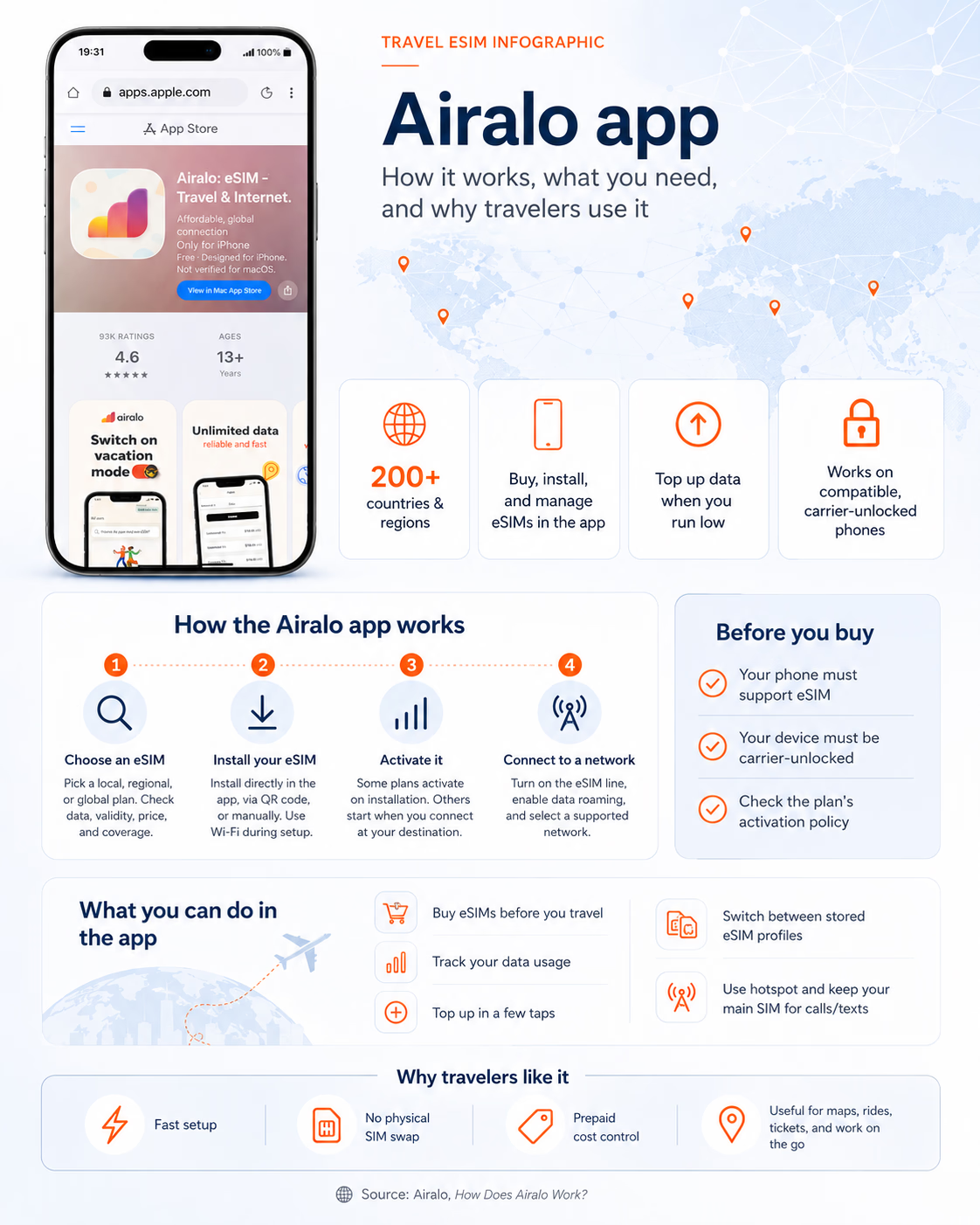
You choose a destination, pick a package, install the eSIM, and connect when ready. Airalo’s own guide explains the process in those simple steps: choose coverage, select a package, install, then activate when needed. Installation still requires internet access, which is worth remembering before you leave home or before you are standing in a hotel lobby with weak Wi-Fi.
READ MORE: Travel eSIM Gets Smarter as Airalo Integrates Thales Tech
The app is especially useful for travelers who know where they are going and roughly how much data they need. A weekend in Istanbul, a week in Japan, two weeks across Europe, a multi-country business trip through Asia, these are classic Airalo use cases. You do not need to understand IMSI routing, roaming agreements, or wholesale telecom economics. You just need to know: “Will this work where I am going, and how much data do I get?”
That clarity is why Airalo became a gateway brand for travel eSIM adoption. It made the category less nerdy.
Another smart detail is the structure of its marketplace. Local, regional, and global eSIMs give travelers different entry points. A city-break traveler can buy a country. A backpacker can choose a region. A frequent traveler can look at global options. That sounds obvious now, but it is the kind of product architecture that trained users to think about connectivity before the trip, not after landing.
 Where travelers still need to pay attention
Airalo is simple, but eSIMs are not always simple.
The first thing to check is whether your phone supports eSIM and whether it is carrier-unlocked. That is not an Airalo-specific issue, but it is still one of the most common reasons people struggle with travel eSIMs. The second is whether the plan is data-only or includes calls and texts. Many travel eSIMs are data-only, which is fine if you live on WhatsApp, Telegram, Google Maps, email, and ride-hailing apps. It is less ideal if you need a local number for restaurant bookings, bank verification, or delivery apps.
READ MORE: Airalo x Cathay: Earn Asia Miles with eSIM
The third issue is speed and network behavior. Two eSIMs can show the same destination and still perform differently because of routing, partner networks, throttling policies, latency, and whether traffic breaks out locally or far away. This is where the glossy app experience meets the hidden telecom layer.
Airalo is good for convenience and coverage breadth. But users should still read the plan details, validity period, activation rules, supported networks, and whether top-up is available. The app removes friction, not responsibility.
The bigger market signal
Airalo’s scale shows how quickly travel eSIMs have moved from niche to mainstream. In April 2025, the company said it had reached 20 million users. In July 2025, CVC announced a $220 million investment round valuing Airalo at more than $1 billion, calling it the first eSIM unicorn.
That is not just a funding story. It tells us investors see travel eSIMs as more than a holiday add-on. Connectivity is becoming part of the travel purchase funnel. Booking platforms, airlines, fintech apps, loyalty programs, and even hotels are all looking at the same question: why let someone else own the traveler’s first digital need abroad?
READ MORE: New Airalo eSIM packages just dropped
GSMA Intelligence has also pointed to a rapid change in consumer eSIM, including mobile operators launching travel eSIM offers and increased investor funding in 2025. GSMA’s 2026 eSIM analysis also notes that global eSIM smartphone penetration was around 5% at the end of 2025 and is expected to reach 10% by the end of 2026.
That means Airalo is not just competing with other eSIM apps. It is competing with telecom operators, embedded travel platforms, banks, super apps, airline add-ons, and eventually phone manufacturers’ own connectivity journeys.
How it compares
Against Holafly, Airalo often feels more flexible for travelers who want defined data packages rather than paying for unlimited-style convenience. Holafly is strong for users who do not want to count gigabytes, especially on longer or heavier-use trips, but that simplicity can come at a premium.
Compared with Nomad or Jetpac, Airalo benefits from stronger brand recognition and a very broad marketplace feel. Nomad can be aggressive on pricing in some destinations, while Jetpac has pushed hard on ease of use and travel perks. Saily, backed by the Nord Security ecosystem, brings a privacy and digital-safety angle that may appeal to travelers who already think about VPNs, identity protection, and safer browsing.
READ MORE: Airalo eSIM Integration on Xiaomi Phones Redefines Travel Connectivity
Ubigi is a different type of competitor. It has a deeper telecom heritage through Transatel and is strong in areas where network-level capability matters, including connected vehicles and specific device ecosystems. Orange Travel eSIM and other operator-backed offers bring the credibility of a traditional telco, but often with less of the nimble app-first marketplace feeling that made Airalo popular.
So the real comparison is not “which app is best?” It is “which model fits the traveler?” Airalo is strongest when the user wants broad destination choice, a familiar interface, fast purchase, and predictable prepaid data. It is less differentiated when everyone else offers similar-looking destination cards, similar prices, and similar installation flows.
Conclusion about the Airalo app
Airalo’s app is important because it made travel eSIMs feel ordinary. That is a bigger achievement than it sounds.
But the next phase of the market will not be won by having “an app with 200 countries.” That is becoming table stakes. The winners will be the brands that explain network quality better, make throttling clearer, handle refunds and support faster, and build trust around what actually happens after the traveler lands.
Airalo enters that phase with scale, recognition, and serious funding behind it. That gives it a strong position. But the category is getting sharper. Holafly owns the easy unlimited story. Saily is trying to connect eSIMs with digital security. Ubigi has infrastructure depth. Operators are waking up. Travel platforms want a distribution margin.
For travelers, the Airalo app remains one of the safest mainstream starting points. For the industry, it is a reminder that eSIMs are no longer just a telecom product. They are becoming part of the travel experience itself, and the app is now the storefront where that battle is being fought. Get the Airalo discount code here.