AI Meets eSIM: Manage Plans Directly in Claude
There’s a quiet yet important shift in how mobile connectivity is managed. eSlM Copilot has just integrated with Claude via Model Context Protocol, and it changes something fundamental: eSIMs are no longer something you “manage” through dashboards. You talk. esim management ai
That might sound like a small UX improvement. It isn’t. It’s a shift from telecom as a product to telecom as an interface layer inside AI.
From dashboards to dialogue
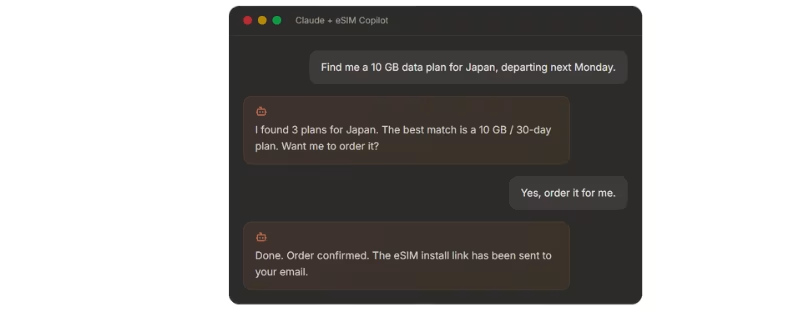
The core idea is simple. Instead of logging into a platform, navigating menus, comparing plans, and completing a checkout flow, you just say:
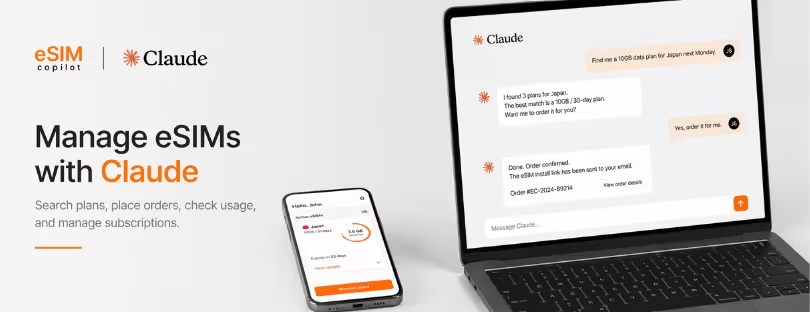
“Find me a 10 GB data plan for Japan, departing next Monday.”
Claude responds:
“I found 3 plans for Japan. The best match is a 10 GB / 30-day plan. Want me to order it?”
“Yes, order it for me.”
“Done. Order confirmed. The eSIM install link has been sent to your email.”
That entire flow replaces what used to be five to ten minutes of manual steps. No portal, no UI friction, no switching tabs.
And it goes further than simple plan purchases.
What the integration actually unlocks
At a practical level, this integration turns Claude into a full eSIM operations layer.
You can search, compare, and buy plans conversationally. But more interestingly, you can also manage entire teams, analyze spend, and automate workflows.
Some of the capabilities are genuinely useful:
- Conversational plan search by country, data size, and duration
- Order placement and delivery in a single interaction
- Real-time usage monitoring across users and devices
- Subscription management, including renewals, cancellations, and upgrades
- Account-level visibility into active eSIMs and users
Then it starts getting more enterprise-focused.
You can upload invoices from your current provider and instantly see potential savings or identify unused plans. You can bulk onboard an entire department in one go. You can even set up real-time webhook alerts for network events or spend thresholds.
And yes, you can troubleshoot connectivity issues without opening a support ticket.
That last one alone tells you where this is going.
MCP is the real story here
The integration itself is powered by MCP, which is quietly becoming one of the more important standards in AI tooling.
Instead of building custom APIs or integrations for every platform, MCP allows AI systems like Claude to connect to external tools in a structured way. You add a connector, approve access, and suddenly the AI can take actions on your behalf.
No API keys. No development work. No integration overhead.
You just paste a URL, authorize it, and start talking.
That simplicity matters, especially for non-technical teams. Travel managers, finance teams, and HR departments don’t want another tool. They want fewer tools.
This is how that happens.
How teams are actually using it
The use cases are where this starts to feel real.
A travel coordinator can say:
“Book eSIMs for the team’s Tokyo trip next week.”
Claude handles the rest. It selects plans, creates orders, and distributes installation links.
Finance can ask:
“How much have we spent on eSIMs for the US this month?”
IT can check:
“Which eSIMs are expiring in the next 7 days?”
And an employee can simply say:
“I need data for my trip to Berlin tomorrow.”
No forms. No approvals buried in systems. Just intent translated into action.
What’s more interesting is how this connects with other tools. Because Claude already integrates with finance systems, HR platforms, and internal data, mobile connectivity is no longer isolated.
You can ask things like:
- “Who’s roaming this month and why?”
- “Which plans haven’t been used in 30 days?”
- “Cancel the plans no one is using.”
That kind of cross-functional visibility used to take spreadsheets and manual reconciliation. Now it’s one prompt.

The bigger shift: telecom becomes programmable
This is where things get more strategic.
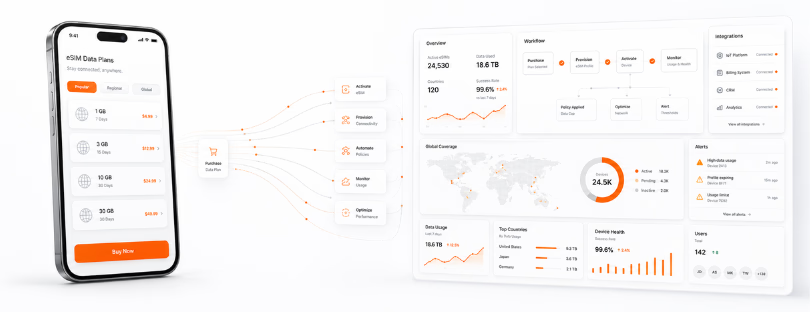
You’re not just managing eSIMs. You’re starting to treat connectivity like infrastructure that can be automated, analyzed, and embedded into workflows.
You can even go a step further and build on top of it. A CFO dashboard that tracks savings. A branded employee portal that hides the underlying eSIM complexity. An onboarding flow where a new hire gets connectivity the moment they’re added in HR.
This is telecom becoming programmable.
And it aligns with a broader trend we’re seeing across the industry. Connectivity is moving away from standalone apps and into platforms, APIs, and now AI layers.
Where this sits in the market
Let’s be clear. eSIM Copilot isn’t the only player pushing automation.
Platforms like 1GLOBAL, Gigs, and eSIM Go are all working toward making connectivity more programmable and embedded.
But most of them still operate at the API or infrastructure level.
What’s different here is the interface.
This is one of the first real examples of eSIM management being pulled directly into an AI assistant, not just exposed via API.
And that matters because user behavior is shifting fast. People are getting used to asking instead of clicking.
Conclusion
If you zoom out, this isn’t really about Claude or eSIM Copilot. It’s about where the control layer of telecom is moving.
For years, the battle was about coverage, pricing, and distribution. Then it shifted to APIs and embedded connectivity. Now it’s shifting again to AI interfaces.
The question is no longer “Which eSIM provider do you use?”
It’s “Where does connectivity live in your workflow?”
Right now, most providers still think in terms of apps and dashboards. A few are thinking in APIs. And now a smaller group is starting to think in conversations.
That’s the direction.
Because once connectivity becomes something you can query, automate, and act on through AI, it stops being a product you manage and becomes a system that works in the background.
And in telecom, that’s where the real value usually ends up.