eSIM Go Investment Signals B2B eSIM Shift
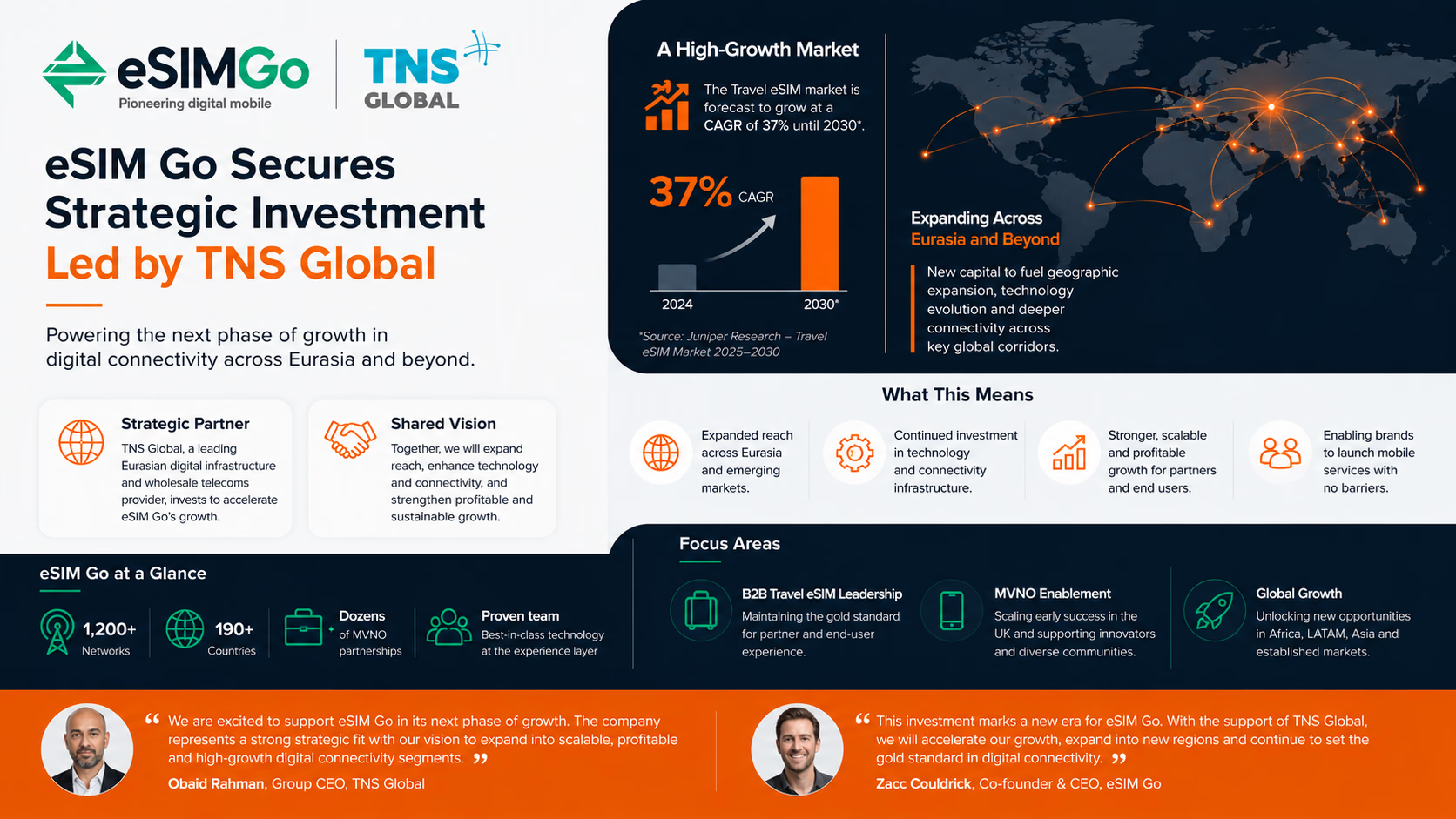
eSIM Go has secured strategic investment led by TNS Global, a Eurasian digital infrastructure and wholesale telecommunications provider, in a move that says a lot about where the travel eSIM market is heading next.
On the surface, this is a funding story. A successful B2B travel eSIM enabler gets new capital, a new strategic backer, and fresh support for geographic expansion into Eurasia and beyond. But the more interesting reading is slightly different: eSIM Go is not just raising money to sell more travel data bundles. It is positioning itself for a market where the lines between travel eSIM, MVNO enablement, wholesale telecoms, and embedded connectivity are starting to blur.
That matters because the travel eSIM category is no longer a small consumer convenience niche. Juniper Research previously projected travel eSIM users to grow from 40 million in 2024 to more than 215 million by 2028, and its newer travel SIMs and eSIMs research continues to frame the sector as one of the more aggressive growth areas in connectivity.
Why TNS Global matters
TNS Global is expected to support eSIM Go’s expansion across Eurasia and other regions, while also backing further development of the company’s technology and connectivity stack. The stated ambition is not speculative growth at any cost, but stronger, profitable growth, which is an important detail in a market where customer acquisition can get expensive very quickly.
Obaid Rahman, Group CEO at TNS Global, said:
“We are excited to support eSIM Go in its next phase of growth. The company represents a strong strategic fit with our vision to expand into scalable, profitable and high-growth digital connectivity segments, complementing our core digital infrastructure footprint.”
That phrase, “digital infrastructure footprint,” is doing a lot of work here. Travel eSIM is often presented to consumers as a simple app experience: buy, install, activate, travel. Behind that, however, sits wholesale access, routing, partner APIs, local market reach, compliance, support, and increasingly, MVNO-style service models.
READ MORE: Telna places a $100 million bet on the future of travel eSIMs
This is where eSIM Go’s next phase becomes more interesting. The company says the investment will also support opportunities in the MVNO space, starting with the UK market, where it is enabling brands to launch consumer mobile services with very low barriers to entry.

From travel eSIM to MVNO enablement
eSIM Go launched in 2020 and has grown into one of the more visible B2B travel eSIM enablers. Its model is built around helping partners launch digital connectivity products through API integration, co-branded services, or affiliate routes. The company says its ecosystem gives partners access to high-quality eSIM data bundles across more than 1,200 networks in 190+ countries.
The UK MVNO angle is particularly worth watching. According to eSIM Go, its UK MVNO launch in partnership with Vodafone Three in the second half of 2025 has already led to dozens of commercial partnerships, including Loopdl, SecondSIM, Faith Mobile and Symu. The company sees the market fragmenting as technical and commercial barriers fall.
“Our focus is profitable and cash-generative growth, scaling early success in the UK MVNO market, and consolidating our market leadership in the eSIM enabler space,” said Zacc Couldrick, co-founder and CEO at eSIM Go. “This investment marks a new era for eSIM Go, as we mature the company upon the solid foundations of a resilient team and best-in-class technology at the experience layer.”
He added:
“We seek to maintain and strengthen our position as the gold standard in Travel eSIM for partner and end-user experience. The core eSIM Go management team remains in place, the timing is perfect for welcoming such vastly experienced investors from the MVNO and wholesale space to open more doors and bring strategic, operational, regional and commercial advantages.”
The funding wave is not accidental
The broader eSIM funding landscape makes this move feel less isolated. Airalo raised a $220 million Series C led by CVC in 2025, reaching a valuation of more than $1 billion and becoming the travel eSIM category’s first unicorn.
Telna has launched a $100 million growth fund focused on digital-first eSIM brands, MVNOs, regional connectivity platforms, and Super App enablement partners. That is a strong signal that infrastructure players do not see eSIM as a side product anymore. They see it as a distribution layer for the next generation of mobile services.
READ MORE: Kolet Secures $10M Series A with Backing from Former Expedia and Apple Executives
Kigen, meanwhile, secured strategic investment from Japan’s SBI Group, alongside existing backers Arm and SoftBank Vision Fund 2, to push secure eSIM and iSIM technology deeper into industrial IoT. Kolet raised $10 million in Series A funding, while Truely secured fresh early-stage funding to expand its travel eSIM platform.
Roamless is another useful signal. Its $12 million Series A, led by Rasmal Ventures, was framed around building a broader global mobile service rather than just another destination-by-destination travel eSIM shop. The company has been pushing a persistent global eSIM model, with a single balance and coverage across 200+ destinations.
What this really means
The eSIM market is moving into a more serious phase. The first wave was about convenience: avoid roaming, skip airport SIM counters, and install a plan before landing. The next wave is about control of infrastructure, distribution, and customer ownership.
That is why eSIM Go’s investment matters. It is not trying to become the loudest consumer brand. It is strengthening the layer that lets other brands become mobile players. Airlines, fintechs, migrant-focused services, travel platforms, loyalty apps, regional MVNOs and digital communities all want connectivity without building a telecom operation from scratch.
READ MORE: Roamless – Global Travel Connectivity Startup – Raises $12M to Fix Broken Roaming
This is also where the market will separate. Basic resellers can still compete on price, but the real value is moving toward players that can provide reliable APIs, strong network access, clean partner tools, local market flexibility, analytics, and a credible path from travel eSIM into broader mobile services.
Conclusion
eSIM Go’s TNS Global investment is another sign that the eSIM industry is maturing from “cheap travel data” into embedded telecom infrastructure.
Airalo has shown the scale of the consumer opportunity. Telna is turning enablement into an investment thesis. Kigen is pushing eSIM and iSIM deeper into industrial devices. Roamless, Truely and Kolet are experimenting with new consumer models, from persistent global connectivity to B2B2C partnerships. eSIM Go sits in a slightly different but increasingly valuable position: the engine room behind brands that want to launch connectivity without becoming traditional operators.
For the industry, the message is simple. The winners will not only be the companies with the nicest app or the cheapest 5GB plan. The winners will be the players who understand distribution, infrastructure, wholesale economics, and partner experience. eSIM Go’s new backing suggests it wants to be one of them.