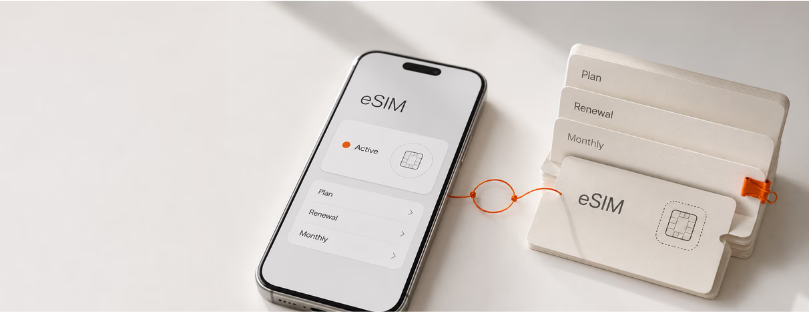
Andorra Telecom’s eSIM Hits 5,000 Users in Just 6 Weeks
When a small market launches a new connectivity product and sees thousands of users onboard within weeks, it is usually a sign that something is working. That is exactly what is happening with Andorra Telecom and its visitor-focused mobile offer, eSIM Andorra.
Just six weeks after launch in late November 2025, more than 5,000 travelers have already chosen the service. For a country with around 80,000 residents and a tourism-driven economy, that number matters. More importantly, it tells a bigger story about how travelers now expect mobile connectivity to work.
This is not a flashy global eSIM brand chasing scale. It is a national operator designing a digital product specifically for visitors who want to stay connected, avoid roaming shocks, and skip SIM card counters entirely.
What the early numbers really tell us
The headline figure of 5,000 users is impressive on its own, but the usage patterns behind it are even more revealing.
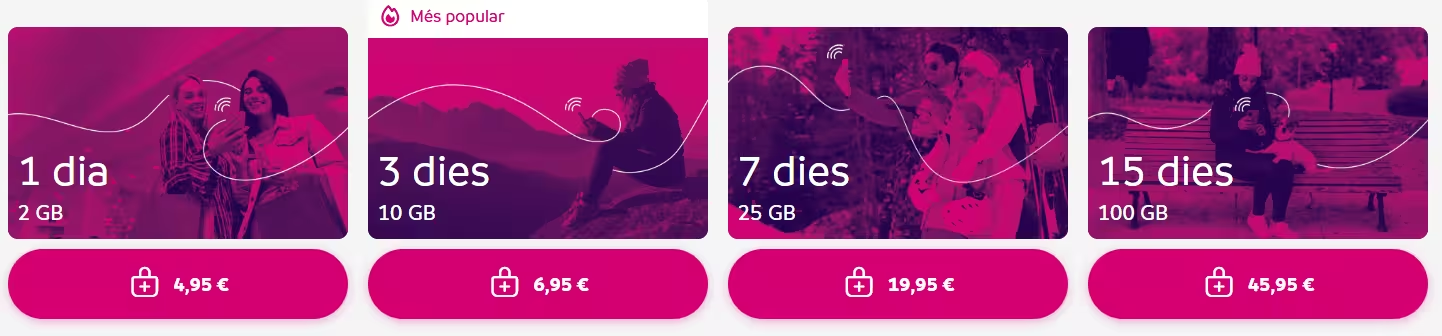
The most popular plan is the 3-day option, followed closely by the 7-day plan. That lines up almost perfectly with Andorra’s tourism profile. Short ski breaks, weekend shopping trips, and compact leisure stays dominate inbound travel. The product was clearly designed with this reality in mind.
Another important signal is timing. A large share of users are purchasing their eSIM before arriving in Andorra. This is a critical behavior shift. Travelers are no longer waiting until they land to think about connectivity. They want it sorted before boarding the plane or crossing the border.
From a product perspective, that is exactly where an official destination eSIM should live. It becomes part of trip planning, not a last-minute fix.
eSIM adoption is no longer a niche behavior
One of the strongest data points from the launch period is the format split. Around 85 percent of users choose eSIM, while only 15 percent still opt for a physical SIM card.
For years, eSIM adoption has been framed as something “still growing” or “not quite mainstream.” In Andorra’s case, that debate is already over. The majority of visitors clearly have compatible devices and feel confident activating digital connectivity on their own.
This mirrors broader industry data from GSMA and major device manufacturers, which shows that most smartphones sold in Europe over the last four years support eSIM. What Andorra Telecom’s results confirm is that traveler readiness has caught up with device capability.

Why the local-operator model matters
There is another layer here that deserves attention. eSIM Andorra is not coming from a global reseller or marketplace. It is being offered directly by the country’s national telecom operator.
That has real implications for network quality, transparency, and trust. Visitors are connecting to the same infrastructure used by residents, not a roaming workaround or a repackaged international profile.
Xavier Agulló, Head of Marketing and Sales at Andorra Telecom, summed it up clearly when he explained that travelers want to arrive connected without complications. The instant purchase and activation model removes friction at exactly the moment travelers are least patient.
In practical terms, this means:
- Direct access to the local network
- No retail queues or SIM swaps
- Predictable pricing without roaming surprises
- Activation that works before arrival
These are the same benefits global eSIM brands promote, but here they come directly from the source.
How does this compare to global eSIM players?
Globally, brands like Airalo, Holafly, and Nomad have built massive awareness around travel eSIMs. They offer coverage across dozens or hundreds of countries and appeal to frequent international travelers.
Andorra Telecom is playing a different game. It is not trying to be everywhere. It is trying to be perfect for one destination.
That focus brings advantages. Pricing can be optimized for local conditions. Network performance is easier to guarantee. Customer support is aligned with the destination itself. For travelers visiting a single country, especially a small one, this approach often makes more sense than buying a regional or global plan.
We are already seeing similar moves elsewhere. Operators in countries like Iceland, Singapore, and Japan have experimented with tourist eSIMs, often with strong early uptake. What sets Andorra apart is how quickly adoption has skewed toward digital.

A quiet signal for tourism boards and destinations
This launch also carries a message for tourism boards and destination marketers. Connectivity is no longer a background utility. It is part of the visitor experience.
When travelers arrive connected, everything works better. Maps load instantly. Booking confirmations are accessible. Ride-hailing, messaging, and payments function without friction. That reduces stress and increases satisfaction.
By offering an official, easy-to-understand eSIM, Andorra Telecom is indirectly improving how visitors experience the country. That is a powerful but often overlooked lever in tourism strategy.
Why timing worked in Andorra’s favor
Launching in late November was not accidental. Winter is peak season in Andorra, driven by ski tourism and short-stay visitors from neighboring countries.
Releasing a digital-first connectivity product just ahead of that demand spike created a natural test environment. High traveler volumes, short stays, and frequent border crossings are exactly where roaming pain points show up.
The early traction suggests the product is not just appealing, but well timed.
What this says about the future of travel connectivity
Zooming out, eSIM Andorra fits neatly into a broader trend. Travel connectivity is becoming:
- More pre-planned
- More destination-specific
- More digital-first
- Less dependent on physical retail
Industry reports from GSMA Intelligence and analysis from companies like Ookla consistently show rising expectations around instant connectivity and network quality. Travelers are no longer impressed by the idea of eSIM itself. They simply expect it to work.
National operators that adapt quickly, especially in tourism-heavy markets, are well-positioned to compete not just with roaming but with global eSIM aggregators.
Conclusion: a small market with a clear signal
The early success of eSIM Andorra is not just a local win for Andorra Telecom. It is a clean example of how travel connectivity is evolving.
In a market often dominated by global players chasing scale, Andorra shows that focus, local infrastructure, and good timing can deliver strong results. Visitors are voting with their phones, choosing digital access, buying before arrival, and prioritizing simplicity over everything else.
If similar operators across Europe and beyond are paying attention, they will see the lesson clearly. The future of travel connectivity is not only global. In many cases, it is local, digital, and designed for how people actually travel today.