Strava x Virgin Atlantic: Run Miles, Earn Flights
There’s a new kind of travel reward emerging, and it’s not tied to how often you fly. Virgin Atlantic is betting that your daily run might be just as valuable as your boarding pass.
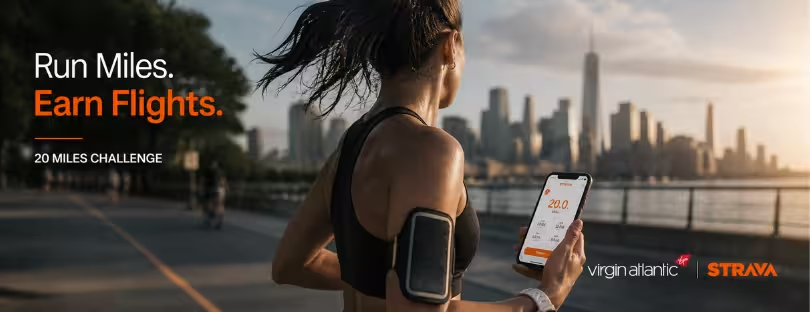
Starting May 6, the airline is launching the Virgin Atlantic Passport Challenge on Strava, turning physical activity into a shot at premium travel rewards. The headline incentive is hard to ignore: log miles, earn entries, and potentially win 1 million Virgin Points.
Those points are not just symbolic. They unlock flights between the US and UK, hotel stays, and even cruises across the broader Virgin Red network. It is a loyalty play, but not in the traditional sense.
How the Challenge Works
The mechanics are simple but cleverly layered. The challenge is open to Strava users in New York City and Los Angeles, where participants track their runs and engage with curated segments across both cities.
Points convert into entries, so performance directly impacts your chances of winning. The structure looks like this:
- Complete the base 20-mile challenge: 5 points
- Add more mileage: +1 point per extra 5 miles
- Complete Strava segments: +1 point per segment (up to 30 daily)
- Hit two segments in one day: +5 bonus points
- Complete all four segments: +10 one-time bonus
It is gamified, but not randomly so. The system rewards consistency, volume, and engagement with specific locations. In other words, it nudges users deeper into the Strava ecosystem while anchoring Virgin Atlantic into that daily habit.
Why This Actually Matters
On the surface, this looks like a marketing activation. In reality, it is a signal of where airline loyalty is heading.
Traditional frequent flyer programs reward distance flown. But the modern traveler is increasingly defined by lifestyle rather than travel frequency. Wellness, routine, and flexibility have become part of the travel identity, especially among digital nomads and business travelers.
This is exactly where Virgin Atlantic is positioning itself.
Juha Jaervinen, Chief Customer Officer, Virgin Atlantic, commented:
“Wellbeing is an important part of the Virgin Atlantic customer journey, from our new LAX and revamped London Heathrow Clubhouses designed with wellness in mind, and in flight at every touchpoint. Partnering with Strava allows us to tap into something our customers already love – moving, exploring, and making the most of their travel experience – and rewarding it in a way that feels genuinely exciting. It’s a fun, innovative take on wellness and travel, helping our customers go further, both on the ground and at 30,000 feet.”
The key line here is not “wellbeing.” It is “something our customers already love.” That is the shift. Loyalty is moving from transaction-based to behavior-based.

Beyond the App
Virgin Atlantic is not keeping this purely digital. On May 28, the airline is hosting a live run in New York City, starting from Virgin Hotels New York.
The event is led by Laura Watts, Flight Service Manager and ultra-marathon runner, blending brand storytelling with real-world engagement.
“Running has taken me all over the world, and it’s become one of the most meaningful ways I experience new places,” said Watts. “This partnership really reflects how people travel today – finding ways to stay consistent with their routines while making the most of where those miles can take them. I’m so excited to bring that energy to our upcoming run in New York City and to the Strava community through this challenge. Whether you’re chasing a new goal or just getting started, it’s about showing up, putting in the minutes, and enjoying the journey.”
Participants get more than miles. There are recovery stations, wellness treatments, and a curated post-run experience. It is effectively a physical extension of the airline’s brand promise.
The Bigger Strategy
This campaign fits neatly into a broader repositioning of airline experiences.
Virgin Atlantic has been leaning heavily into wellness, from its LAX Clubhouse to refreshed spaces at London Heathrow. Meditation zones, guided sessions, spa partnerships. These are not random upgrades. They are part of a narrative: travel should feel better, not just faster.
At the same time, the airline is embedding itself into a wider ecosystem. Through Virgin Red, points are no longer confined to flights. They move across hotels, cruises, and lifestyle services.
That creates something more powerful than a loyalty program. It becomes a lifestyle loop.

Where This Sits in the Market?
Virgin Atlantic is not alone in trying to rethink loyalty, but its approach stands out.
Delta Air Lines has expanded partnerships across credit cards and retail. Emirates focuses on premium onboard experiences and status-driven rewards. Meanwhile, platforms like Airbnb have experimented with experiential loyalty through stays and activities.
What Virgin Atlantic is doing is different. It is tapping into pre-travel behavior, not just travel itself.
READ MORE: Westin Hotels & Resorts Teams Up With Strava To Motivate Fitness Enthusiasts of All Levels To Go the Extra Mile
There is also a data angle here. By integrating with Strava, the airline gains insight into user habits, movement patterns, and engagement frequency. That kind of behavioral data is significantly more valuable than transactional flight data alone.
According to broader industry reporting from sources like IATA, airlines are increasingly under pressure to diversify revenue streams beyond ticket sales. Loyalty programs already contribute billions in value, but they need to evolve to remain relevant.
This is one way to do it.
The Quiet Opportunity
What makes this interesting from a travel tech perspective is not just the campaign itself, but the model behind it.
We are moving toward a world where connectivity, mobility, and lifestyle data intersect. Airlines, fitness platforms, and even telecom providers are starting to overlap in how they engage users.
For a platform like Alertify, this is the bigger story.
If airlines can reward movement, what stops eSIM providers from rewarding connectivity behavior? What stops travel platforms from rewarding location-based engagement in real time?
The infrastructure is already there. The missing piece is narrative and execution.
Conclusion
Virgin Atlantic’s Passport Challenge is more than a clever campaign. It is a preview of where loyalty is going.
By linking physical activity with travel rewards, the airline steps outside the traditional boundaries of aviation. It stops competing only with other airlines and starts competing for attention in everyday life.
Compared to competitors like Delta or Emirates, which still anchor loyalty primarily in flights and status, Virgin Atlantic is experimenting with something broader. A lifestyle-driven loyalty loop that begins long before the airport and continues after the trip ends.
The question is whether this scales beyond a campaign.
If it does, it could redefine how travel brands think about engagement. If it doesn’t, it will remain a well-executed but isolated activation.
Either way, one thing is clear. The future of travel loyalty will not be built only in the sky. It will be built on the habits people already have on the ground.