United Airlines: How to Make Reservations and Save Money
When you search for united airlines reservations, you’re not just booking a flight. You’re stepping into one of the most complex and far-reaching airline systems in the world.
United Airlines isn’t just big. It’s deeply interconnected. With over 300 destinations across North America, Europe, Asia, Oceania, and Latin America, plus its role in Star Alliance, a single booking can open up routes far beyond what most travelers initially see.
But here’s the reality. The experience you get depends heavily on how you book, what fare you choose, and how well you understand the system behind it.
Where United Actually Stands Today
United has been around since 1926, evolving through mergers into the airline we know today. It’s headquartered in Chicago and operates major hubs in:
- Chicago O’Hare
- Newark
- San Francisco
- Denver
- Houston
- Washington Dulles
- Los Angeles
This hub structure is what makes United powerful. It allows strong connectivity between continents, especially for:
- US to Europe routes
- Transcontinental US travel
- West Coast to Asia flights
And once you factor in Star Alliance, your “United reservation” can easily include Lufthansa, ANA, Singapore Airlines, and more without you even realizing it.
Booking Strategy: This Is Where You Save or Lose Money
Most people treat booking as a quick transaction. That’s a mistake.
United’s pricing is dynamic and highly sensitive to timing, demand, and route competition. If you want better deals, you need to approach it strategically.
Start with flexibility. Even shifting your trip by a day or two can significantly change the price. United’s low-fare calendar is one of the most useful tools here, but most travelers ignore it.
Next, compare one-way and round-trip tickets. On United, pricing inconsistencies still exist, and sometimes splitting tickets results in lower total cost.
Nearby airports are another overlooked lever. Flying into or out of alternative airports can reduce fares, especially in Europe and major US cities.
Also, don’t underestimate fare alerts. If you’re not in a rush, letting prices settle before booking can save a noticeable amount.
And finally, if your itinerary is complex, multi-city, or involves partner airlines, calling support can still unlock combinations the website doesn’t easily surface.

Seat Selection: Small Choice, Big Impact
United offers more seat variation than most travelers expect, and this is where your experience can change dramatically.
Economy is the baseline. It’s functional, but seat selection often comes with a fee unless you wait until check-in.
Economy Plus is where things start to make sense, especially on longer flights. The extra legroom can make a real difference, and upgrades are often reasonably priced compared to the comfort gained.
Premium Economy steps it up further. Better seat width, more recline, improved service, and additional baggage allowances make it a strong middle-ground option for long-haul travel.
Then there’s Polaris Business Class. On international routes, this means lie-flat seats, upgraded dining, and lounge access. It’s a premium experience, but prices vary significantly, and sometimes upgrade offers are more accessible than expected.
The key insight here is simple. Always check upgrade options during booking. The price difference is not always as large as you think.
Baggage: Where Costs Add Up Fast
Baggage is one of the easiest ways to lose control of your travel budget.
United typically includes one carry-on and one personal item, but checked baggage depends entirely on your fare type and route.
For international flights, you’ll usually get at least one checked bag included, but for domestic US flights, that’s often not the case.
Weight and size limits are strict. Exceed them, and fees escalate quickly.
This is why it’s critical to check baggage rules before booking, not after. The cheapest ticket is not always the cheapest overall once baggage is added.
MileagePlus: Still One of the More Useful Loyalty Systems
United’s MileagePlus program is free to join and remains one of the more flexible frequent flyer programs.
You earn miles not just from flights, but also from hotels, car rentals, shopping portals, and co-branded credit cards.
Miles can be used for:
- Free flights
- Seat upgrades
- Partner airline bookings
What makes MileagePlus interesting is that miles don’t expire as long as there’s activity in your account.
Frequent travelers can also move up through elite tiers, unlocking perks like priority boarding, upgrades, and lounge access.
But here’s the key. Even occasional travelers can benefit if they use miles strategically instead of letting them sit unused.
Lounges and Pre-Flight Experience
United operates over 50 airport lounges worldwide, known as United Clubs.
These lounges offer:
- Wi-Fi
- Snacks and drinks
- Workspaces
- Quiet areas
Access depends on your ticket class, elite status, or membership.
If you’re traveling long-haul or dealing with a connection, lounge access can significantly improve the overall experience. It’s not just about comfort. It’s about reducing travel friction.
In-Flight Experience: What to Expect
On long-haul international flights, United offers complimentary meals, with premium cabin passengers getting a more refined dining experience.
On shorter or domestic routes, food is usually buy-on-board, with basic snacks and drinks included depending on flight duration.
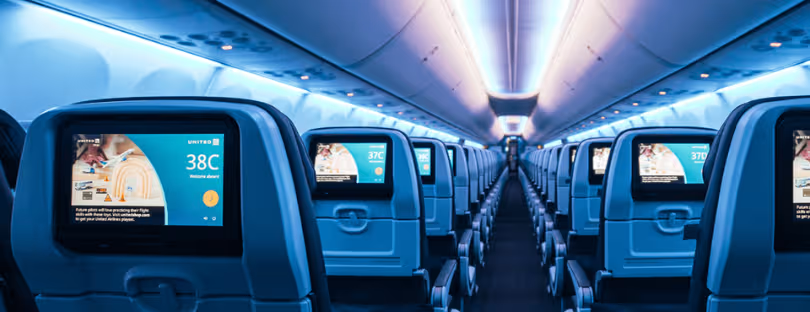
Entertainment is delivered through your personal device. United provides a streaming library accessible via onboard Wi-Fi, so downloading the app before flying is essential.
It’s not the most luxurious system in the industry, but it works.
Customer Experience: Improving, But Not Perfect
United has had its share of customer service issues in the past. That’s well documented.
However, in recent years, the airline has made efforts to improve:
- Better digital tools
- More proactive communication during disruptions
- Expanded support channels
You can reach United via phone, social media, or directly at airport service desks and lounges.
Compensation policies for delays and cancellations follow industry standards, with additional protections for EU-based flights under EU261 regulations.
Still, expectations should be realistic. Like most large airlines, the experience can vary depending on the situation.
Reliability and Performance
United maintains a solid safety record and operates at a reliability level comparable to other major US carriers.
Delays and cancellations do happen, typically due to:
- Weather
- Air traffic control
- Operational constraints
The important part is how those disruptions are handled. This is where preparation and flexibility on your side still matter.
Conclusion
United Airlines remains one of the most powerful global airline networks available today. Not because it’s perfect, but because of the sheer flexibility it offers.
The system rewards travelers who understand how to use it.
So the next time you search for united airlines reservations, don’t just look at the price.
Look at the structure behind the ticket.
That’s where the real value is.