UnionPay and Samsung Wallet Launch NFC + QR Payments
Mobile payments rarely change overnight. Most of the time, progress comes through small but strategic integrations that quietly remove friction for users. That is exactly what UnionPay International and Samsung Electronics have just done with the launch of their joint NFC and QR code payment service.
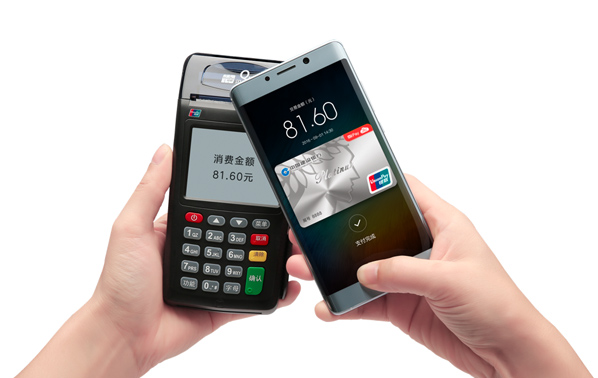
Announced in Shanghai, the new collaboration introduces an “NFC-QRC all-in-one” mobile payment solution that allows UnionPay cardholders worldwide to link their cards to Samsung Wallet and choose how they want to pay. One tap via NFC. One scan via QR. Same wallet, same card, no compromises.
Hong Kong SAR will be the first market to go live, with BOC Credit Card (International) Co., Ltd. acting as the inaugural issuing partner. On paper, this looks like another wallet expansion. In reality, it signals something bigger happening beneath the surface of global payments.
Why NFC plus QR actually matters
For years, the global payment industry has been split by geography and habit. NFC dominates in markets with mature POS infrastructure such as Europe, Australia, and parts of Asia. QR codes rule in places where merchants prioritise speed, cost efficiency, and flexibility, including mainland China, Southeast Asia, and large parts of Latin America.
What UnionPay and Samsung are doing is acknowledging a simple truth that many global wallets still struggle with. Travelers and cross-border users do not care about payment standards. They care about whether the payment works where they are standing.
By combining NFC and QR into a single wallet experience, Samsung Wallet removes the need for users to think about compatibility. The wallet adapts to the environment instead of forcing the user to adapt. That sounds basic, but it is surprisingly rare at a global scale.
Hong Kong as the launchpad makes strategic sense
Hong Kong SAR is not just a test market. It is a crossroads. High smartphone penetration, heavy cross-border travel, strong UnionPay acceptance, and a population already comfortable with both contactless and QR payments make it an ideal launch environment.
For UnionPay, starting in Hong Kong also reinforces its long-term strategy of expanding beyond mainland China without reinventing itself. UnionPay cards are already widely accepted globally, but mobile usage has historically been fragmented outside its core markets. Samsung’s Android dominance changes that equation.
Samsung Wallet is currently available in 62 countries and regions. That reach instantly extends UnionPay’s mobile payment footprint among Android users, particularly in markets where Apple Pay has historically had the upper hand.

What Samsung gains from this partnership
Samsung has been quietly rebuilding Samsung Wallet into a serious global contender. Unlike some competitors, it is not trying to own the payment ecosystem outright. Instead, Samsung is positioning itself as the most flexible wallet layer on Android.
Adding UnionPay enhances Samsung Wallet in regions where Visa and Mastercard are not the preferred payment options. It also improves Samsung’s relevance for Chinese outbound travelers, international students, and business users who rely heavily on UnionPay cards.
Woncheol Chai, EVP and Head of the Digital Wallet Team at Samsung Electronics, described the collaboration as more than technical integration. That framing matters. Samsung is not just adding another card network. It is aligning itself with how payments actually work across borders today.
UnionPay’s long game: inclusivity over disruption
UnionPay’s messaging around this launch is telling. Larry Wang, CEO of UnionPay International, emphasised openness, mutual benefit, and ecosystem building rather than disruption. That is consistent with UnionPay’s global playbook.
Instead of trying to replace existing payment methods, UnionPay tends to integrate deeply with local infrastructure. The NFC-QRC model reflects that approach. It allows overseas partner institutions to launch both UnionPay QuickPass and UnionPay QR services at the same time, without forcing a single payment behaviour onto users.
Today, UnionPay mobile payment services are accepted in more than 100 countries and regions. Outside mainland China, UnionPay QuickPass works at over 23 million POS terminals, while QR code interoperability projects span around 50 markets, with tens of millions of merchants already onboarded.
This collaboration with Samsung does not create that network. It unlocks it for a new generation of Android users.
Promotions, incentives, and early adoption
To accelerate uptake, UnionPay International and Samsung Electronics will roll out exclusive instant discount promotions in Hong Kong for UnionPay cardholders using Samsung Galaxy smartphones. This is a familiar but effective tactic.
Mobile wallets live or die by habit formation. Once users bind a card and complete a few successful transactions, the wallet becomes part of their daily routine. Incentives lower the psychological barrier, especially in competitive wallet environments like Hong Kong.
BOC Credit Card’s role as the first issuing partner also matters. Bank-backed launches still carry weight in regulated financial markets, and early issuer support often determines whether a wallet feature becomes mainstream or remains niche.

How this compares to Apple Pay, Google Pay, and Alipay+
From a market perspective, this move positions Samsung Wallet differently from both Western and Chinese competitors.
Apple Pay remains heavily NFC-centric. QR payments exist, but they are not core to the Apple Pay experience outside China. Google Pay has expanded its flexibility, but QR acceptance and consistency still vary widely by region.
On the Chinese side, Alipay+ and WeChat Pay excel at QR-based interoperability but are less integrated at the device ecosystem level globally, particularly on Android hardware outside China.
Samsung Wallet with UnionPay sits somewhere in between. It leverages deep device integration while embracing the reality of QR-first markets. That hybrid positioning could become increasingly important as travelers move between regions with very different payment norms.
What does this signal mean for travelers and merchants?
For travelers, the benefit is straightforward. Fewer payment failures. Less switching between apps. One wallet that works whether you are tapping in Hong Kong, scanning in Southeast Asia, or paying contactless in Europe.
For merchants, especially smaller ones, QR support remains attractive due to lower hardware costs. NFC remains critical for speed and throughput. Supporting both through the same global wallet increases acceptance without increasing complexity.
This duality also aligns with broader trends in travel technology. Flexibility, redundancy, and local optimisation are replacing one-size-fits-all solutions.
Conclusion: a practical step toward truly global wallets
This launch will not dominate headlines like a new super app or crypto-powered payment scheme. But its impact may be more durable.
UnionPay and Samsung are not trying to reinvent how people pay. They are removing unnecessary decisions from the payment experience. In a world where travelers already juggle roaming, apps, currencies, and regulations, that matters.
Compared with competitors, this partnership reflects a growing industry consensus. The future of mobile payments is not NFC versus QR. It is NFC and QR, working seamlessly in the background.
For Alertify readers watching the evolution of travel tech and global connectivity, this move fits squarely into a wider trend supported by organisations like the Bank for International Settlements and the World Economic Forum. Interoperability, not dominance, is becoming the real competitive advantage.
If Samsung and UnionPay execute well beyond Hong Kong, this could quietly become one of the most traveler-friendly payment integrations we have seen in years.