Ubigi eSIM Japan: Reliable Data for Smart Travelers
Japan is one of those destinations where mobile data stops being a nice travel extra and becomes part of the trip itself. You need it for train routes, QR menus, translation apps, hotel check-ins, digital tickets, cashless payments, and the occasional panic-search inside Shinjuku Station when Google Maps starts behaving like it has given up too.
That is why the “Ubigi eSIM Japan” search is not just about finding cheap gigabytes. It is about choosing a travel connection that feels stable enough for a country where visitors depend heavily on apps from the moment they land.
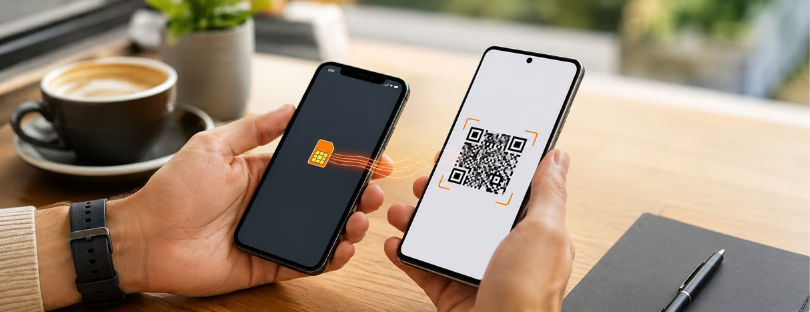
Ubigi sits in an interesting position here. It is not the loudest consumer eSIM brand, and it does not market itself with quite the same influencer-heavy style as Airalo, Saily, or Holafly. But for Japan, it has a serious advantage: it looks and feels more infrastructure-led than many travel eSIM offers. Ubigi describes itself as a global mobile data service for smartphones, tablets, laptops, and connected cars, with connectivity available in 200+ destinations. Its eSIM setup is fully digital, with QR-code installation, real-time balance tracking, alerts, and top-ups through the app.
The Japan offer
At the time of writing, Ubigi’s Japan range includes practical short-stay and longer-stay options. A 10GB Japan plan is listed at US$16.50 for 30 days, while an unlimited Japan plan is listed at US$25 for 7 days. For longer or heavier users, Ubigi also lists a 30-day unlimited Japan plan at US$65. There is also a monthly-style Japan option, such as 5GB per month for US$8, with cancellation possible after three months.
That variety matters. Japan attracts very different types of visitors. A first-time tourist spending one week between Tokyo, Kyoto, and Osaka probably wants simple prepaid data. A remote worker staying a month in Fukuoka or Sapporo may care more about repeat top-ups and predictable cost. A business traveler moving between meetings may not want an “unlimited” product that becomes painful after a hidden daily cap.
READ MORE: Ubigi’s SmartIP Is the Quiet Feature That the eSIM Industry Has Been Ignoring
Ubigi’s strongest appeal is that it gives travelers several ways to buy, not just one big shiny plan. That sounds boring, but it is useful. The eSIM market has become crowded with offers that look similar on a landing page. The real differences usually appear later: network access, throttling rules, top-up experience, app reliability, and whether the plan still feels good on day four of a busy trip.
Network matters more in Japan
Japan is not a destination where you should judge an eSIM only by price per GB. Tokyo and Osaka are relatively forgiving. Most decent providers will work well enough in central areas. The real test comes when you move through train corridors, smaller towns, mountain areas, coastal routes, or regional airports.
This is where Ubigi often gets attention. Ubigi’s own Japan guide says some eSIMs, including Ubigi, use major carriers such as NTT Docomo and KDDI coverage, with strong population coverage and 5G availability in many areas. Independent Japan eSIM comparisons also frequently point to Ubigi’s use of major Japanese networks as one of its stronger points.
That does not mean every traveler will notice a huge difference every day. If you are spending five days in central Tokyo, you may not care whether your eSIM sits on one premium network or another. But if your Japan itinerary includes Hokkaido, Okinawa, rural ryokans, ski resorts, or day trips outside the main city grid, the local network relationship becomes much more important.
This is one of the quiet truths of travel eSIMs: two brands can both say “Japan coverage,” but the actual experience can feel different because of routing, roaming agreements, local network priority, and traffic management. The plan name does not tell the whole story.
Who Ubigi is best for
Ubigi is probably best for travelers who care about reliability and plan clarity more than flashy packaging. It suits visitors who want to install before departure, land, switch data on, and avoid the old airport-counter ritual. It also works nicely for people who may return to Japan or travel across multiple countries, because the app-based top-up model is designed around repeat use rather than a single disposable purchase. Ubigi says users can install the eSIM, create an account, monitor balance in real time, receive alert notifications, and top up when needed.
It may not be the cheapest possible Japan eSIM in every comparison. It also may not be the friendliest brand for a traveler who wants maximum hand-holding, instant chat support, or a very simple “buy unlimited days and forget everything” flow. Holafly, for example, has built a strong consumer reputation around unlimited-data positioning and flexible day-based buying. Airalo remains one of the most recognized names for destination and regional eSIMs, with Japan-specific and Asia regional options widely compared in travel guides. Saily is pushing a different angle, leaning into security-related features such as ad blocking, web protection, and virtual location in some markets.
READ MORE: Ubigi Promo Code 2026: Save 10% on Travel Data
Ubigi’s pitch is less emotional. It feels more like: here is the connection, here is the plan, here is the app, go travel. For many Japan visitors, that is exactly enough.
Save 10% on Your First Ubigi eSIM
Use Ubigi’s travel eSIM before you fly and stay connected in 200+ destinations without roaming surprises.
Discount applies to eligible first Ubigi eSIM purchases. Check final price and plan details before checkout.
The bigger shift
The reason this topic matters is bigger than Japan. Travel eSIMs are moving from niche convenience to normal travel behavior. GSMA Intelligence reported that global eSIM smartphone penetration reached 5% at the end of 2025 and is expected to reach 10% by the end of 2026. The same GSMA update frames eSIM mass-market deployment as having moved from forecast to fact.
That changes the competitive field. Consumer eSIM providers are no longer only fighting physical SIM kiosks. They are competing with mobile operators, airline add-ons, banking apps, travel apps, and device-level experiences. GSMA Intelligence has also noted that MNOs are increasingly launching travel eSIM offers, while consumer eSIM activity is expanding into temporary connectivity and business-market use cases.
READ MORE: From City Breaks to Nomad Life: The Travellers Who Benefit Most from Ubigi eSIMs
For Ubigi, Japan is a strong showcase market because it rewards the things that are easy to overlook in cheaper destinations: network quality, smooth activation, multi-device relevance, and the ability to stay connected without thinking too much. The market is not short of alternatives, but Japan exposes weak products quickly.
Final take
Ubigi is not the loudest Japan eSIM brand, but it may be one of the more sensible choices for travelers who want a serious connection rather than a bargain-bin data experiment. Airalo will appeal to users who want broad familiarity and simple destination plans. Holafly is attractive for people who instinctively choose unlimited data and do not want to count gigabytes. Saily is carving out a sharper identity around app-layer security and privacy features. Ubigi, meanwhile, feels closer to the network-quality end of the market.
That positioning is useful. The next phase of travel eSIM will not be won only by who offers the lowest 1GB plan. It will be won by providers that make connectivity feel invisible, stable, and boring in the best possible way. In Japan, boring is not a weakness. When you are standing on a train platform with three minutes to find the right line, boring connectivity is exactly what you paid for.