Ubigi’s SmartIP Is the Quiet Feature That the eSIM Industry Has Been Ignoring
There’s a problem that frequent travelers know well but rarely talk about: the moment you land abroad, your entire digital identity shifts. Streaming services think you’re somewhere else. Your bank app acts suspiciously. News feeds go regional. Captchas appear out of nowhere. You’re physically in Tokyo but digitally homeless.
Ubigi, the eSIM brand backed by Transatel — one of the more quietly powerful connectivity infrastructure players in the market — has a direct answer to this. It’s called Smart IP, and it’s arguably one of the more technically interesting product moves any travel eSIM provider has made in the past two years.
What Smart IP Actually Does
The concept is straightforward, even if the implementation isn’t: instead of routing your traffic through a local IP at your destination, Smart IP lets you maintain the IP address of your country of residence while still connected to local mobile broadband. In other words, you get local network performance without losing your digital home address.
The feature is fully integrated into the Ubigi eSIM itself — no additional app, no separate VPN subscription, nothing to configure beyond a toggle in the Ubigi app. That last part matters more than it sounds.
The more common solution to this problem — a commercial VPN — comes with overhead. Encryption tunneling adds latency, kills battery faster, and gets blocked by an increasing number of streaming platforms. Smart IP sidesteps all of that because it operates at the network layer, not the application layer.
The Two-Mode Logic
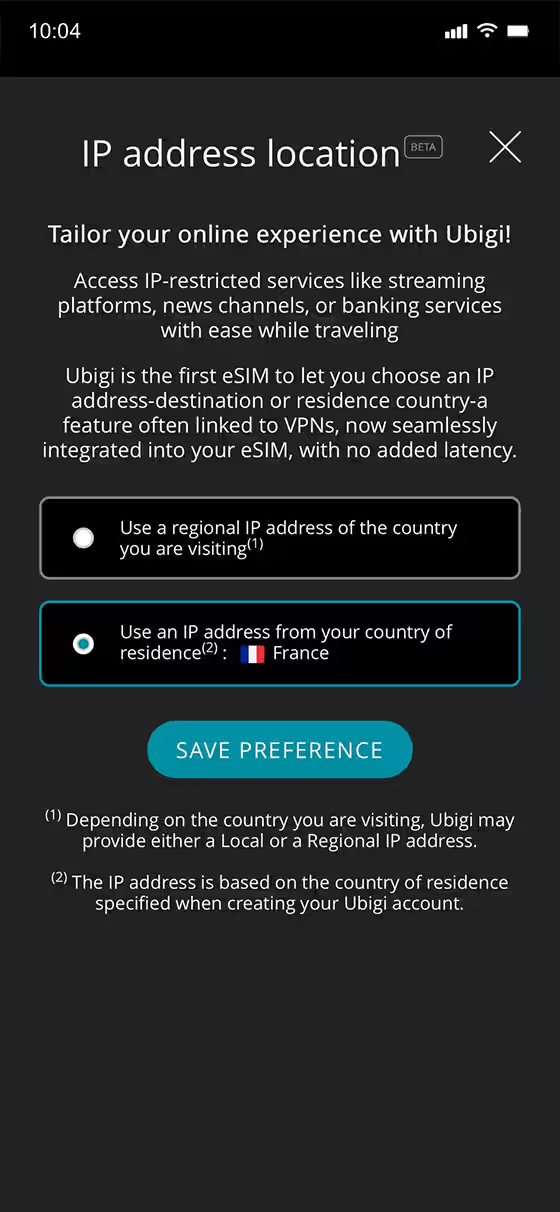
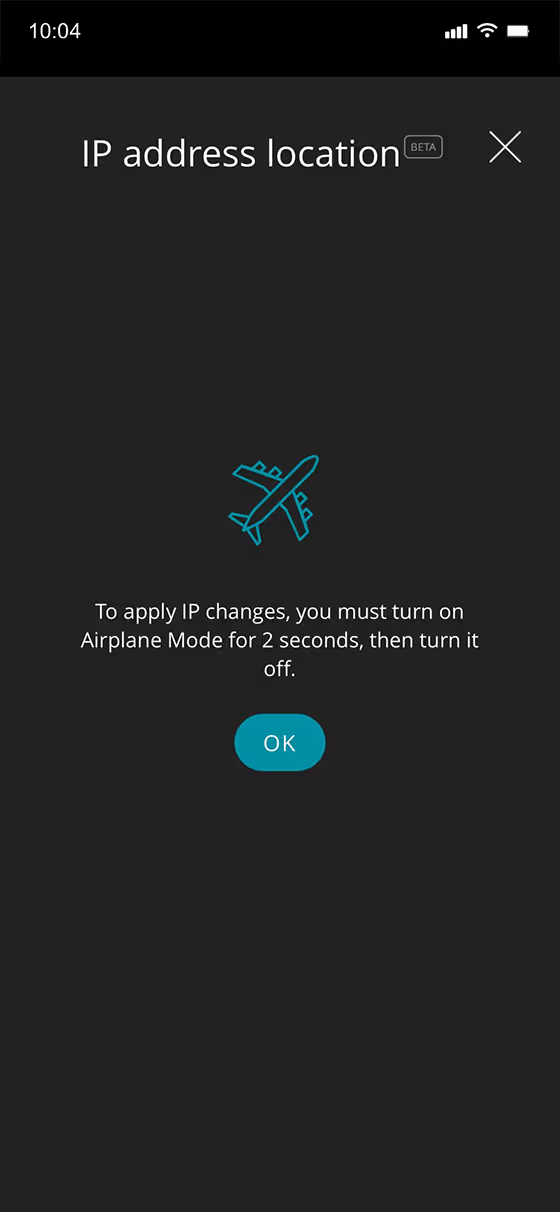
The product actually gives you a binary choice: use a regional IP (the default, local to wherever you’re traveling) or switch to your country of residence IP. You can toggle between the two with a single tap. It’s clean, it’s fast, and outside of a brief airplane mode restart to finalize the switch, it’s invisible.
How it works in practice
Ubigi keeps the user experience deliberately simple.
How to switch IP location
- Open the Ubigi app and view your current IP settings
- Select the IP location option
- Choose your country of residence or stay on a regional IP
- Confirm your selection
- Briefly enable airplane mode to apply the change
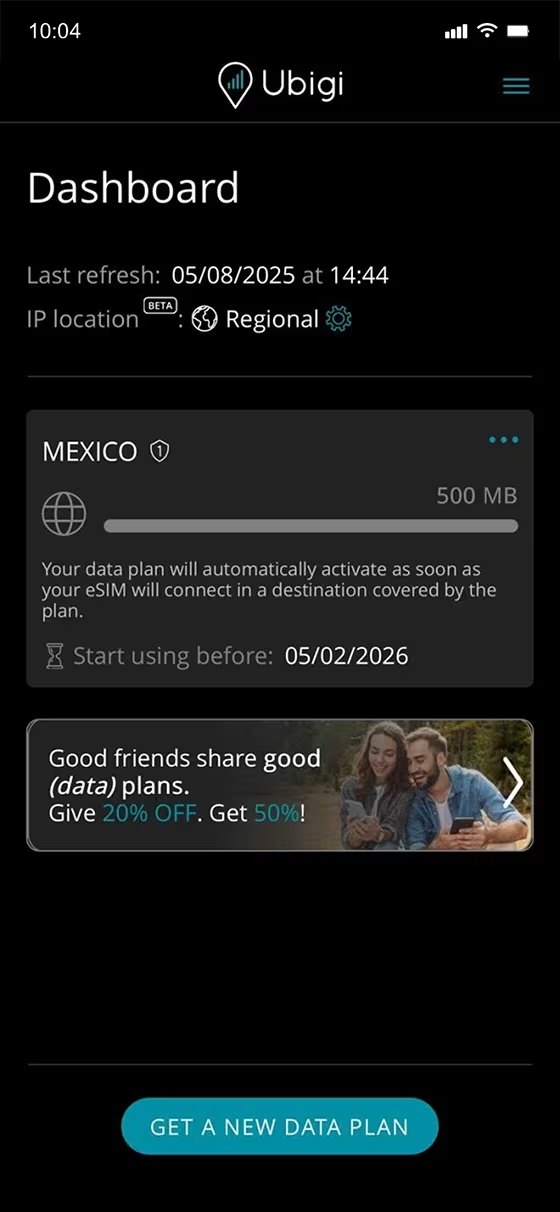
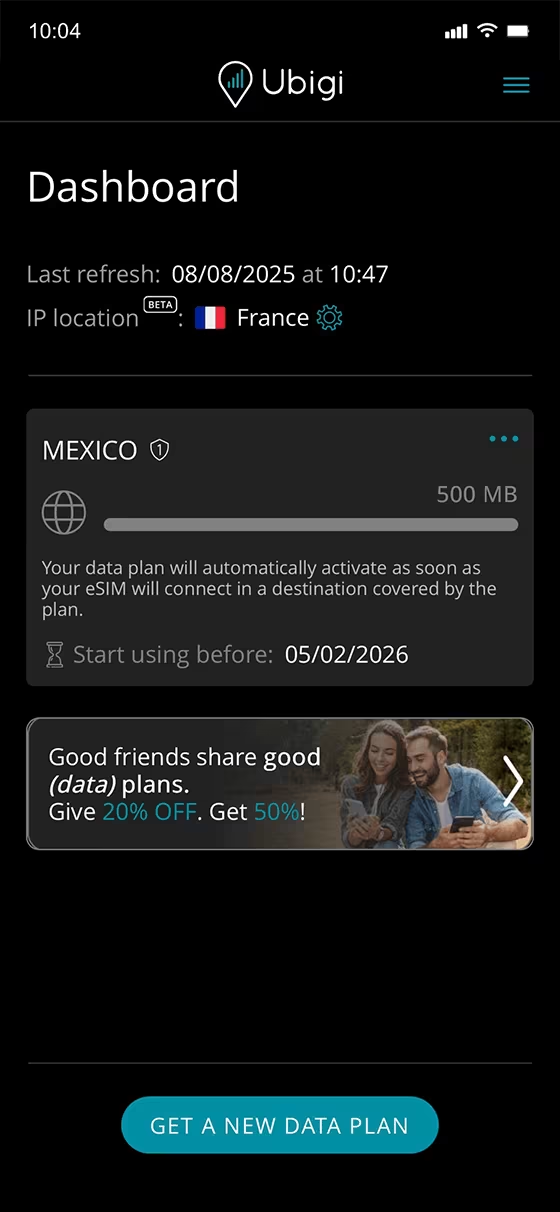
Once activated, your selected IP location is reflected in the app dashboard. There is no need for additional apps, configurations, or technical knowledge.
That dual-mode design is clever positioning. Ubigi isn’t forcing a single routing approach on everyone — it’s acknowledging that different use cases demand different network contexts. Working in a local market? Use the regional IP. Need to check your home banking dashboard or stream a match that’s geo-restricted to your country? Switch to the residence IP.
In just a few taps, you can switch from a regional IP to your country-of-residence IP and make your connection feel more consistent while traveling.
|
1
StartTap the IP icon on your dashboard to open Smart IP settings. |
2
SwitchChoose a regional or your home country IP and save. |
3
ApplyTurn Airplane Mode on briefly to activate the change. |
4
DoneYour new IP is active and visible on the dashboard. |
Why this matters in real usage
This is not a feature you actively think about. It is one you notice when problems stop happening.
Where it makes a difference
- Accessing home streaming services without regional restrictions
- Using banking and fintech apps without triggering security flags
- Avoiding repeated captchas and verification loops
- Staying connected to local news and services from your home country
- Maintaining consistent app behavior across borders
But the real benefit is not any single use case; it is consistency. Your digital environment starts behaving as if you never left your home country, even when you are moving across multiple destinations.
The zero-latency claim is worth scrutinizing. Traditional VPNs add latency because your data makes an extra hop through a tunnel server. Ubigi says Smart IP doesn’t add latency at all, because the routing is handled directly at the eSIM and network level rather than through application-layer tunneling. Independent speed tests haven’t formally validated this at scale yet, but the architectural logic holds up.
Who Can Actually Use It
Here’s where things get more grounded. Smart IP is currently available for residents of France, Canada, Belgium, Japan, Australia, the United States, Germany, Switzerland, Singapore, and the United Kingdom. That’s a solid initial footprint, roughly the top tier of international frequent flyers by volume, but it’s still a limited rollout. The feature first launched in beta in January 2025 for French and US customers only, and has since expanded. More countries are promised.
On the device side, it works across smartphones, tablets, and eSIM-capable laptops — anything compatible with the Ubigi eSIM itself. No platform-specific carve-outs, which is a sensible call.
The free pricing is also notable. This isn’t a premium add-on — it’s bundled into the Ubigi experience at no extra charge, which suggests Ubigi is using it as a differentiation tool rather than a revenue line. That’s a calculated move in a market where most providers compete almost exclusively on data pricing.
The Bigger Shift This Points To
Smart IP isn’t a gimmick. It’s a signal of where serious eSIM providers are heading: beyond data pipes, into value-added network features that solve real traveler pain points.
The eSIM market has largely been a race to the bottom on price per gigabyte, but few other providers have cracked the IP identity problem — they’re all still handing you a foreign IP and leaving you to deal with the consequences.
Ubigi’s approach stands out at the infrastructure level. Transatel operates as an MVNO with its own core network, not a reseller, which allows features like Smart IP to be implemented directly at the network layer rather than added on as software. That’s a meaningful technical advantage that pure-play eSIM resellers simply can’t replicate without a similar infrastructure backbone.
Where This Gets Interesting
The eSIM market is maturing faster than most people realize. The first wave was about eliminating the physical SIM. The second wave — where we are now — is about layering services on top of connectivity. What Ubigi is doing with Smart IP fits a broader pattern: embedded features that remove friction, reduce dependency on third-party apps, and increase stickiness.
If Smart IP expands to cover more residence countries and begins showing up in B2B/IoT contexts (think corporate travel management or remote work infrastructure), the feature stops being a consumer differentiator and starts becoming a genuine product moat. Independent reviewers have noted that Ubigi is the only provider they’ve tested offering this kind of home-IP switching — for now. how to keep home ip address while traveling
The window to build that moat won’t stay open forever. As the eSIM market consolidates and large players deepen their platform features, Ubigi’s technical edge becomes a ticking advantage. The smart play is to own the IP identity narrative before someone else reframes it. Smart IP is the right idea at the right time — the only question is whether Ubigi can execute the rollout fast enough to matter.