Annual eSIM Plans: Connectivity Without Commitment
Most travel eSIM conversations still force you into two familiar boxes.
Box one is the classic telco contract. Commitment, ID checks, local billing, and cancellation rules you only fully understand once you are already inside the system.
Box two is the travel eSIM top-up treadmill. You buy a bundle, you monitor your data usage, you run out at the worst moment, and then you buy another bundle while standing in an airport queue on unstable Wi-Fi.
Ubigi’s annual eSIM plans sit somewhere else entirely.
Not a contract.
Not subscription.
Not roaming.
Instead, they represent something that could be described as a 12-month eSIM architecture.
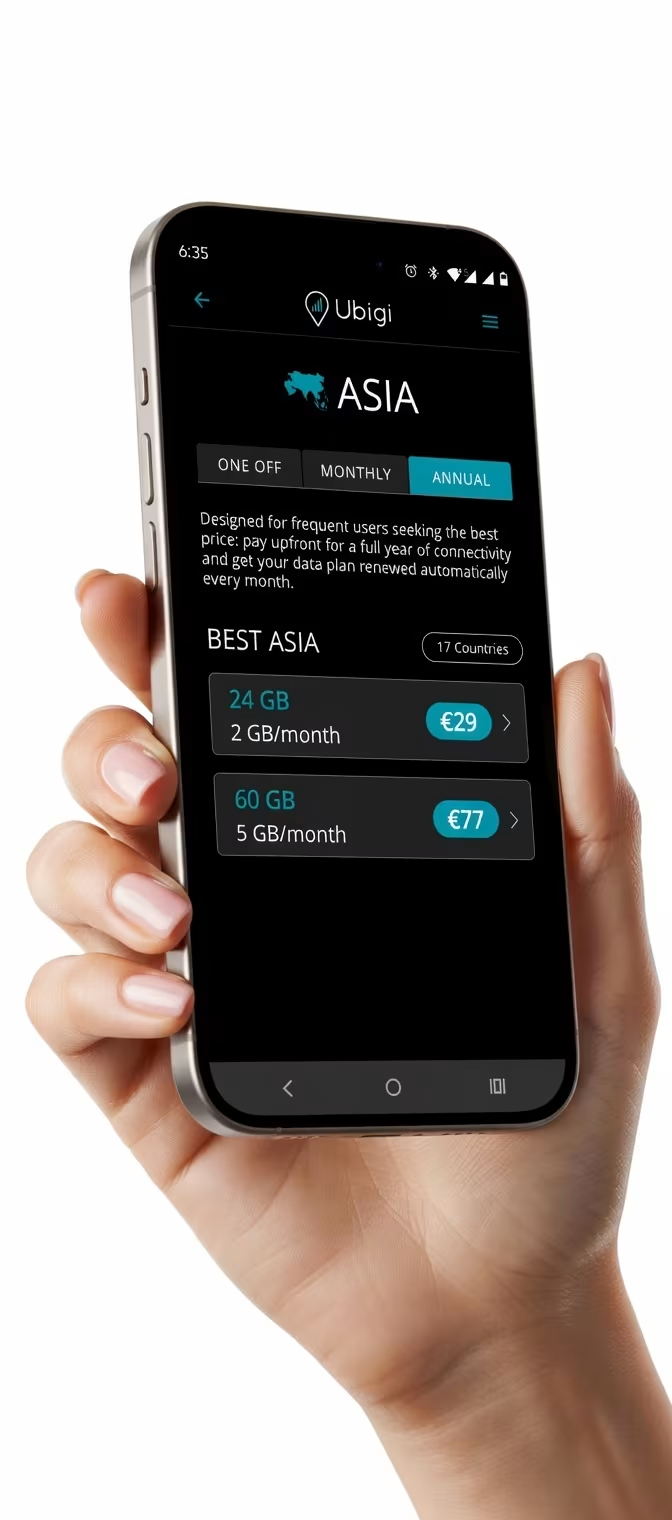
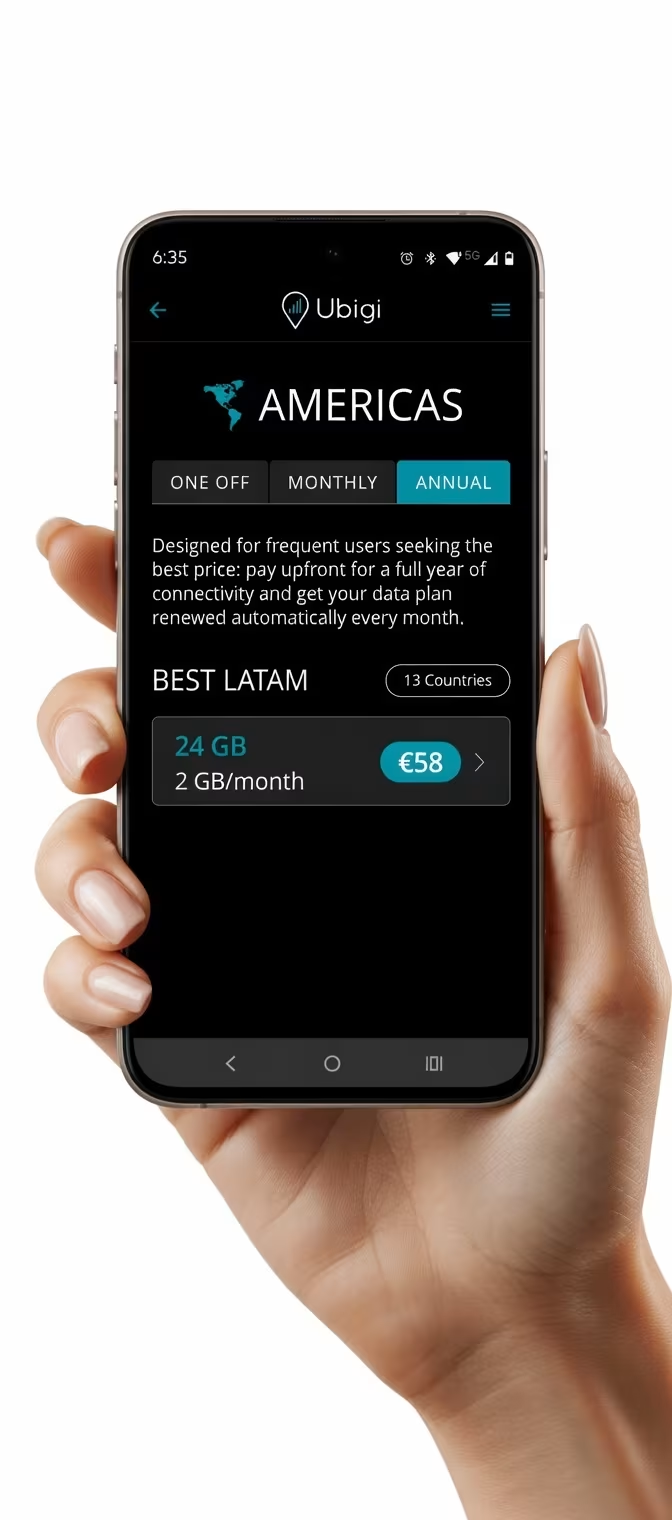
A prepaid structure where you pay once for the year, and your data allowance renews every month without additional charges.
Ubigi describes the concept simply: the plan is purchased for 12 months upfront, and the monthly data allowance automatically refreshes each month during that period.
It sounds straightforward. And that simplicity is exactly why the idea matters.
Because it creates a different relationship with connectivity.
Not something you buy for every trip.
But something you keep available across the year.
“Connectivity without commitment” is becoming a real category
Annual eSIM plans occupy a middle ground that has not been discussed enough in the travel connectivity market.
Traditional mobile contracts lock you into ongoing relationships with operators.
Monthly subscriptions charge continuously until you cancel.
Travel bundles require constant repurchasing.
Annual architecture behaves differently.
You prepay once. The clock runs for twelve months. Your data allowance refreshes every month. And when the year ends, the relationship simply stops unless you actively renew.
It is closer to buying a yearly pass than signing a service contract.
That structure changes the mental model.
You are no longer buying connectivity for a specific trip.
You are building a personal connectivity baseline for the year.
For travelers who move between countries regularly, this removes one of the most repetitive friction points in modern travel.
Instead of deciding which eSIM to install every time you travel, the connectivity layer is already in place.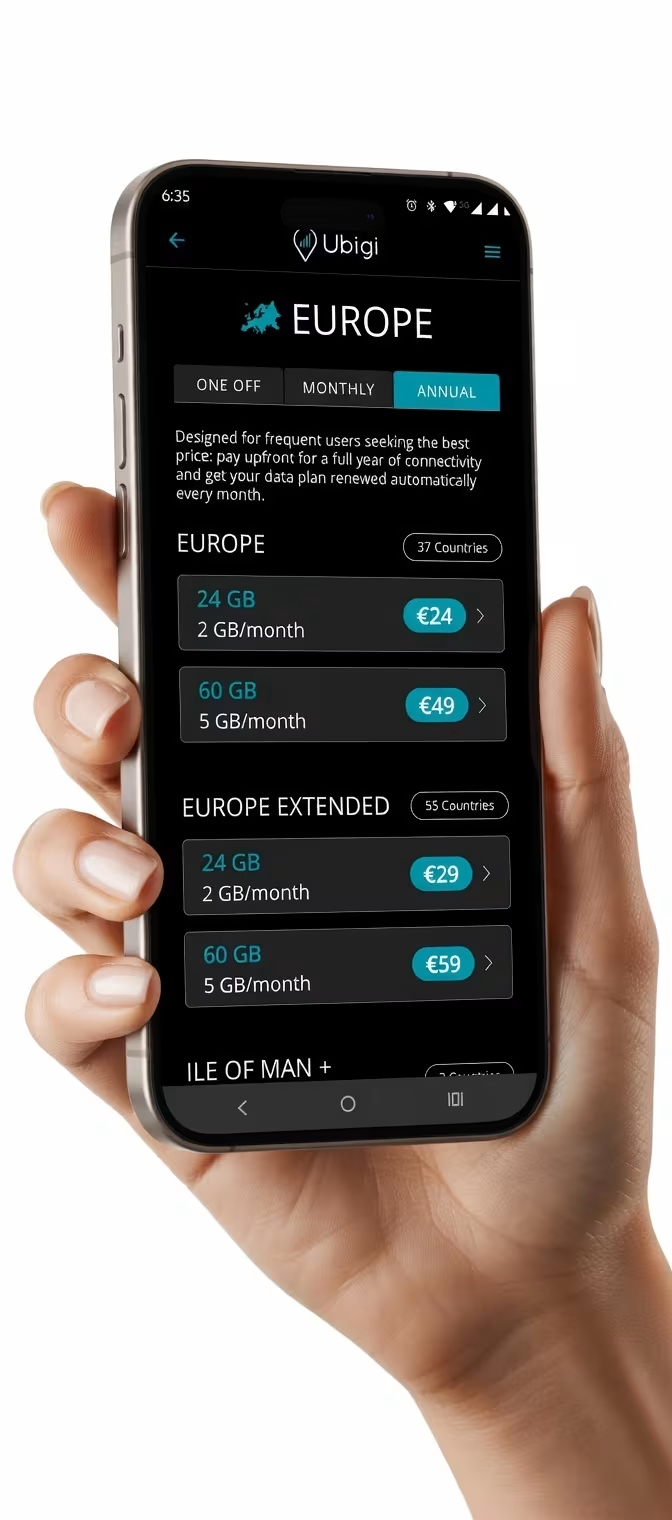
Why the setup permanence matters more than people think
If you have ever installed an eSIM in a hurry before a flight, you know that the real friction is rarely the data itself.
It is the setup.
QR codes.
Device settings.
Activation timing.
Switching data roaming on or off.
Checking which SIM is currently active.
Those first ten minutes are where most people experience frustration. Ubigi already solved part of that problem with the Smart eSIM feature (activate once, use it everywhere), but an annual architecture change that dynamically further. For World (global) or regional plans, that means:
You activate once.
Then the system stays ready.
The next time you land in another country, the connectivity layer already exists on your device.
Instead of repeating the onboarding process for every trip, you are simply using something that is already configured.
That difference may sound small, but in practice, it removes one of the most annoying parts of travel connectivity.
The economic reality is also there: Ubigi’s annual plans have some of the best prices per GB in the market.
The second device reality
Where annual eSIM plans become particularly interesting is with secondary devices -even with solo dedicated country plans.
Modern travelers rarely carry just one connected device anymore.
A typical travel setup might include:
- a primary smartphone
- a tablet used during flights or meetings
- a spare phone used as a backup device
- a laptop with cellular capability
- a child’s phone during family trips
These devices do not always need large amounts of data. But they often need reliable baseline connectivity.
That is exactly the kind of scenario where yearly architecture works well.
Instead of activating a temporary plan every time the device leaves the house, the connectivity layer simply exists in the background throughout the year.
When the device needs data, it is already there.
This is particularly useful for tablets and secondary phones that travel intermittently but still require occasional connectivity.
 The “always-ready” travel device
Many frequent travelers keep what could be called a travel-ready device.
A phone or tablet that lives in a backpack, cabin bag, or travel kit.
It may not be used every day, but when a trip happens, it becomes active immediately.
With a traditional travel eSIM model, that device requires constant preparation before every journey.
You need to buy a plan, install it, activate it, and confirm everything works.
Annual architecture changes that.
The device already has an active connectivity layer installed.
When the trip starts, you simply turn it on and go.
For travelers who move frequently across borders, that reliability becomes surprisingly valuable.
A quiet shift away from roaming habits
Travel eSIM adoption has been accelerating rapidly as travelers move away from traditional roaming fees.
Industry analysts have tracked strong growth in the segment. For example, Kaleido Intelligence projected global retail spending on travel eSIM services reaching around €3 billion by the mid-2020s, reflecting the increasing shift toward software-based connectivity.
But as the market grows, usage patterns are evolving.
Early travel eSIM adoption was mostly about solving a specific problem. Avoiding roaming charges during a trip.
Now the conversation is gradually expanding.
Connectivity is becoming part of a traveler’s permanent digital setup, not just a temporary travel tool.
Annual plans support that transition.
They turn travel connectivity into something that exists continuously in the background.
Where Ubigi fits in the broader ecosystem
Ubigi is not a typical startup trying to win the market through aggressive promotions.
The brand operates under Transatel, a global connectivity provider with deep experience in embedded connectivity, including automotive deployments.
That background influences how Ubigi approaches consumer connectivity.
The focus is not only on selling short-term bundles, but on building reliable, persistent connectivity layers across devices and environments.
In many ways, this mirrors broader industry trends.
Cars are becoming connected devices.
Laptops increasingly support cellular connectivity.
IoT devices rely on embedded SIM technology.
As these categories expand, the idea of connectivity as a permanent digital layer becomes more relevant.
Annual eSIM architecture fits naturally in that direction. How this approach differs from other models
Travel bundle marketplaces
Many travel eSIM platforms offer hundreds of short-term data bundles across different countries. These are excellent when you want flexibility and destination-specific pricing.
But they also keep the user in constant purchase mode.
Annual architecture reduces that repetition.
Subscription-first models
Some providers are pushing global monthly subscriptions with recurring billing.
These models can be ideal for very frequent travelers, but subscriptions also introduce another recurring payment that users need to manage.
Annual architecture avoids that psychological friction.
You pay once, use it for the year, and decide later whether to renew.
Roaming replacement
Many travel eSIM products frame themselves primarily as a cheaper alternative to roaming.
Annual plans go a step further.
They shift the focus from avoiding roaming to building a personal connectivity infrastructure.
Conclusion: the rise of connectivity as infrastructure
The travel eSIM market is evolving quickly.
At first, most providers competed on price, coverage, or bundle size.
But the next phase of competition is increasingly about product architecture.
How connectivity fits into everyday digital life.
Some providers are betting on unlimited subscriptions. Others are focusing on short-term flexibility.
Ubigi’s annual plans illustrate a different direction.
Connectivity that is prepaid, predictable, and continuously available without recurring contracts or subscription pressure.
Not necessarily the lowest price per gigabyte.
But potentially one of the lowest levels of friction.
As travel becomes more fluid and digital devices multiply, that kind of reliability starts to matter more than people expect.
Connectivity is slowly becoming something closer to infrastructure than a one-time purchase.
Annual eSIM architecture may not be the final shape of that future.
But it is an early signal of how the market is beginning to think differently about staying connected.