Telfoni eSIM: A Human Take on Travel eSIMs
There is a certain fatigue around travel connectivity now. Not because travelers do not understand eSIMs, but because many understand the category a little too well. They have seen the “from €1” banners, the vague fair-use policies, and the plans that look simple until the airport Wi-Fi drops.
That is the space Telfoni is trying to speak into: a travel eSIM and SIM service built around transparency, continuity, and less telecom theatre. The company positions itself as a practical alternative for people who want mobile data, and in some cases voice, without feeling trapped inside the old roaming logic.
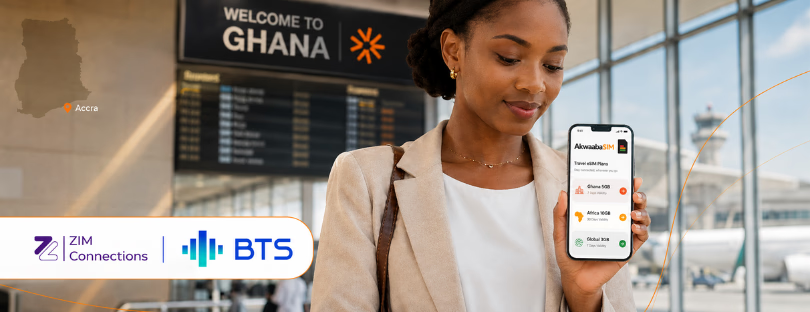
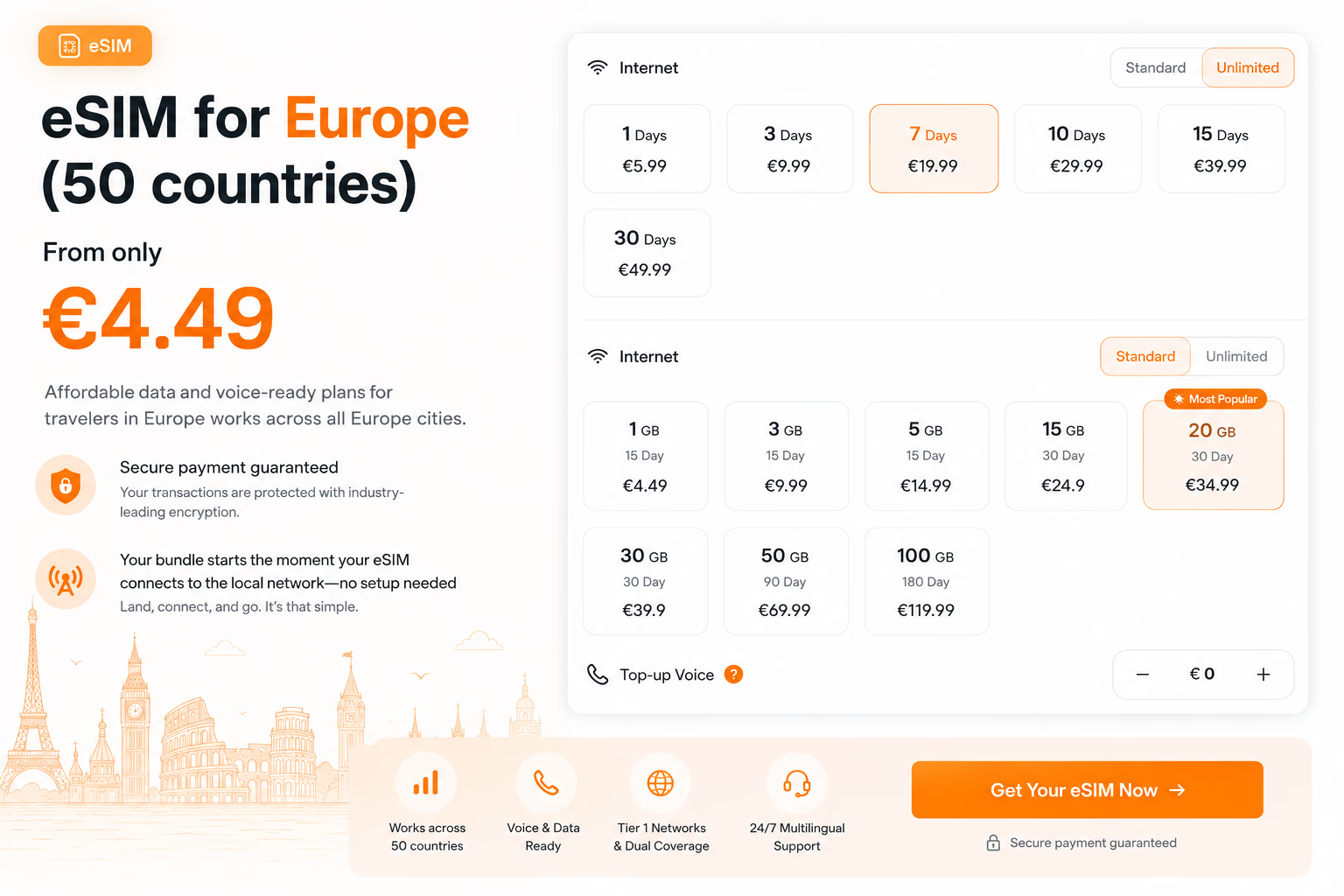
On its website, Telfoni promotes eSIM access for more than 150 countries, while its app store descriptions refer to connectivity across over 190 countries. Its destination pages also show regional-style coverage, including Europe plans that work across more than 50 European countries. In plain English, this is not a brand trying to sell only one country holiday data. It is leaning into how people travel now: one trip, several borders, changing plans, and little patience.
Built from frustration
The story behind Telfoni is refreshingly unpolished. It did not begin as a neat corporate deck. According to the brand’s own positioning, it started with three close friends who travelled often and became tired of mainstream telecom habits: unclear pricing, fine print that felt like a trap, and packages that left users unsure what they had bought.
That origin matters because travel connectivity is emotionally practical. Nobody wants to think about mobile networks when landing in Athens, crossing from Germany into Austria, or trying to call a hotel in Rome. The best connectivity product is usually the one that disappears into the trip.
Telfoni’s “from the people, for the people” philosophy works in that context. It is not trying to make telecom sound glamorous. It is trying to make it feel less manipulative.
 What Telfoni gets right
 What Telfoni gets right
The most interesting part of Telfoni’s proposition is multi-country continuity. Travelers do not want to install a fresh eSIM every time they move from one country to another. A single eSIM that can work across multiple countries, with instant top-ups, is exactly where the category is moving.
Network quality is the second point. Telfoni says it works with Tier 1 networks and offers at least two local network options per country. If delivered consistently, that is a real advantage. Cheap data means little if the phone hangs on one weak signal while another better network is available nearby.
READ MORE: Telfoni eSIM Explained: More Than Basic Travel Data
The third point is voice. Many travel eSIMs are still data-first, which is fine for WhatsApp, maps, email, and social apps. But voice still matters. Calling a hotel, speaking with an airline, confirming an appointment, or receiving a local call is real travel. Telfoni’s voice-and-data angle gives it a more complete feel than generic data-only eSIM offers.
The simultaneous multi-bundle idea is useful too. A traveler could keep a regional plan running in the background while adding a larger local bundle where they need more data. The benefit is simple: more control and fewer forced choices.
Support still matters
One of Telfoni’s strongest claims is human, multilingual 24/7 support. In the eSIM market, this is not a small detail. Setup usually takes minutes when everything goes well, but when it does not, the user is often already in transit, tired, and dependent on airport Wi-Fi.
That kind of support can become a product feature, especially for first-time eSIM users, business travelers, and families managing several devices. The market has enough slick checkout flows. What it still lacks, too often, is calm assistance when activation fails.
Where it fits
Telfoni is entering a category that is becoming more serious. GSMA Intelligence has noted that mobile operators are increasingly launching travel eSIM offers, while travel eSIM is helping make the consumer value of eSIM easier to understand. Juniper Research has also pointed to the price gap between traditional roaming and travel eSIMs as a major driver of adoption.
That means Telfoni is not competing only with familiar travel eSIM names like Airalo, Holafly, Nomad eSIM, Ubigi, or Yesim. It is also competing with mobile operators, airline add-ons, fintech travel perks, and corporate travel platforms. The market is moving from “cheap data abroad” toward something more layered: continuity, reliability, security, support, and enterprise readiness.
This is where Telfoni’s dual B2C and B2B architecture could matter. For individual travelers, the promise is a simple setup and regional flexibility. For companies, APIs and dashboards can make connectivity manageable at scale.
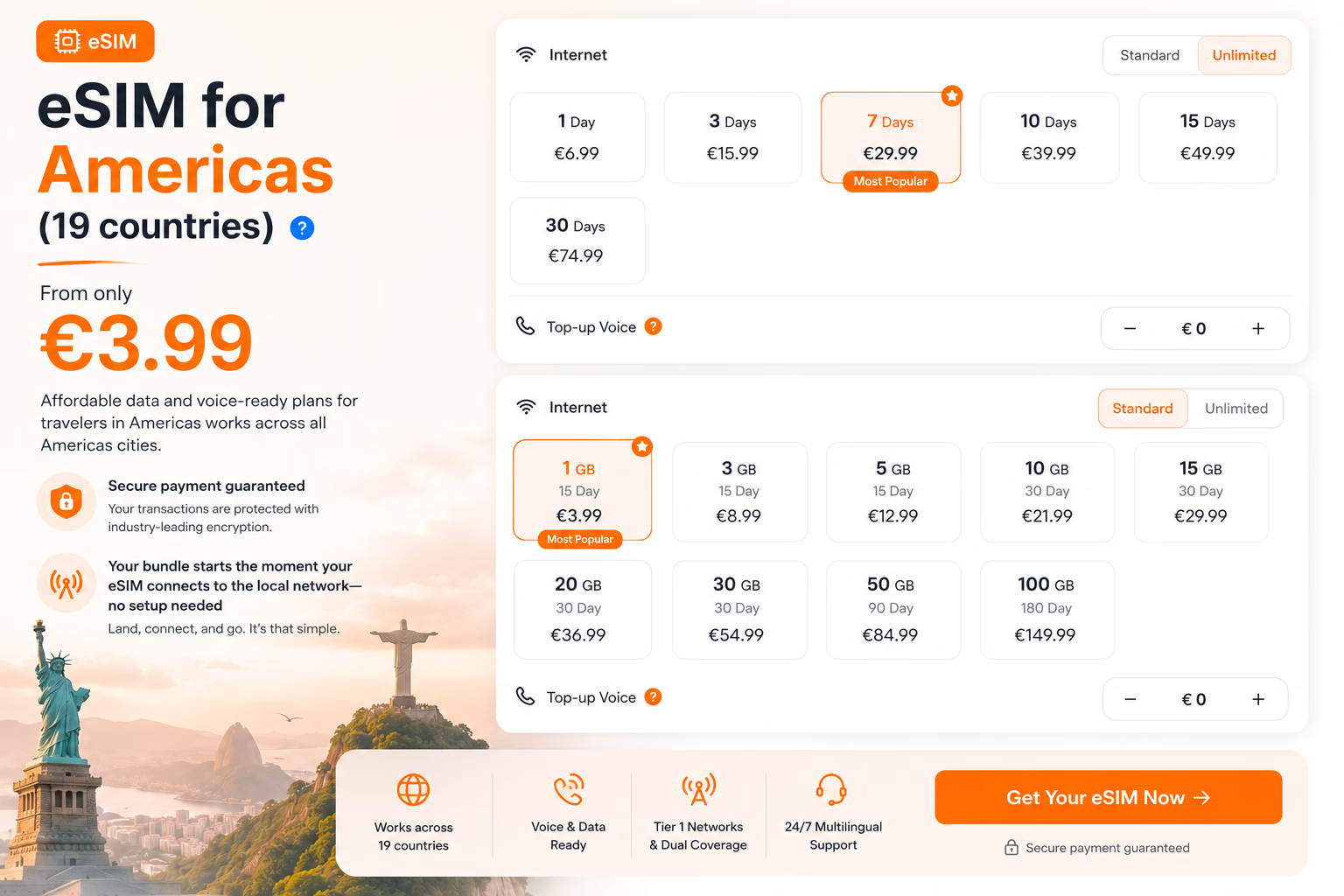
Telfoni could still sharpen the public message. Its website could make network partners, fair-use rules, routing details, and voice availability easier to compare plan by plan. Serious travelers want to know what happens after 20GB, which network they will use, and how voice top-ups work.
Final thoughts about Telfoni
Telfoni’s strongest idea is not that it sells eSIMs. Many companies do that now. Its stronger idea is that travel connectivity should feel honest, regional, resilient, and human.
For light users who only need 1GB for maps and messages, there may be cheaper alternatives. For unlimited-data hunters, Holafly-style plans may still feel more obvious. For frequent regional travelers, business users, and people who value voice, support, and network redundancy, Telfoni has a more interesting proposition.