Starlink Smartphone Satellite Internet Explained
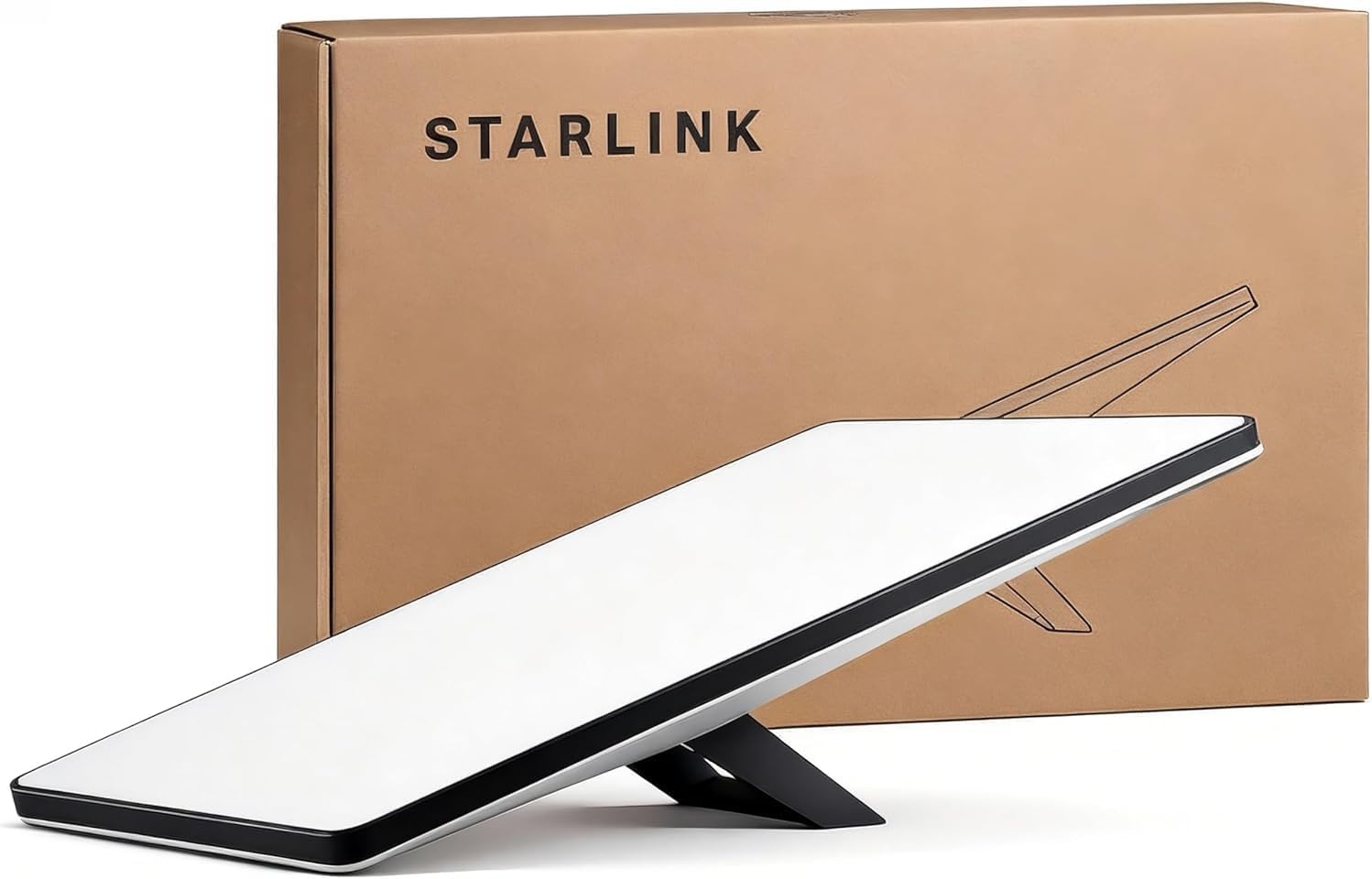
For years, satellite internet sounded like something that belonged to dishes, terminals, RV roofs and maritime decks. Starlink changed that story once already with its low-Earth-orbit broadband network. Now SpaceX is trying to push the idea much closer to the traveller: satellite internet that talks directly to a normal smartphone.
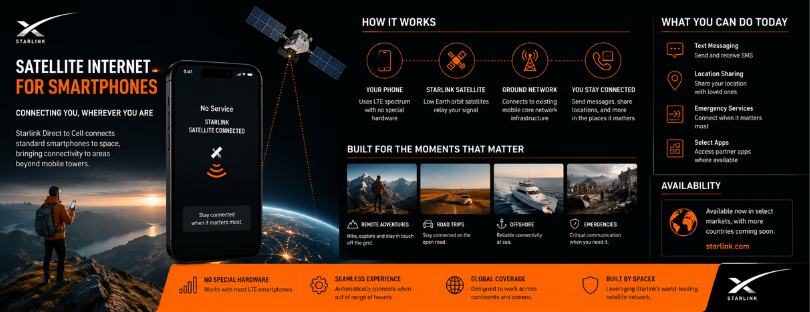
This is the interesting part. We are not talking about a rugged satellite phone or a specialist emergency gadget. Starlink’s Direct to Cell service is designed to connect ordinary 4G LTE phones through satellites when terrestrial mobile coverage disappears. SpaceX says the service is already commercially available for satellite messaging in the United States and New Zealand, with work continuing toward data, voice and IoT services.
For travellers, hikers, remote workers and anyone who has ever watched their signal vanish five minutes outside a city, the promise is obvious. No extra device. No local SIM shop. No “sorry, no service” moment when you actually need the map, the booking confirmation or the emergency contact.
But let’s not oversell it. This is not yet the same as streaming Netflix from a mountain trail. Not today.
From emergency backup to travel utility
The first practical use case is messaging. T-Mobile’s T-Satellite with Starlink, the most visible commercial example so far, is positioned to keep users connected where towers cannot reach. T-Mobile says it works in most outdoor areas in the United States, Canada and New Zealand where users can see the sky, and supports texting, select satellite-ready apps, location sharing and emergency communications, depending on device and conditions.
That “where you can see the sky” phrase matters. Satellite-to-phone is clever, but physics still has a vote. Dense buildings, deep valleys, heavy tree cover and indoor use can limit the experience. The smartphone is not magically becoming a full Starlink terminal. It is using mobile spectrum and satellite infrastructure to provide a narrow but valuable lifeline.
Still, even a narrow lifeline can be commercially powerful. A delayed WhatsApp message from a remote road is better than silence. A location share from a hiking route is better than guessing. A text to emergency services is not a lifestyle feature; it is a safety feature.
This is where satellite internet for smartphones becomes bigger than “cool tech.” It starts to look like an extension of mobile coverage itself.
The carrier relationship is the real story
Starlink cannot do this alone in the way consumer hype sometimes imagines. Direct-to-cell depends heavily on mobile operator spectrum, regulatory approvals and roaming-style partnerships. That is why T-Mobile matters in the U.S., and why the wider market is watching operator alliances closely.
T-Mobile’s Starlink-powered service is available even to non-T-Mobile customers as an add-on, which is strategically smart. It turns satellite coverage into a product layer, not just a loyalty perk.
But operators are not simply waiting for SpaceX to define the future. AT&T and Verizon have been working with AST SpaceMobile, while Orange has signed agreements with AST SpaceMobile and Satellite Connect Europe for direct-to-device connectivity demonstrations in Romania, including voice, SMS and data testing planned for the second half of 2026.
That tells us something important: mobile operators want satellite connectivity, but they do not necessarily want to become passengers in someone else’s platform. The future may not be “Starlink replaces mobile networks.” It is more likely “Mobile networks gain a space layer, and everyone fights over who controls the customer relationship.”
Why travellers should care
For the travel connectivity market, this is a warning shot.
Travel eSIM providers built their growth on one very simple pain point: roaming is expensive, confusing or unreliable. Direct-to-cell satellite connectivity attacks a different pain point: coverage gaps. These are not the same problem, but they increasingly meet inside the same traveller journey.
A tourist in Tokyo does not need satellite service. They need affordable, fast mobile data. An overlander in Iceland, a sailor in Greece, a digital nomad driving through rural Canada or a business traveller visiting a remote energy site might need both: local mobile data when networks exist, and satellite backup when they do not.
That is where the market gets interesting. eSIMs solve cost and access. Satellite-to-smartphone solves the reach. The winning product experience may eventually combine both, without asking the user to understand the plumbing underneath.
The competitors are not standing still
Starlink has the brand power and the launch machine, but it is not the only serious player. AST SpaceMobile is probably the most important comparison because its pitch is full broadband directly to standard smartphones, with no special hardware or phone modifications. The company says its BlueBird satellites are designed for 4G and 5G-style connectivity, including voice, data, and apps.
Apple is also in the picture, although from a different angle. Its satellite features have focused more on emergency messaging and roadside-style assistance than full mobile internet. That makes Apple less of a direct Starlink broadband rival today, but very relevant in shaping consumer expectations. Once users learn that a phone can connect to space in emergencies, they start asking why it cannot do more.
Then there are legacy satellite players such as Iridium, Globalstar, Viasat and others, each with different assets, spectrum positions and enterprise relationships. The old satellite world is not disappearing. It is being forced into a more mobile-native, software-driven market.
Conclusion
Starlink smartphone satellite internet is not the end of roaming, eSIMs or mobile operators. That is the lazy headline. The more accurate one is sharper: satellite connectivity is becoming another layer in the mobile stack.
For Alertify readers, this is the shift to watch. The connectivity market is moving away from neat categories. Roaming, travel eSIMs, operator bundles, emergency satellite messaging and direct-to-device broadband are starting to overlap. The traveller does not care which layer is active. They care whether the phone works.
Starlink has made the idea feel real because SpaceX can launch satellites at scale and turn infrastructure into a consumer story. AST SpaceMobile is pushing a more operator-integrated broadband vision. Orange, AT&T, Verizon and T-Mobile show that carriers want control of the experience, not just wholesale access to someone else’s sky network.
So the future is not “satellite internet instead of mobile internet.” It is mobile internet with fewer dead zones, more invisible handovers and more commercial tension behind the scenes.
And that matters. Because the next big travel connectivity product may not be the cheapest eSIM plan. It may be the one that quietly keeps working when every normal network disappears.