Saily App: Travel eSIM Meets Mobile Security
For a while, most travel eSIM apps looked like slightly different versions of the same idea: pick a destination, choose a data package, scan or install the eSIM, land, connect, and hope it works. Useful? Absolutely. Exciting? Not really.
Saily is interesting because it does not enter the market as just another cheap-data app. It arrives with Nord Security behind it, the company better known for NordVPN, and that changes the story. The pitch is not only “avoid roaming charges.” It is closer to: travel connectivity should be simple, mobile-first, and a little safer by default.
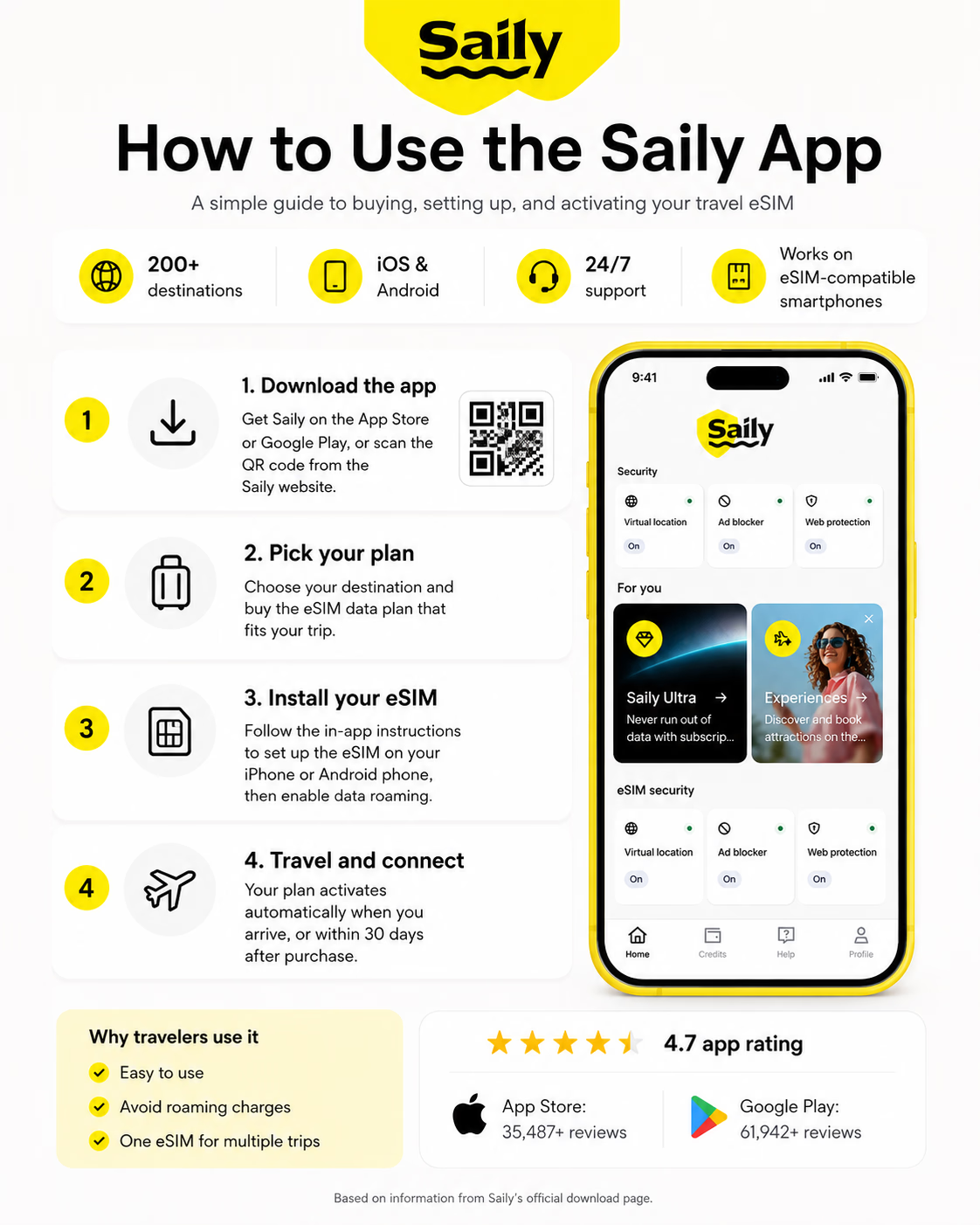
That may sound like marketing polish, but the app page shows Saily leaning quite deliberately into this positioning. The Saily app is available for iOS and Android, offers eSIM data plans in more than 200 destinations, and is presented as a place where users can choose, install, manage, and activate travel data without dealing with airport kiosks or physical SIM cards. Its download page also displays strong public app ratings, with 4.7 shown for both App Store and Google Play listings.
For travelers, that matters. The best eSIM app is not the one with the longest feature list. It is the one that reduces panic at the airport.
The app-first advantage
Saily’s biggest strength is not that it sells eSIMs. Everyone sells eSIMs now. The advantage is that the experience is built around app behavior that travelers already understand.
You download the app, pick a destination, buy a plan, install the eSIM, and activate when needed. Saily says plans can activate automatically when the user reaches the destination, which is exactly the kind of small convenience that makes travel eSIMs feel less technical.
This is important because eSIM adoption still has one awkward barrier: many people are not afraid of eSIMs; they are afraid of setting them up wrong. They worry about switching off their main SIM, losing WhatsApp, triggering roaming, or landing with no connection. A clean app flow can remove more friction than a discount ever could.
READ MORE: Saily Launches the Internet Connectivity Index for Travelers
Saily’s positioning is especially clear for casual travelers. It does not ask the user to understand IMSI routing, roaming agreements, or local carrier logic. It packages the experience in plain travel language: choose your destination, avoid roaming fees, stay online, and manage everything in one app.
That is not revolutionary. But it is commercially smart.
Security becomes the twist
Where Saily separates itself from many consumer eSIM competitors is the security layer. The company promotes features such as virtual location, ad blocker, and web protection inside the eSIM experience. Saily says users can choose from 115+ virtual locations, reduce trackers and ads, and enable web protection from the app.
This is where the Nord Security connection becomes more than a logo in the background. Saily is not trying to win only on gigabytes. It is trying to make connectivity feel like part of a safer travel stack.
READ MORE: Travel eSIM app Saily debuts Ultra: eSIM, VPN, Lounge Access & More
That is a clever move because many travelers already behave this way. They use hotel Wi-Fi, airport Wi-Fi, ride-hailing apps, banking apps, translation tools, and booking platforms in unfamiliar environments. The phone becomes a passport, wallet, map, boarding pass, and inbox. In that context, “mobile data plus security” feels more natural than it would have five years ago.
Saily has also claimed that its ad blocker can reduce data usage significantly, citing an independent research finding of 28.6% average data savings. That is a useful claim because it connects privacy and practicality. Travelers do not only dislike ads because they are annoying. They dislike them because they eat data on limited plans.
 Not just another eSIM reseller story
The travel eSIM market has become crowded. Airalo has scale and consumer familiarity. Holafly has pushed hard on unlimited data. Ubigi often performs well with users who care about automotive, connected-device, and telecom-grade reliability. Nomad eSIM, Jetpac, aloSIM, Airhub, Yesim, and many others are fighting for the same moment: the few minutes before a trip when someone searches “best eSIM for Italy” or “Japan eSIM app.”
Saily’s answer is different. It is trying to build trust through brand adjacency. NordVPN has already trained millions of people to associate the Nord name with privacy and online protection. Saily borrows some of that credibility and applies it to travel connectivity.
READ MORE: NordVPN’s travel eSIM app Saily introduces unlimited data plans
That gives it a sharper consumer story than many smaller providers. But it also creates expectations. If a brand comes from the cybersecurity world, users will expect the app to be clean, stable, transparent, and easy to control. They will be less forgiving of confusing activation flows or vague network behavior.
And this is where the wider eSIM market is heading. The app is no longer just a place to buy data. It is becoming the control layer: plan management, top-ups, usage tracking, security tools, virtual location, account recovery, support, and eventually loyalty or subscription bundles.
Saily seems to understand that.
The bigger market signal
The real story here is not only Saily. It is the direction of consumer travel connectivity.
A few years ago, the main question was: “Can I get cheaper data abroad?” Now the better question is: “Which app will I trust to manage my connectivity every time I travel?”
That is a much more valuable market. It moves eSIM providers away from one-off prepaid transactions and closer to recurring travel utility. Saily’s app-first model fits neatly into that shift.
READ MORE: NordVPN’s travel eSIM app, Saily, preserves nearly 30% of mobile data
Nord Security announced Saily as a travel eSIM product in 2024, describing it as a way to simplify travel, avoid unexpected roaming costs, and bring the company’s cybersecurity experience into connectivity. Its support pages also frame Saily as a prepaid eSIM service created by Nord Security for mobile data in over 200 countries and regions.
That background matters because Saily is not trying to look like a telecom company. It is trying to look like a modern travel utility from a digital security brand.
Where Saily fits next
Saily is not automatically “better” than every other eSIM app. Heavy-data users may still compare it against unlimited-focused players like Holafly. Frequent regional travelers may still look at Ubigi, Jetpac, Airhub, Nomad, or Yesim, depending on coverage, price, speed, and route. Business travelers may need features that consumer apps still do not fully solve, such as pooled usage, admin controls, invoicing, policy management, or managed support.
But Saily has chosen a smart lane. It is not only about cheap data. It is saying that travel connectivity should come with less friction and more protection. That is a stronger story than “we also have 200 destinations.”
The trend to watch is this: travel eSIM apps are becoming travel operating systems in miniature. The winning providers will not be the ones with the prettiest destination list. They will be the ones who make travelers feel in control before departure, during the trip, and when something goes wrong.
Saily is one of the clearer examples of that shift. Not because it invented the travel eSIM, but because it understands that the app is now the product.