Roamless In-App Calling: A Smarter Way to Call Abroad
Most travel eSIM stories still start with data. How many gigabytes do you get? Which country is covered? Does the plan expire after seven days or thirty? That is useful, but it misses something basic about travel: sometimes you still need to make a normal phone call.
Not a WhatsApp call. Not a Zoom link. A real call to a hotel reception desk, airline support line, restaurant, bank, car rental office, clinic, embassy, taxi company or a family member who does not live inside messaging apps.
That is where Roamless’ in-app international calling becomes interesting. Roamless is not just selling another country-by-country eSIM package. Its bigger idea is one app, one balance and one global eSIM that can be used across 200+ destinations, with credits covering mobile data, calls and SMS. Roamless says its Credits do not expire, and its current positioning is clearly moving toward an “all-in-one global connectivity app” rather than a simple travel data product.
Not your phone app
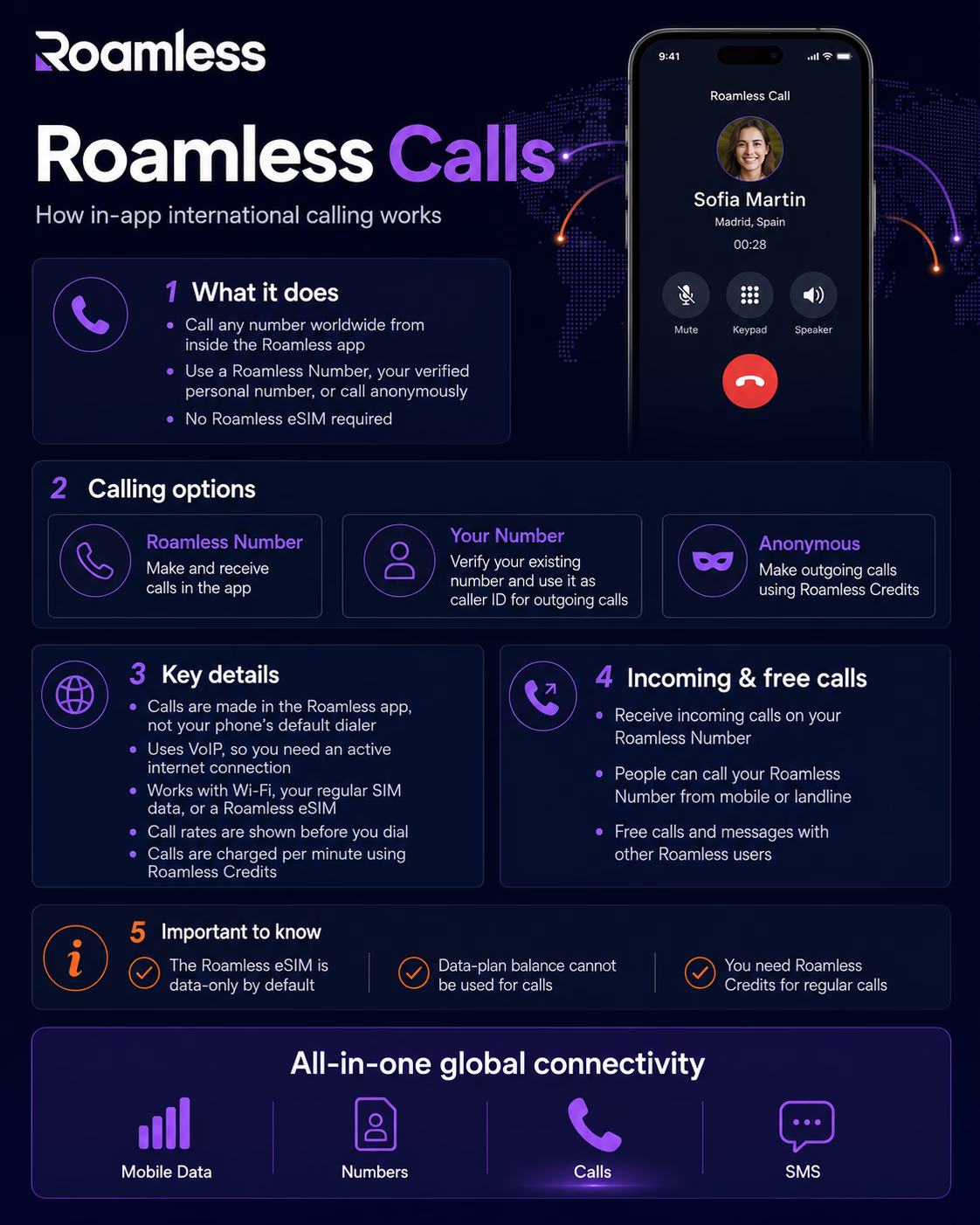
The important detail is that Roamless calling does not turn the eSIM itself into a traditional mobile line. Roamless is clear that its eSIM is data-only, with no default phone number, voice or SMS capability attached to the eSIM profile itself. Regular phone calls through the device’s native phone app still belong to your home SIM or mobile operator, which means roaming charges may still apply if you use that line abroad.
Instead, the calling happens inside the Roamless app. You need internet connectivity, which can come from Wi-Fi, the Roamless eSIM or even your regular SIM’s mobile data. Then you open the Calls tab, use your pay-as-you-go balance and call numbers in 200+ destinations, charged per minute.
READ MORE: Roamless Global eSIM: One App for Every Trip
That may sound like a small distinction, but for travelers it is actually the whole point. It separates the call from the expensive roaming behavior of the primary SIM. You are not “calling abroad” in the old operator sense. You are using an app-based voice layer paid from the same wallet you use for travel data.
Where it feels practical
The feature is not aimed at people who spend hours chatting internationally every evening. That market already has Rebtel, Skype subscriptions, WhatsApp, FaceTime and a long list of VoIP apps. Roamless is solving a more travel-specific problem: the short, practical call that happens at the worst possible moment.
Your airline changes the departure gate. Your hotel cannot find your late check-in note. Your bank blocks a card transaction. The restaurant asks you to confirm a reservation by phone. Your ride is waiting outside a train station with three exits. In those moments, the cheapest data plan is not enough if you cannot actually reach a normal phone number.
Roamless claims international in-app voice calls start from $0.01 per minute, while its app listings and support pages emphasize that rates are shown before dialing. That upfront pricing matters because travelers hate mystery charges more than high charges.
The second number angle
Roamless has also started moving beyond outbound-only calls. Its newer Roamless Numbers feature allows users to subscribe to local numbers in selected countries, including the UK, Canada and Australia, and use them inside the app for calls and SMS. Google Play’s current listing says Roamless Numbers support making and receiving calls, sending and receiving SMS, including 2FA and banking codes.
This is where the story becomes more strategic. A travel eSIM with a number starts to look less like a disposable connectivity product and more like a lightweight global communications identity. For business travelers, freelancers and frequent movers, that is useful. A separate number for travel, work or online services can reduce dependence on the home operator without forcing the user to abandon their primary number.
READ MORE: Roamless – a game-changing eSIM that’s challenging the conventional woes of roaming charges
Still, there is a caveat. Availability, caller ID behavior, SMS reliability and supported use cases will matter. Roamless’ own help content has evolved quickly, with older support pages describing numbers as “coming soon” and newer pages saying users can subscribe to a Roamless Number for incoming calls and SMS. That tells us the product is developing fast, but also that users should check the latest in-app details before relying on it for anything critical.
How it compares
Compared with classic travel eSIM players such as Airalo, Nomad, Ubigi or Holafly, Roamless is leaning harder into the app-as-connectivity-wallet model. Many eSIM providers remain mainly data sellers. Some offer regional plans, unlimited packages or business dashboards, but voice is often missing, pushed to WhatsApp or left to the user’s home SIM.
Compared with pure calling apps, Roamless has a different strength. Rebtel focuses heavily on international calling, including connections over Wi-Fi, mobile data or local phone lines, and Skype still supports paid calls to mobiles and landlines through subscriptions, though Microsoft has moved away from selling new Skype Credit and Skype Numbers.
Roamless sits between those worlds. It is not only a calling app, and it is not only an eSIM app. It is trying to combine travel data, international calling, SMS and numbers around one balance. That is a stronger story than “cheap data abroad”, especially as the eSIM market gets crowded and harder to differentiate.
Conclusion
Roamless in-app calling is not a headline feature for every traveler. Many people will still use WhatsApp and never think twice. But for the kind of traveler who needs to call real-world services, not just app contacts, this feature fills a gap that many travel eSIM brands quietly ignore.
The bigger trend is clear: travel connectivity is moving from “buy a data pack” to “manage your communications layer while abroad.” Data, calls, SMS, verification codes, second numbers and account balance are starting to merge inside the same app. That is where Roamless is making a smart bet.
The risk is complexity. Once an eSIM app adds calling, SMS and numbers, users will expect it to behave like a telecom service, not just a travel app. Reliability, support, number availability and clear pricing will matter more than clever branding. But if Roamless gets that right, its in-app calling feature could be one of the reasons it stands out in a market where too many providers still compete only on gigabytes and destination lists.