Roamless App: One eSIM for Data, Calls and Travel
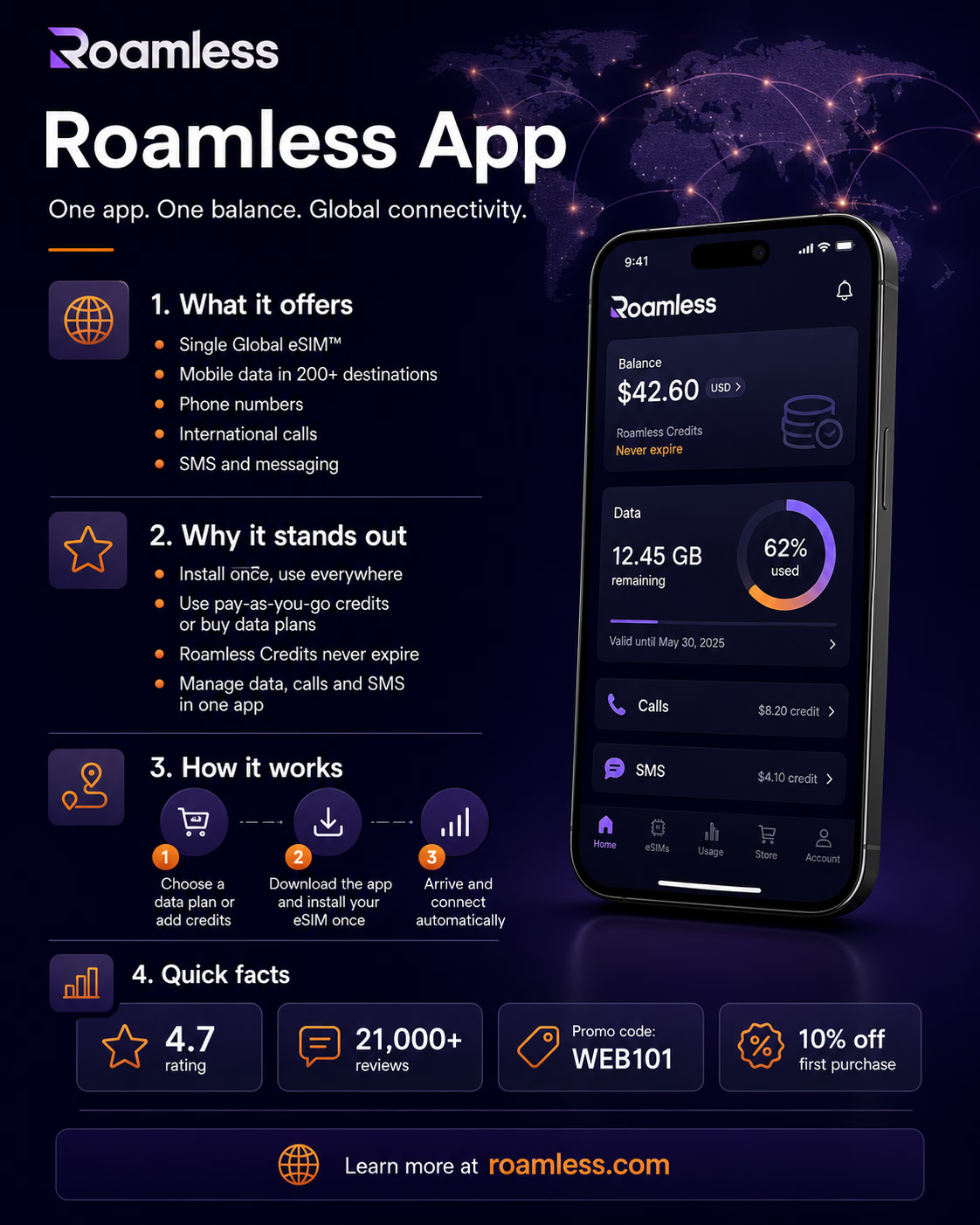
Roamless is not trying to be just another app where you buy a Spain eSlM, a Turkey eSlM, or a Japan eSlM before your trip. Its bigger idea is simpler: install one global eSIM once, keep one balance, and use it across 200+ destinations without constantly swapping profiles or starting again for every country. That matters because the eSIM market is now crowded with apps that all promise “easy travel data”, but many still feel like digital versions of old SIM shops.
Roamless is pushing toward something more persistent.
One app, one balance
The strongest part of the Roamless app is its “single account” logic. Users can add Roamless Credits for pay-as-you-go data or buy fixed data plans, all through the same Roamless eSIM. Its help center says pay-as-you-go rates start from $2.45/GB, while data plan rates can start from $1.50/GB, depending on destination and plan type.
This is where Roamless feels different from the classic “buy a plan, install a profile, use it, forget it” eSIM model. For frequent travelers, the mental load is lower. You do not need to wonder whether your old eSIM still works, whether you should delete it, or whether you need a new QR code before your next trip. Install once, manage everything in the app, and move on.
That sounds small until you are changing countries every few weeks. Then it becomes the whole point.
Data, calls and numbers
Roamless has also been adding communication features beyond data. Its app listings mention international calls, SMS, second number functionality, and free Roamless-to-Roamless communication after number verification.
This is an important shift. Most travel eSIM apps are still primarily data stores. Roamless is starting to look more like a lightweight global communications layer. Not a full mobile operator in the traditional sense, but also not just a data marketplace.
READ MORE: Roamless – Global Travel Connectivity Startup – Raises $12M to Fix Broken Roaming
There is a practical angle here. Travelers still need data first, of course. But business travelers, digital nomads, founders, remote workers, and people managing bookings abroad often need more than WhatsApp. They need to call a hotel, confirm a reservation, contact a bank, or keep a second number separate from their home line. Roamless is clearly trying to sit closer to that real-world use case.
Where it fits in the market
Airalo remains the best-known global eSIM marketplace, with eSIMs in 200+ countries and regions. Holafly is strong in unlimited-data positioning, also across more than 200 destinations. Nomad competes heavily on destination plans and app-based management, with 200+ country coverage and visible per-GB pricing examples.
Roamless is not “better” than all of them in every scenario. That would be too easy, and honestly, not true. Holafly may appeal more to travelers who want unlimited data without thinking too much. Airalo has brand recognition and a mature marketplace feel. Nomad is often sharp on pricing for specific destinations.
READ MORE: Roamless Adds Calls, SMS and Phone Numbers — Is This the All-in-One Travel eSIM?
Roamless’ advantage is different. It is strongest for people who dislike repetitive eSIM purchasing and want a wallet-style travel connectivity app that stays useful after one trip. The app feels built around continuity, not just checkout.
The small catch
There is one important caveat: pay-as-you-go flexibility is not always the cheapest option for heavy users in every country. Travelers who know they will burn through 20GB in one destination may still want to compare fixed plans from Roamless, Nomad eSIM, Airalo, Holafly, or local options before buying.
Also, users should always check network details, throttling terms, validity, hotspot rules, and whether calls/SMS features work the way they expect. In travel connectivity, the headline price rarely tells the full story.
Final take
Roamless is interesting because it points to where travel eSIMs are going next. The first phase of the market was about replacing airport SIM cards. The second phase was about cheaper data plans. The next phase is about persistent connectivity: one app, one identity layer, one balance, and fewer decisions every time you cross a border.
That is why Roamless deserves attention. It is not just selling data. It is trying to make travel connectivity feel continuous. In a market full of one-trip eSIM purchases, that is a smarter and more durable position.