Portugal’s Millennium Bank Adds Travel eSIM to App
A quiet but interesting shift is happening in the travel connectivity market. And this time, it is not coming from a telecom operator or a travel eSIM startup. It is coming from a bank.
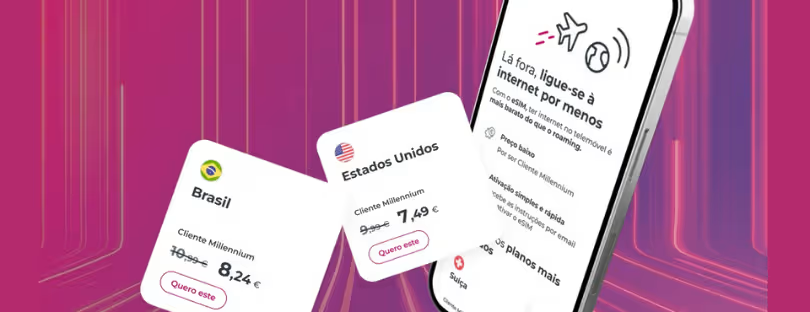
Portugal’s Millennium bcp has become the first bank in the country to integrate a travel eSIM directly inside its mobile banking app. Through a partnership with Portuguese telecom operator NOS, customers can now purchase the “get eSIM travel” offer without leaving the Millennium App.
In simple terms, a banking app has become a distribution channel for mobile connectivity.
The integrated service gives users access to mobile internet in more than 150 countries across five continents, offering instant activation without a physical SIM card.
For travelers, that means one less app to download and one less step before getting connected abroad.
For the telecom industry, it signals something bigger.
A New Kind of Travel Utility
The idea behind the integration is straightforward. When customers are preparing for a trip, they already open their banking app to check balances, exchange currency, or manage travel spending. Adding connectivity to that same environment removes friction from the process.
Instead of searching for a travel eSIM provider online, downloading a separate app, and going through registration steps, customers can simply purchase data from inside the bank’s digital ecosystem.
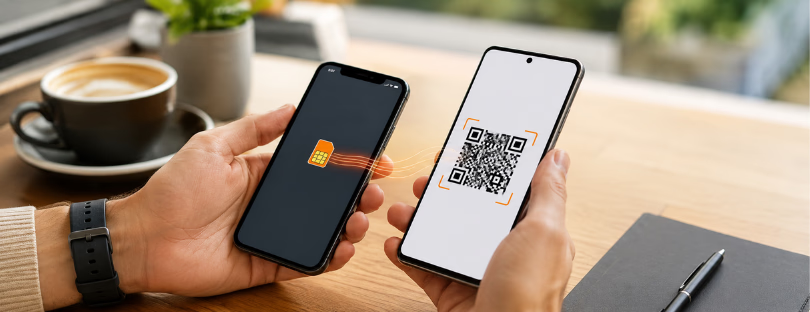
The “get eSIM travel” product itself is a standard travel eSIM offering. It provides regional and country-specific data plans that can be installed directly on compatible smartphones, eliminating the need for physical SIM cards.
Activation happens digitally and the user connects to local mobile networks in the destination country.
Technically speaking, nothing about the eSIM itself is revolutionary.
But the distribution channel absolutely is.
Why Banks Are Entering the Connectivity Game
Banks have something many travel eSIM companies struggle to build: a large, trusted customer base.
Mobile banking apps are now one of the most frequently used digital tools in everyday life. Many customers open their banking apps multiple times a week, sometimes multiple times per day.
That makes the banking interface an extremely powerful place to distribute digital services.
By embedding telecom products into the banking ecosystem, Millennium bcp is effectively turning its app into a travel utility platform. Alongside payments, foreign exchange, and travel insurance, connectivity becomes another service travelers can activate instantly.
From a strategic perspective, this move fits a broader trend often described as “embedded services.”
Instead of forcing customers to jump between multiple apps, companies increasingly bundle services into a single digital environment.
Ride-hailing apps sell insurance. Airlines sell travel insurance and hotel bookings. Super apps combine payments, transport, food delivery, and financial services.
Now banking apps may start selling mobile data.
Telecom’s Distribution Problem
For travel eSIM providers, distribution has quietly become the most difficult challenge in the industry.
Launching a data plan is relatively easy today. The global connectivity infrastructure already exists, and wholesale mobile data can be sourced through aggregators and mobile virtual network operators.
But acquiring customers is another story.
Most travel eSIM providers rely on expensive acquisition channels such as Google Ads, affiliate websites, influencer marketing, or app store promotions. These marketing costs can easily exceed the price of the data plan itself.
That is why integrations like this one are so interesting.
A banking app already has millions of users. Adding connectivity to that environment dramatically reduces customer acquisition costs.
In other words, the bank already did the hard part.

A Growing Fintech–Telecom Convergence
Millennium bcp is not alone in exploring the intersection between fintech and telecom.
Around the world, financial platforms are experimenting with embedded connectivity services. Some neobanks already offer international roaming packages or travel-related digital services inside their apps.
Meanwhile, telecom operators are increasingly partnering with fintech platforms to expand distribution beyond traditional telecom channels.
The logic is simple.
Consumers do not wake up thinking about telecom services. They think about travel, payments, or communication. The companies that control those daily digital touchpoints have a significant advantage.
With more than 200 travel eSIM providers and thousands of prepaid data plans globally, the market is already highly competitive.
That means distribution channels may matter more than the product itself.
What This Means for the Travel eSIM Market
From an industry perspective, Millennium bcp’s move may look like a small feature inside a banking app. But it reflects a much larger shift.
The travel eSIM market is gradually moving from standalone telecom apps toward embedded connectivity platforms.
Instead of asking users to search for connectivity solutions, companies are placing connectivity directly inside the digital services people already use.
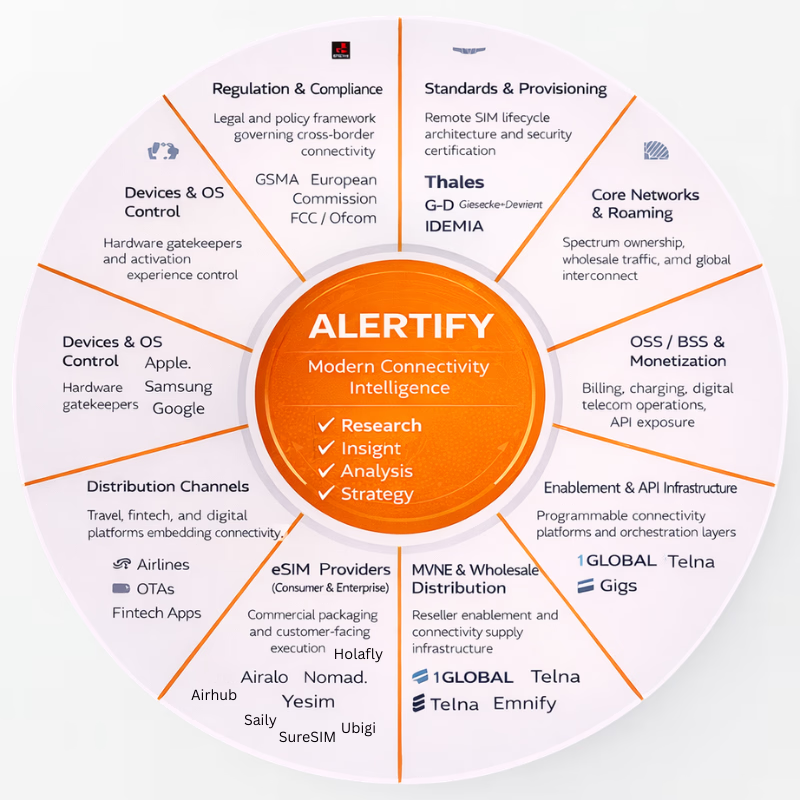
Banks, airlines, fintech apps, travel platforms, and even mobility services are all potential distribution channels.
For telecom operators, this opens new revenue opportunities beyond traditional mobile subscriptions.
For travel eSIM startups, it creates a new competitive landscape where partnerships and integrations may become more important than marketing budgets.
Conclusion: Connectivity Is Becoming an Invisible Layer
The most interesting part of this story is not that a bank is selling eSIMs. It is what that says about the future of connectivity.
Mobile data is gradually becoming an invisible infrastructure layer embedded into other digital services.
In the same way that payments became embedded across digital platforms over the past decade, connectivity may follow a similar path.
Companies like NOS are experimenting with distribution through banking platforms. Global travel eSIM providers are integrating into airline booking flows, fintech apps, and travel marketplaces. And telecom infrastructure providers are increasingly positioning themselves as connectivity platforms rather than traditional carriers.
According to GSMA and industry analysts, the number of eSIM-capable devices and travel connectivity solutions is expected to continue expanding rapidly over the coming years.
But as the market grows, the real battle will not be over coverage or data pricing.
It will be over who controls the customer relationship.
Millennium bcp’s integration shows one possible answer: the future of travel connectivity might not start with telecom companies at all.
It might start with the apps people already trust the most.