Maya Mobile eSIM Bets on Simple Global Connectivity
Maya Mobile sits in one of the most crowded corners of travel tech: the travel eSIM market. That is not a small statement anymore. A few years ago, travel eSIMs were still a clever workaround for roaming bills. Today, they are a proper category, with GSMA Intelligence describing travel eSIM as one of the clearest consumer benefits of eSIM adoption.
So the question is no longer, “Does the world need another eSIM provider?” It is: “What does this provider make easier?”
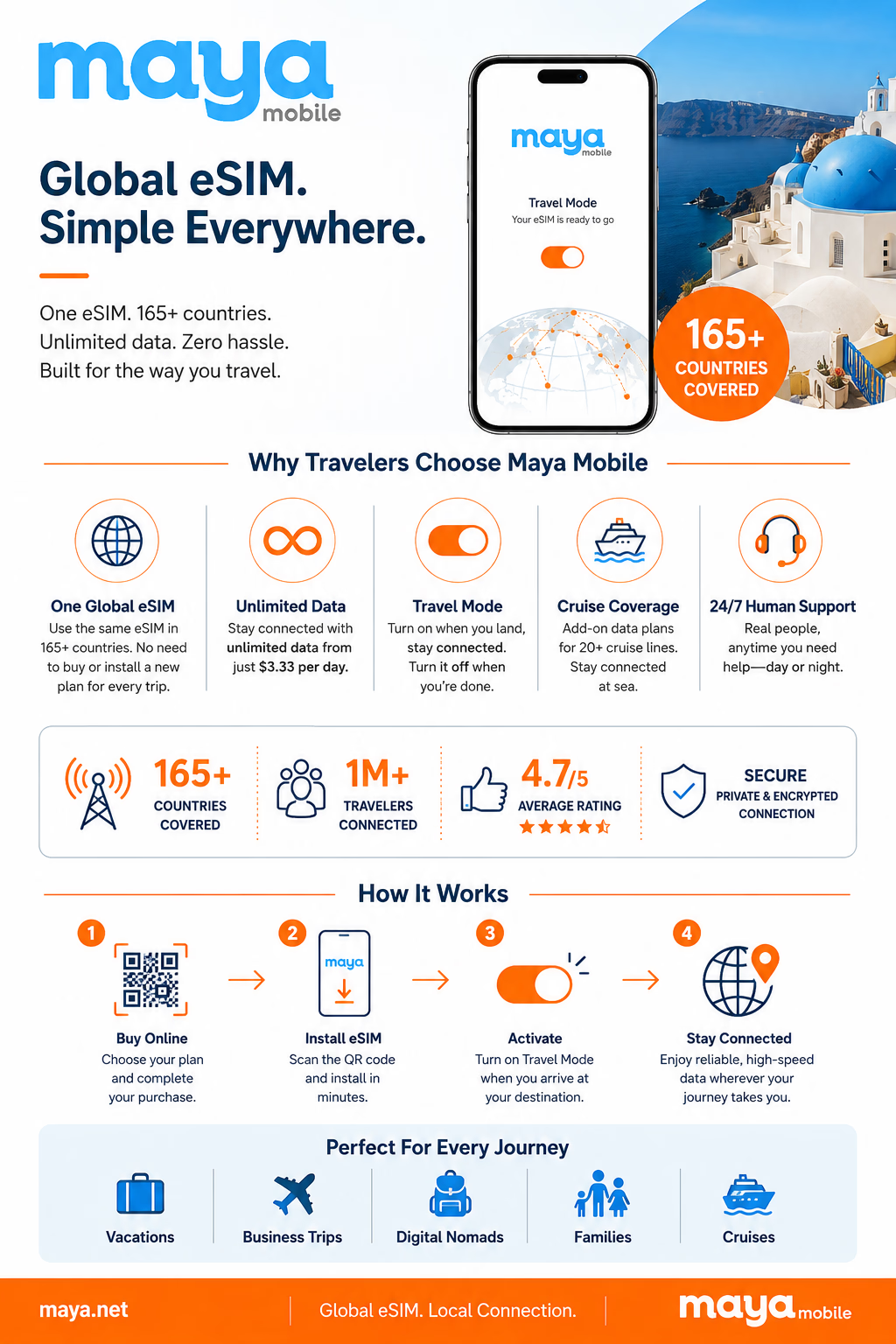
Maya Mobile’s answer is refreshingly direct. The company positions itself around one global travel eSIM that covers 165+ countries, with unlimited data from USD 3.33 per day, and a simple “install once, use every trip” approach. Instead of pushing travellers into buying a new country plan every time they cross a border, Maya wants the eSIM to behave more like a travel utility. Turn Travel Mode on, connect, turn it off when finished.
That sounds basic, but in travel connectivity, basic is often the luxury.
Why Maya’s offer stands out
The most interesting thing about Maya Mobile is not that it sells eSIM data. Everyone sells eSIM data now. The sharper point is that Maya is trying to remove the mental admin around travel connectivity.
Its core promise is one plan across 165+ countries, the same price across destinations, and no need to reinstall a new eSIM for every trip. For travellers doing multi-country travel, this is a real benefit. Think Europe plus Turkey, Japan plus South Korea, or a business trip that suddenly adds another stop. The usual eSIM buying process can become messy fast: country plan, regional plan, validity dates, top-ups, QR codes, and network settings. Maya is clearly trying to flatten that experience.
READ MORE: Save 20% on Maya Mobile eSIMs
There is also cruise coverage, which is a smart detail. Maya says it offers cruise add-ons for 20+ cruise lines, which puts it closer to real travel behaviour rather than just airport-to-hotel use cases. Cruises remain one of the places where travellers still get surprised by connectivity costs, so this is a useful niche rather than a decorative feature.
The company also highlights 24/7 real human support. In eSIM marketing, support is often treated as a footnote. It should not be. Most eSIM problems happen at the worst possible moment: airport arrival, hotel check-in, taxi pickup, or a business meeting abroad. A cheaper plan is not cheaper if the user spends two hours trying to get online.
Unlimited, but still read the rules
Maya leans heavily into unlimited data, and that is attractive. Travellers increasingly use mobile data like they do at home: maps, WhatsApp, Uber, translation, email, video calls, cloud files, and a hotspot for a laptop. The old “1GB for a weekend” logic feels outdated for many people.
But unlimited eSIM plans always need careful reading. Maya’s own help page says unlimited plans may be temporarily throttled to 10 Mbps if daily usage exceeds 3GB, and to 1 Mbps if very high usage continues, with throttling removed within 24 hours. It also says the plans are intended for travellers and mobile business users, not high-frequency machine use or large file transfers.
That is not necessarily a problem. In fact, it is better when providers explain this clearly. The travel eSIM market has had a trust issue around “unlimited” because the word can mean very different things depending on the provider. Maya’s model is attractive for normal travellers, remote workers, and business users who need reliable app access. But someone planning to upload 80GB of video files from a hotel room should still understand the limits before buying.
Where Maya fits in the market
Compared with Airalo, Maya feels less like a marketplace of many small destination packages and more like a simplified global plan. Compared with Holafly, it competes in the unlimited-data conversation, but Maya’s install-once, Travel Mode positioning gives it a slightly different flavour. Compared with Ubigi or Nomad eSIM, the story is less about a large catalogue of plan choices and more about reducing decisions.
That is a smart place to be. Juniper Research expects travel eSIM revenue to grow from USD 1.8 billion in 2025 to USD 8.7 billion in 2030, which means the category is growing fast but also becoming noisier.
As more providers enter the market, feature lists will become less persuasive. Everyone will say they have global coverage, fast data, instant activation, and low roaming costs. The winners will be the brands that make travellers feel confident before they land.
Maya Mobile is strongest when judged through that lens. It is not trying to be the cheapest country-by-country option for every possible destination. It is trying to be the eSIM you install once and stop thinking about.
Final take
Maya Mobile is a good example of where travel eSIM is heading next. The early market was built on price: “Don’t pay roaming.” The next phase is being built on simplicity: “Don’t make me manage connectivity like a second itinerary.”
That is where Maya’s proposition works. One eSIM, global coverage, unlimited-style usage, app-based activation, and a cleaner experience for repeat travellers. It will still need to keep being transparent about throttling, network performance, and real-world coverage, because those details decide trust. But the direction is right.
In a market full of providers selling data, Maya Mobile is selling something slightly more valuable: fewer decisions at the exact moment travellers already have too many.