No More Blind Spots: How Marketplaces Pull Logistics Out of the Last Century
For many years, the freight industry remained a slow-moving giant dependent on paperwork and endless approvals. Digital freight platform
Today, we are witnessing a rapid shift toward automation, where digital platforms take over routine tasks.
The End of the Phone Call Era
Previously, sending a shipment from Chicago to Los Angeles turned into a real quest involving dispatchers, brokers, and dozens of long calls. Now these tangled chains are replaced by transparent algorithms, allowing communication costs to be reduced dramatically. We are implementing new approaches in our daily work, taking into account modern business requirements for reaction speed.
Finding a reliable contractor has become significantly easier thanks to smart platforms where ratings and reviews create an honest, unfiltered picture of the market. A vivid example of such a technological approach is GetTransport.com, which provides instant access to thousands of verified providers around the world. The auction‑based pricing model guarantees absolute market fairness, since every carrier is personally motivated to offer the best possible terms for the client.
Process Digitization: Who Actually Wins?
Abandoning classic intermediaries directly affects business margins in the United States and far beyond. Digitalization brings tangible benefits to literally every participant in the logistics chain:
- Shippers minimize costs thanks to a competitive bidding system;
- Carriers reduce empty miles by filling unused truck space on return routes;
- Brokers transform into digital analysts, shifting routine tasks to smart algorithms.
All this allows us to forget forever about unexpected downtime and massive penalties for missed delivery deadlines. When transportation infrastructure is tightly integrated with cloud solutions, any issue is resolved in fractions of a second.
The Economics of Transparency: What Old Rates Hide
Traditional logistics contracts too often include hidden fees, broker risk insurance, and unjustified surcharges for urgency. If you break down a standard commercial delivery invoice within the United States, you can find a huge number of unpleasant surprises. For clarity, we have collected up‑to‑date data on typical hidden costs when relying solely on classic forwarding methods.
| Cost category | Average percentage of total budget | Primary driver of expense |
| Dispatcher administrative fees | 15-20% | Manual routing and broker margins |
| Empty miles penalty | 10-15% | Lack of backhaul planning |
| Third-party insurance markups | 5-8% | Intermediary risk coverage |
| Expedited shipping surcharges | 25-30% | Last-minute capacity constraints |
Optimizing these non‑obvious expense items, in turn, becomes the main financial priority for the corporate sector this year. Many companies have already clearly realized that paying for inefficient intermediary services consumes a significant share of net profit.
Big Data vs. the Human Factor
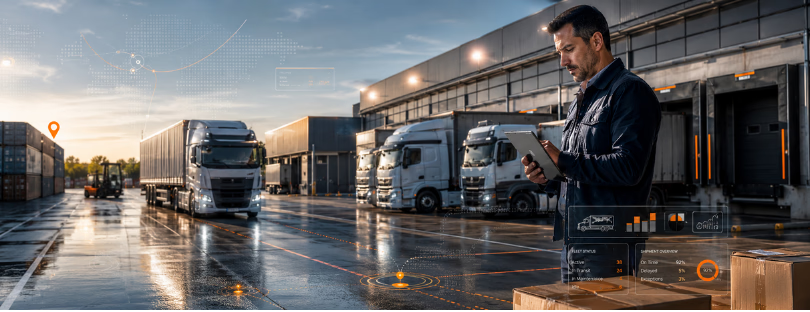
Errors caused by something as simple as manually entering addresses or by silly confusion over cargo dimensions regularly led to multimillion‑dollar losses. And although many processes still depend on people, computer algorithms do not get tired, so the probability of a critical mistake today approaches zero. Artificial intelligence can accurately predict federal highway congestion, sudden weather changes, and even the likelihood of a breakdown of a specific commercial tractor.
At the same time, the widespread shift to smart contracts fully protects both sides of the transaction from sudden non‑fulfillment of financial obligations. As soon as the valuable cargo physically reaches its destination, funds are automatically debited from the customer’s account, and GetTransport also actively uses verified digital driver profiles to strengthen global trust in the market.
There is an opinion that in the next couple of years, only those ambitious forwarders who can offer clients seamless integration with their internal ERP systems will survive. Even mid-sized businesses now have open access to analytical tools that were once an exclusive privilege of the wealthiest multinational corporations.
The New Industry Standard
As the foundation of the modern economy, logistics is finally shedding the rusty shackles of bureaucracy, giving way forever to transparent and fast digital solutions, and the winners in this race for efficiency will be only those companies that are ready to boldly delegate routine tasks to smart algorithms.