LotusFlare Powers MTN South Africa’s Pi Brand
MTN South Africa’s new digital brand, Pi, is not just another app wrapped around a mobile plan. That would be the easy interpretation, and probably the least interesting one.
The bigger story is that MTN is trying to build a cleaner digital layer for connectivity: mobile, home internet and travel eSIM services handled through one app-first experience, without contracts, credit checks or call-centre dependency. For South African customers used to telecom experiences that can still feel heavier than they should, that matters.
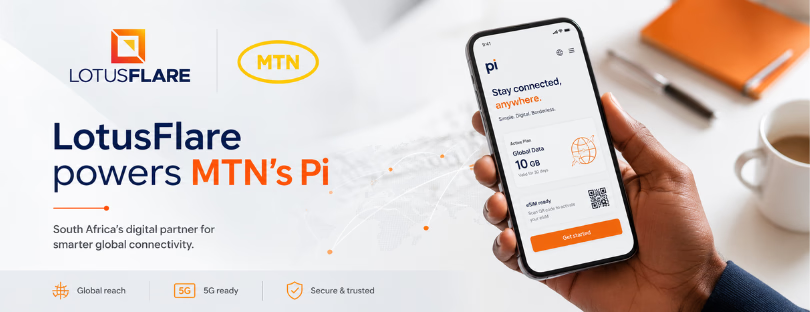
LotusFlare says its DNO™ Cloud platform is powering the launch. The company describes DNO™ Cloud as a fully digital, cloud-native BSS platform supporting the whole Pi ecosystem, from onboarding and product catalog to order management, converged charging, billing and eSIM orchestration.
That sounds technical, but the customer-facing promise is simple: choose a service, activate it, manage it and adjust it without waiting for the old telecom machine to catch up.

Why Pi matters
Pi brings together 5G mobile, fixed wireless access and travel eSIM services in a single digital environment. That mix is worth watching because connectivity is no longer only a monthly SIM plan. It is becoming a flexible service layer that can follow a household, traveller, remote worker or family account across different situations.
For MTN, Pi gives the group a way to serve digital-first users without forcing every interaction through the legacy operator model. For LotusFlare, it is a useful proof point for DNO™ Cloud: a platform that can support speed, scale and continuous product changes without rebuilding the commercial stack each time.
READ MORE: Ericsson Backs LotusFlare to Build the New Network API Economy
According to the announcement, the platform is deployed on public cloud infrastructure while complying with South African regulations. Telecom cloud transformation is not only about moving faster. It also has to deal with data residency, regulatory controls, billing accuracy and service reliability.
Sam Gadodia, CEO of LotusFlare, positioned the launch as a broader market signal:
“Our partnership with Pi is a defining moment not just for MTN, but for the telecoms industry in South Africa at large. With DNO™ Cloud at its foundation, Pi represents a bold step forward in reimagining how telecom services are built, delivered, and experienced, unlocking new possibilities in South Africa and beyond.”
Ernst Fonternel, MTN South Africa’s Chief Consumer Officer: Postpaid & Home, framed it as part of MTN’s customer experience shift:
“Our partnership with LotusFlare to launch Pi represents a pivotal step in redefining the customer experience in South Africa. By accelerating our digital capabilities, we are not only transforming how we serve customers but also strengthening MTN’s leadership in a rapidly evolving telecommunications landscape.”
The eSIM angle
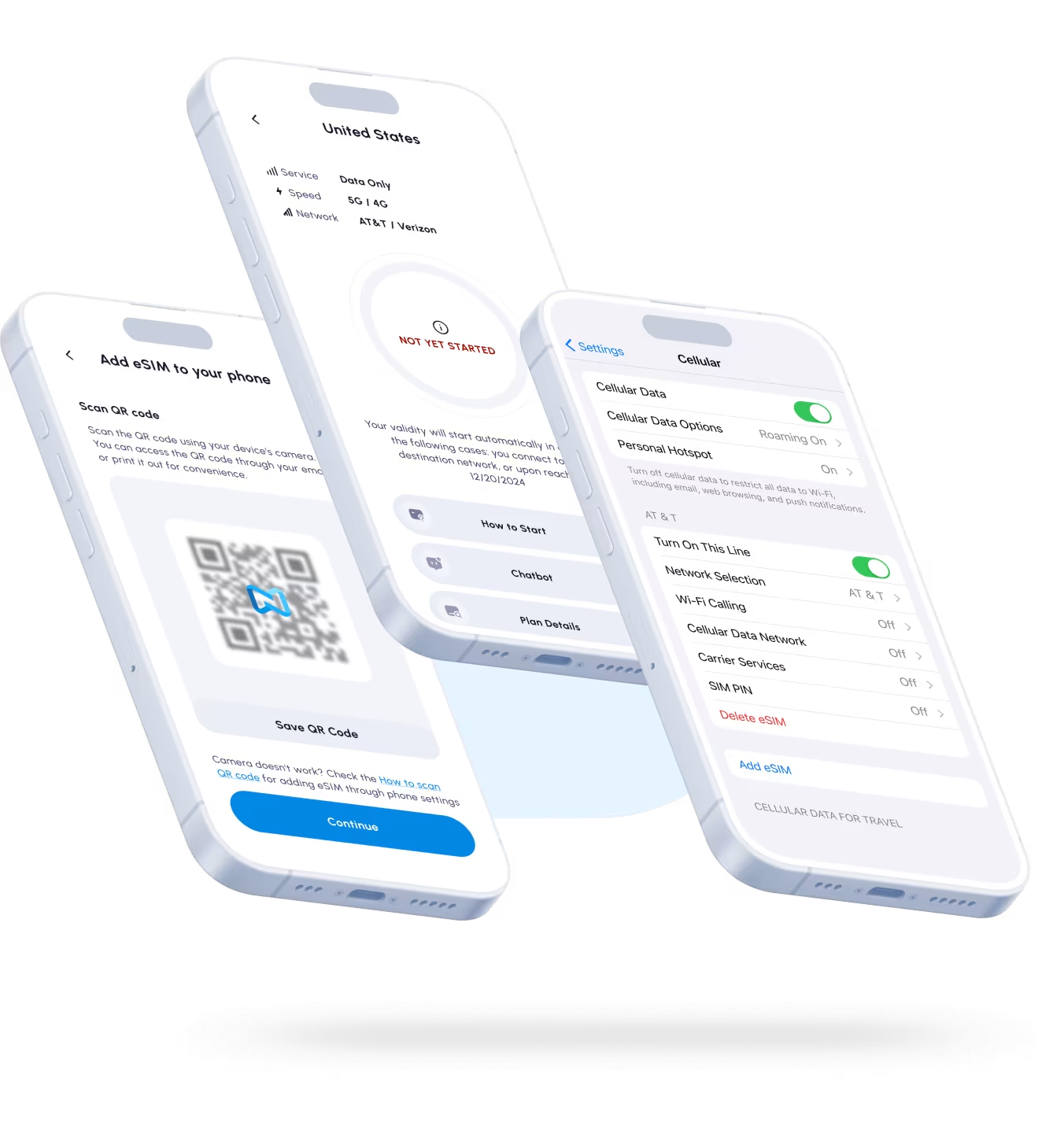
The travel eSIM part should not be treated as a side feature. It is one of the clearest signs that operators now understand the threat and opportunity created by travel eSIM challengers.
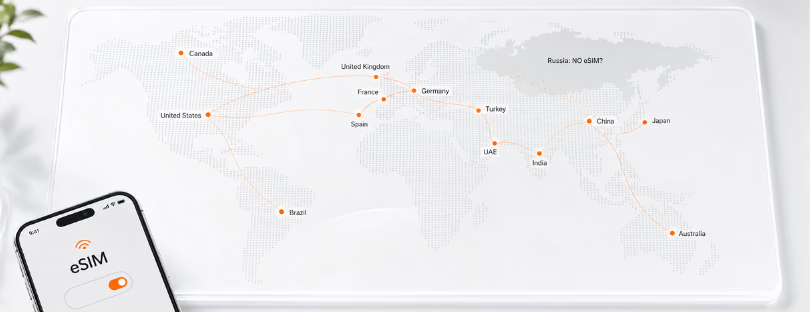
For years, travel eSIM brands won attention by making roaming feel outdated: install before departure, connect on arrival, avoid bill shock. Operators are now responding with their own digital offers, but they have one advantage independent eSIM providers often do not have: network ownership, billing relationships and brand trust in the home market.
READ MORE: The Real Story Behind Nomad eSIM (Hint: It’s LotusFlare)
That does not automatically make operator-led travel eSIMs better. Travel-first players such as Airalo, Holafly, Ubigi, Nomad eSIM and GigSky have trained users to expect simple plan comparison, fast installation and transparent destination pricing. If Pi wants to compete seriously, the travel eSIM experience has to feel as clean as the best specialist apps.
What still has to prove itself
The concept is strong, but digital telecom brands live or die in small details. App reliability, transparent pricing, support quality and clear plan rules will matter more than launch language. Customers may not care whether the backend is cloud-native. They will care whether activation works the first time, whether billing is understandable and whether help is available when something breaks.
Pi may not be the perfect fit for every user. Some customers still prefer store support, traditional contracts or bundled services negotiated through a familiar account manager. Families and flexible data users may find the model more attractive than people who simply want the cheapest one-off travel data plan.
The real signal
Pi sits between two worlds. Traditional mobile operators are trying to modernize without losing control of the customer relationship. Digital-first eSIM and connectivity brands are proving that users have little patience for legacy telecom complexity.
LotusFlare’s role is to make the operator side move faster. MTN’s role is to show whether a large incumbent can create a digital brand that feels genuinely modern, not just cosmetically updated.
The timing is right. GSMA Intelligence has pointed to growing consumer eSIM momentum, while the broader market is moving toward flexible, app-based connectivity models across mobile, fixed wireless and travel use cases. In that context, Pi is part of a larger shift: telecom services are being rebuilt around immediacy, self-service and portability.
If Pi delivers on that promise, it could become a useful model for other operators. If it does not, it will be another reminder that the future of telecom is not won by launching an app. It is won by removing the friction that customers have learned to hate.