Japan Sakura Travel Trends: Timing Is Everything
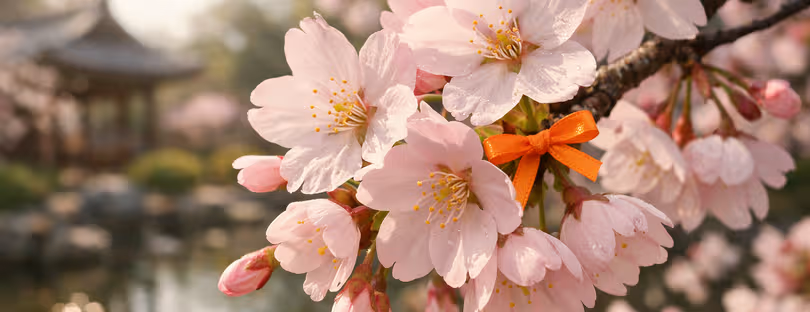
Japan has entered its most poetic moment of the year. Cherry blossoms are in full bloom, and once again, the country has shifted into something slower, softer, and quietly emotional.
For locals, this is not just a visual spectacle. Sakura carries meaning. It reflects both energy and fragility. The bloom lasts only about a week at its peak, which is exactly why it matters so much. You have a narrow window, and if you miss it, you wait another year.
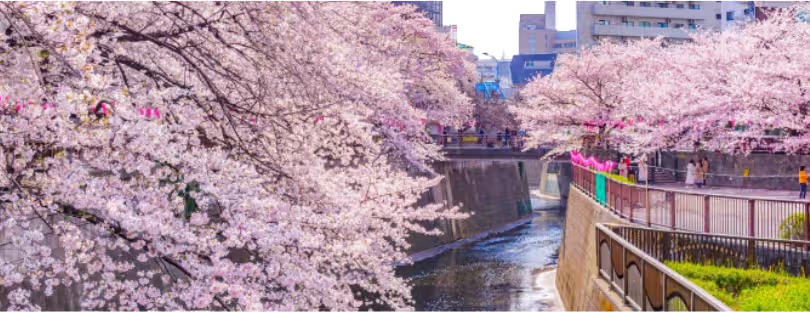
This year is no exception. Parks, temples, and riverbanks across Japan are packed. From Tokyo to Kyoto, people are gathering under pale pink canopies, aware that the moment is already slipping away.
Travel demand follows the bloom
Data from Agoda shows just how global this phenomenon has become. Interest is not only strong domestically. International demand is led by South Korea, Taiwan, Hong Kong, Thailand, and the Philippines.
What stands out is behavior. Travelers are not locking plans months in advance. Agoda reports a 36 percent increase in domestic accommodation searches in February for stays during peak bloom weeks in March. That suggests a more reactive approach. People are waiting for bloom forecasts, then booking quickly to catch the flowers at their best.
This aligns with a broader travel trend. Flexibility is becoming a core part of trip planning. Instead of fixed itineraries, travelers are chasing real-time experiences.
Hanami remains the core experience
At the center of it all is hanami. This centuries-old tradition is still the heart of cherry blossom season.
People gather under the trees with food, drinks, and friends. It is social, but also reflective. Music plays, conversations flow, and for a few hours, everything slows down.
Tokyo reached full bloom last weekend. The timing is precise and fleeting. Within days, petals begin to fall, covering streets and parks like soft snow. That transition from bloom to fall is part of the experience. It is not just about peak beauty, but about watching it disappear.
Where the experience comes alive
Some locations continue to define the season year after year.
Kyoto and Hiroshima
Kyoto’s Maruyama Park remains iconic, especially for its illuminated weeping cherry tree at night. Hiroshima’s Shukkeien Garden offers a quieter, more reflective setting with carefully designed landscapes.
Central Japan classics
Nagoya’s Tsuruma Park and Kanazawa’s Kenrokuen Garden deliver classic cherry-lined paths that feel almost cinematic. These are places built for slow walks and long pauses.
Festival atmosphere
Castles like Kanazawa and Kochi bring a different energy. Festivals here mix blossoms with traditional music, performances, crafts, and tea ceremonies. It is less about quiet observation and more about cultural immersion.
More than tourism
What often gets overlooked is that sakura season is deeply tied to life transitions in Japan.
It marks the start of the new business and school year. Graduates step into jobs. Students move cities. Families experience both beginnings and goodbyes. The blossoms mirror that shift. Beautiful, brief, and full of change.
What this says about travel trends
This is where things get interesting from a broader travel tech perspective.
Cherry blossom season is no longer just a destination-based event. It is becoming a timing-driven travel model. People are traveling for a specific, short-lived window. That creates demand spikes, last-minute bookings, and a premium on accurate data.
Platforms like Agoda are responding with real-time insights and flexible booking patterns. Airlines and accommodation providers are adapting pricing around bloom forecasts. Even connectivity plays a role. Travelers need reliable data to track bloom updates, navigate crowds, and adjust plans on the go.
You see similar patterns in other seasonal events. Tulip season in the Netherlands. Autumn foliage in Canada. But Japan remains the strongest example because of how compressed and culturally significant the window is.
Conclusion
Cherry blossom season is no longer just about flowers. It is a case study in how modern travel works.
A short-lived natural event drives global demand, shifts booking behavior, and rewards flexibility over rigid planning. Platforms like Agoda are surfacing this data, but the bigger story is how travelers are changing. They are less willing to miss moments that cannot be repeated.
Compared to other seasonal travel peaks, Japan’s sakura stands out because it combines emotional meaning with precise timing. That combination creates urgency, and urgency reshapes the entire travel ecosystem.
Looking ahead, expect more travel experiences to follow this model. Real-time driven, experience-first, and built around moments rather than destinations.
And if there is one takeaway for travelers, it is simple. You do not plan sakura months in advance anymore. You watch, you wait, and when the bloom hits, you move.