How many eSIM can be used in iPhone 16?
The iPhone 16 is not just another camera upgrade story. For frequent travelers, remote workers, and anyone tired of airport SIM kiosks, one practical question matters: how many eSIMs can you actually use on it?
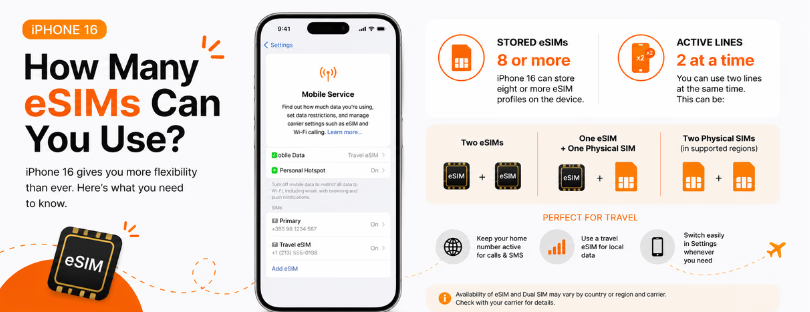
The answer is slightly more interesting than “two.” On iPhone 16 and iPhone 16 Plus, Apple lists Dual SIM support as “nano-SIM and eSIM” plus support for two eSIMs. In everyday language, that means the iPhone 16 can have two active lines at the same time. Those two active lines can be two eSIMs, or one physical SIM and one eSIM, depending on the market.
But active is the key word. Apple also says iPhones can store eight or more eSIMs and let you switch between them in Settings. So the real answer is this: you can store at least eight eSIM profiles on an iPhone 16, but you can only use two lines actively at the same time.
Stored vs active
This distinction matters because many people ask the wrong version of the question.
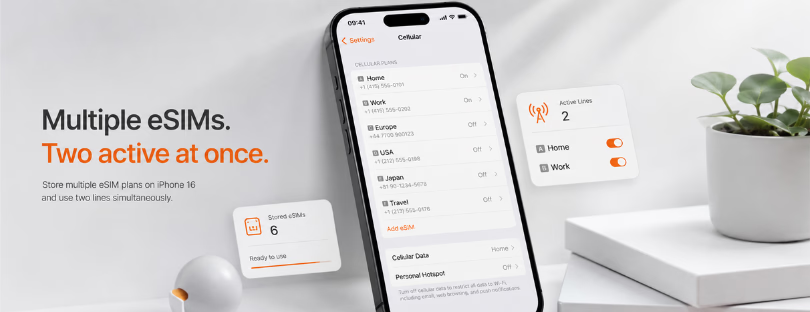
If you are asking, “Can I keep my home number, work number, and several travel eSIMs saved on one iPhone 16?” yes, that is where eSIM starts to feel useful. You can keep a Croatian number, a business line, a US travel eSIM, a Japan eSIM, and a Europe regional plan saved on the device, then switch when needed.
READ MORE: iPhone eSIM Explained
If you are asking, “Can I run five mobile networks at the same time?” no. iPhone 16 is not a mini telecom switchboard. Two lines can be active. For most people, that is enough: one primary number for calls and verification messages, and one data eSIM for travel.
This is also where iPhone feels clean. Apple’s Settings flow is one of the easier ways to label lines, choose which SIM handles mobile data, and keep iMessage or FaceTime tied to the right number. It is not perfect, but it is understandable.
Why does this matter when you travel?
Keep your home SIM active for calls, banking SMS, or WhatsApp identity. Add a travel eSIM for local or regional data. When you land, mobile data can run through the travel eSIM, while your main number stays reachable.
That sounds small until you arrive at an airport and immediately need maps, a ride app, hotel details, or a transfer driver message. The old version involved hunting for Wi-Fi, queueing for a SIM card, or accepting roaming charges because you were too tired to compare options. With iPhone 16, the travel eSIM can be installed before departure and switched on when you arrive.
Not every plan behaves the same. Some eSIMs are data-only. Some include calls or SMS. Some support hotspot, some do not. The iPhone can support the setup, but the provider decides what the plan actually includes.
What could still be better
Transfer between iPhones is usually smooth when carriers support it, but travelers still run into QR codes, carrier apps, activation windows, and customer support gaps. The phone is ready. The telecom ecosystem is not always as ready.
Many users do not know the difference between deleting an eSIM and turning it off. That matters because deleting a travel eSIM can sometimes mean losing access to the profile unless the provider allows reinstalling it. Apple could make this language clearer.
READ MORE: Apple’s Boldest Move Yet: iPhone Air Goes eSIM-Only in Europe
The iPhone 16 is also not the best fit for someone who constantly swaps physical SIM cards in countries where eSIM support is weak. In many major travel markets, eSIM is already normal. In some destinations, especially with smaller local operators, physical SIM still has advantages.

How iPhone compares
Compared with Samsung and Google flagships, iPhone 16 sits in the same modern category: multiple stored eSIMs, two active lines. Samsung says some Galaxy devices can download up to 20 eSIM profiles, although the exact number can depend on chip memory and profile size. Google Pixel devices have also moved strongly toward dual eSIM support in newer models.
So Apple is not alone anymore. The difference is consistency. For travel eSIM users, iPhone has become one of the safest bets because support is predictable across recent models, provider instructions are often written with iPhone first, and travel eSIM apps test heavily on iOS.
That does not mean Android is behind. Samsung may appeal more to users who want more stored profiles. Pixel is attractive for people already deep into Google services. But for a traveler who wants the least drama before a trip, iPhone 16 is easy to recommend.
The real takeaway
The iPhone 16 can store eight or more eSIMs and use two active lines at once. That is the fact. But the bigger story is that eSIM has quietly become part of normal travel planning, not a geeky add-on.
For most travelers, the setup is straightforward: keep your main number active, install a travel eSIM before departure, and use it for data abroad. The benefit is not just cheaper connectivity. It is control. You are not forced into roaming by habit, airport Wi-Fi by desperation, or local SIM shops by timing.
The remaining weak point is not the iPhone. It is the uneven quality of eSIM providers, carrier support, and plan transparency. That is where comparison matters. The iPhone 16 gives travelers the hardware flexibility. Choosing the right eSIM still decides whether that flexibility feels brilliant or annoying.