The Most Overlooked Travel Costs (And Why They Matter)
A new study commissioned by iD Mobile shows that six in ten Brits now rank free roaming as their top priority when choosing a phone plan. That alone tells you something has shifted. Connectivity isn’t a feature anymore. It’s a decision driver.
And yet, despite that awareness, people are still getting burned.
Roaming bills are still catching people off guard
According to the research, based on a survey of 2,000 adults, 34 per cent of Brits have been hit with roaming charges. Of those, nearly a quarter ended up paying £50 or more from a single trip, and around 1.5 million travellers have faced bills exceeding £100.
That’s not edge-case behavior. That’s mainstream usage.
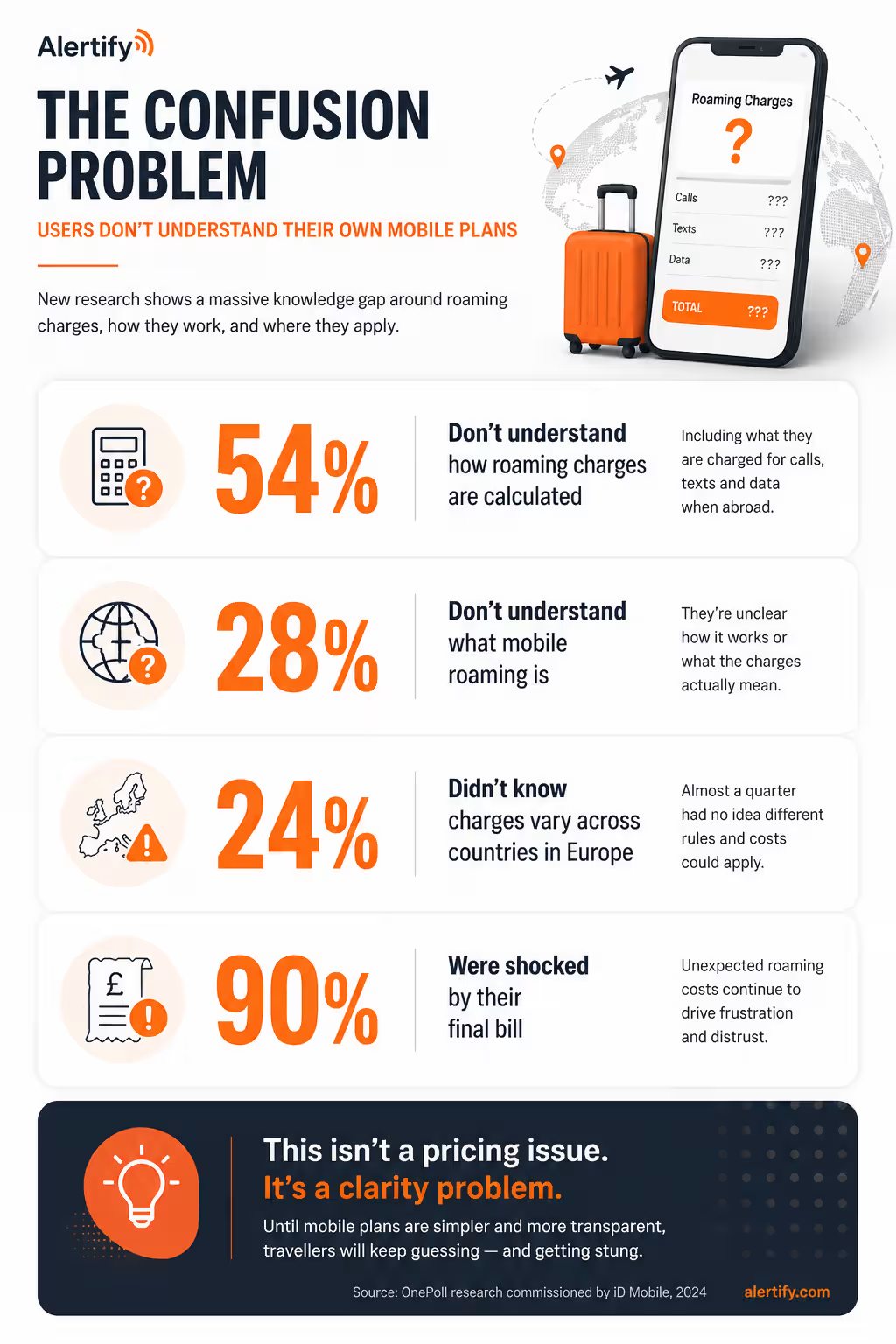
Even more telling is the confusion behind it. Nearly a quarter of respondents admitted they had no idea that roaming charges vary across European countries. This is years after “Roam Like at Home” reshaped expectations across the EU.
The result is predictable: people assume they’re covered, until they’re not.
As an iD Mobile spokesperson put it:
“Being hit with a huge roaming bill when you return home is genuinely frustrating. Our research shows just how many people are unsure about roaming charges, how they work, and where they apply.”
The real problem isn’t price. It’s understanding
What stands out in this study isn’t just the cost. It’s the lack of clarity.
54 percent of respondents said they don’t understand how roaming charges are calculated on their current plan. That includes basic things like what they’re paying for calls, texts, or data abroad.
Even more striking, 28 percent said they don’t actually understand what mobile roaming is.
That’s not a pricing issue. That’s a product design failure.
Telecom operators have spent years competing on bundles, discounts, and “inclusive” offers. But the reality is that most users still don’t know what’s included, when limits apply, or what happens once they cross them.
And that uncertainty changes behavior.
Connectivity is shaping the travel experience
Nearly half of those hit with roaming charges said it negatively affected their holiday. Not slightly. Significantly.
You see it in how people use their phones abroad:
42 percent feel anxious about usage
29 percent constantly check their data
13 percent actively limit what they do
Others go further. 40 per cent switch off mobile data entirely. 20 per cent avoid sending photos or videos.
Think about that for a second. In 2026, people are still turning off data on holiday to avoid unpredictable costs.
That’s not just a telecom issue. That’s a broken travel experience.
And it shows up emotionally, too. Around 30 per cent said they felt disconnected from friends and family while abroad. Not because they wanted to unplug, but because they didn’t trust the cost.
Roaming isn’t the only hidden cost
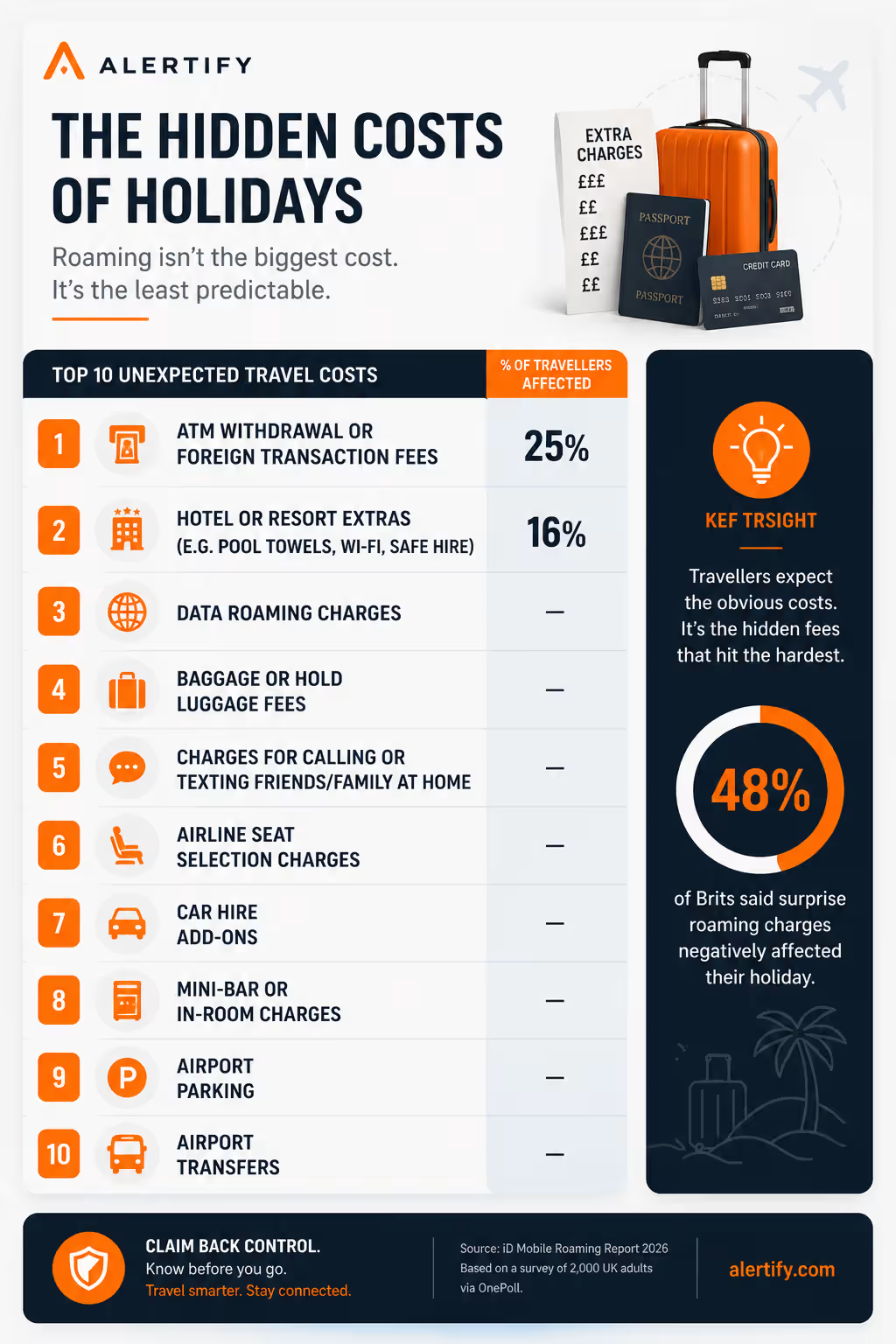
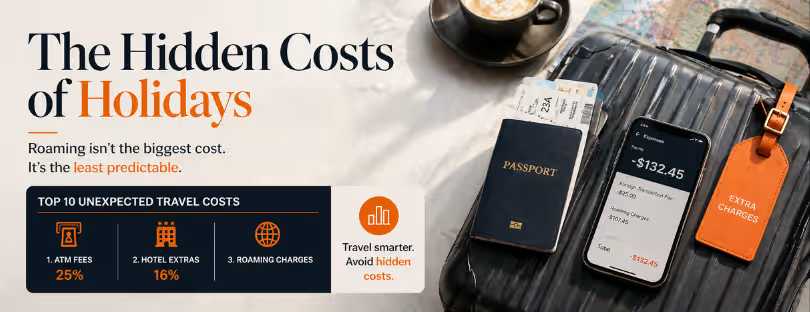
Interestingly, roaming charges ranked third on the list of unexpected holiday expenses.
The top offenders?
ATM withdrawal or foreign transaction fees (25 percent)
Hotel extras like Wi-Fi or pool towels (16 percent)
Roaming sits alongside baggage fees, seat selection, and car hire add-ons. In other words, it’s part of a broader pattern: fragmented, poorly communicated costs layered across the travel journey.
Which raises a bigger question. Why is connectivity still treated like an afterthought?
The market is shifting, but not fast enough
Some operators, including iD Mobile, are trying to simplify things by offering inclusive roaming across multiple destinations. At the same time, traveleSIM providers like Airalo, Yesim, and Ubigi are building their entire value proposition around predictability.
No surprise bills. No country confusion. Just upfront pricing.
That’s why eSIM adoption continues to grow, according to data from GSMA. Not because it’s cheaper in every case, but because it’s clearer.
And clarity is becoming the real premium.
What this really tells us
This isn’t just a story about Brits and roaming charges. It’s a signal of where the market is failing.
People don’t just want lower prices. They want control. They want to know what happens when they land, how much they’ll spend, and what they can actually do with their phone.
Right now, most telecom products still don’t deliver that.
Which is why behavior hasn’t caught up with technology. You can have 5G speeds and global coverage, but if users are still turning off data at the airport, something fundamental is broken.
The real shift is happening outside traditional telecom
The interesting part is where the solution is coming from.
Not legacy operators, but platforms that treat connectivity as part of a broader experience. Travel companies, fintech apps, even airlines are starting to see this gap and move into it.
Because the opportunity isn’t just selling data. It’s owning the moment when a traveler needs to be connected and doesn’t want to think about it.
Driven by wanderlust and a passion for tech, Sandra is the creative force behind Alertify. Love for exploration and discovery is what sparked the idea for Alertify, a product that likely combines Sandra’s technological expertise with the desire to simplify or enhance travel experiences in some way.


 That’s not a pricing issue. That’s a product design failure.