Google Pixel 10A: The Sensible Travel Phone Gets Smarter
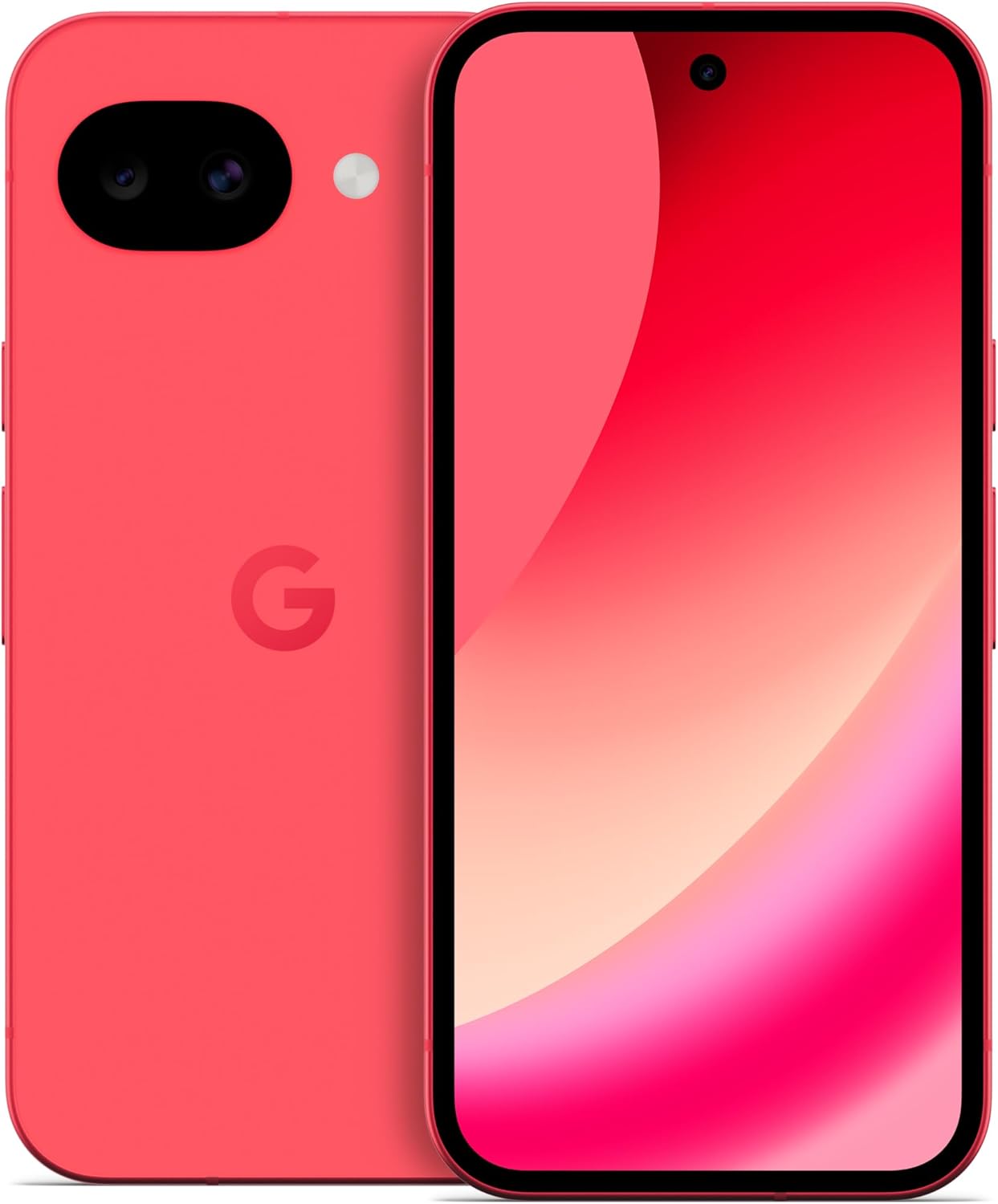
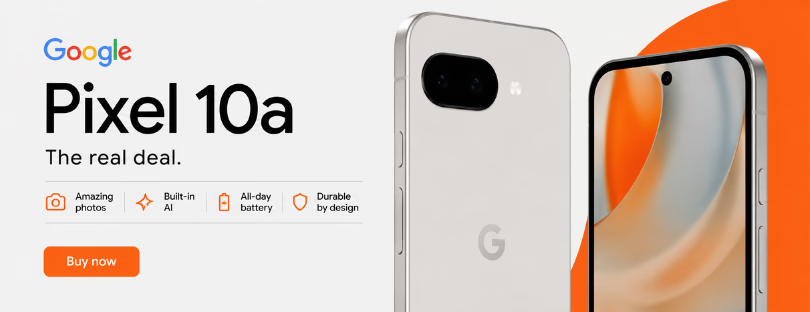
The Google Pixel 10A does not arrive with flagship drama. No foldable trick, no oversized camera island, no design shouting from across the room. Instead, Google has done something more useful: it has made the A-Series feel less like the cheaper Pixel and more like the sensible Pixel.
That matters because the mid-range phone market is crowded. Some brands chase charging speed. Others chase megapixels. Google is chasing a different promise with the Pixel 10A: a phone that works smoothly, takes reliable photos, handles modern connectivity, and does not feel abandoned after two years.
In Europe, the Pixel 10A is expected to sit in the upper mid-range bracket, likely around the €550 mark, depending on the market, taxes, storage version, and launch offers. That puts it above many value-focused Android rivals, so the real question is whether the Pixel 10A justifies paying more for polish, long-term software support, reliable cameras, and proper travel connectivity.
Familiar hardware, smarter priorities
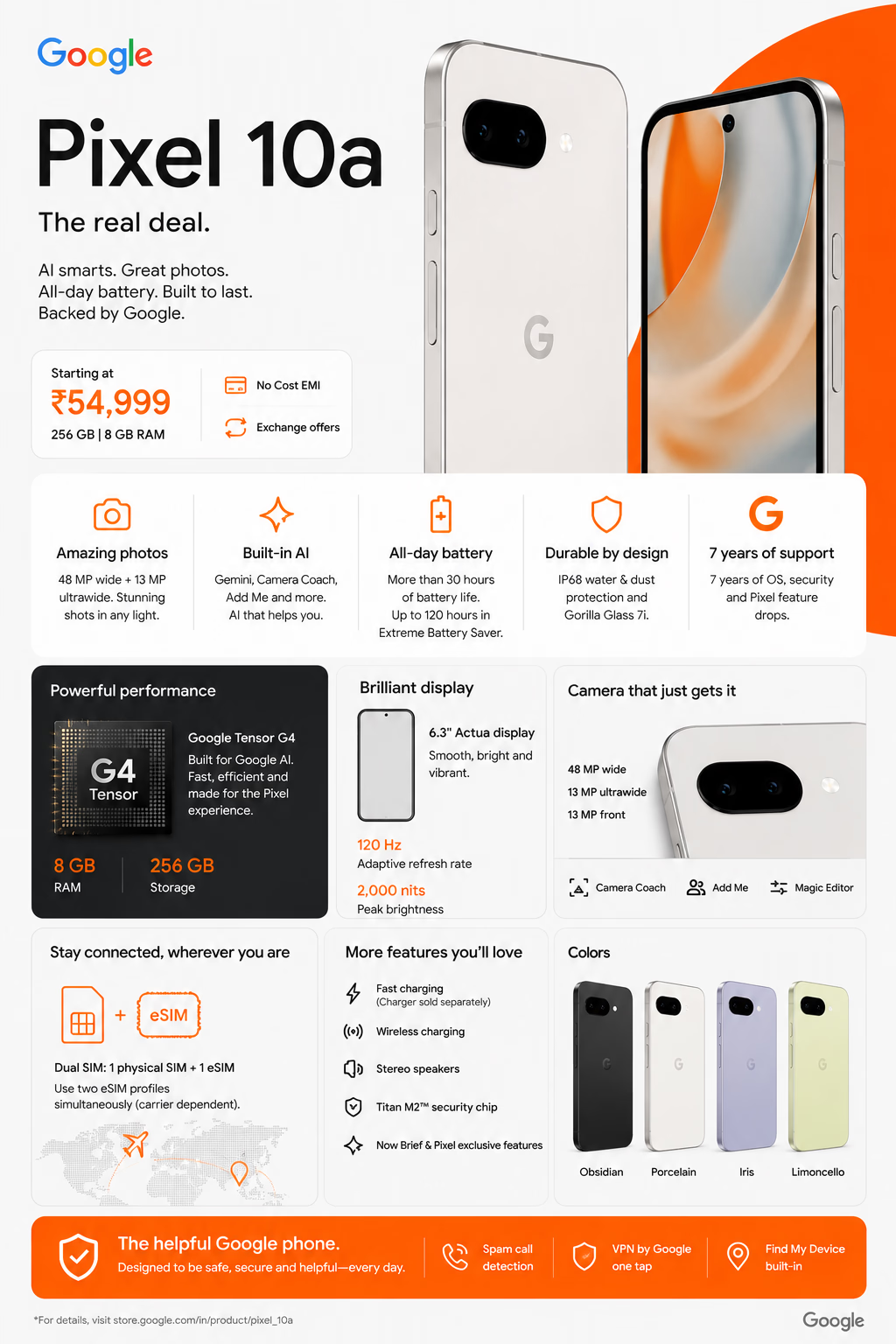
On paper, this is not a phone built to win spec-sheet arguments. The Pixel 10A uses Google’s Tensor G4 chip, with 8GB of RAM and 256GB of storage. The 6.3-inch Actua pOLED display supports a 60-120Hz refresh rate and reaches up to 3,000 nits peak brightness. That is the kind of detail people notice when trying to read a boarding pass outside an airport terminal.
The battery story is practical rather than dramatic. Google claims more than 30 hours of battery life, or up to 120 hours with Extreme Battery Saver, from a 5,100mAh typical battery. Fast charging can reach up to 50% in about 30 minutes, although the compatible 45W USB-C PPS charger is sold separately. Wireless charging is included, which still cannot be taken for granted in this price band.
The design has quiet confidence. It weighs 183g, has IP68 dust and water resistance, Gorilla Glass 7i, and a satin aluminium frame. Google also says the phone is made with at least 36% recycled materials by product weight. It makes the Pixel 10A feel designed for real use.
The camera remains the reason
Pixel phones still live or die by the camera. The Pixel 10A has a 48MP wide camera, a 13MP ultrawide camera, and a 13MP front camera. There is no dedicated telephoto lens, which matters if you often shoot concerts, skylines, or kids playing sport from across a field. Super Res Zoom up to 8x helps, but software zoom is not magic.
READ MORE: Google Pixel 10 Could Go eSIM-Only in the US
Where the Pixel 10A should feel strong is the everyday stuff: food in bad restaurant lighting, quick street shots, group photos where someone blinks, and travel images taken when you do not want to adjust settings. Camera Coach, Add Me, Auto Best Take, Magic Eraser, Night Sight, Real Tone, and conversational photo editing all point to Google’s real strength: removing friction from photography.
Google is not selling the highest camera number. It is selling fewer missed moments.
A travel detail worth noticing
For Alertify readers, connectivity is not a footnote. The Pixel 10A supports dual SIM with one physical nano-SIM and one eSIM. Google also says that, where carriers allow it, two eSIM profiles can be used simultaneously with dual 5G standby. That is useful for travellers who want to keep their home number active while using a travel eSIM for data abroad.
It also supports 5G Sub-6, Wi-Fi 6E, Bluetooth v6, NFC, and USB-C 3.2. In plain English, this is a modern travel phone. Not the most extreme, but flexible enough for people who swap networks, use mobile payments, hotspot laptops, and move between local SIM, eSIM, and roaming.
The catch is the price
The Pixel 10A is not for everyone. If you want raw performance, a bigger screen, faster charging, or more aggressive hardware for less money, brands like Nothing, OnePlus, Xiaomi, and Samsung will be hard to ignore. Nothing Phone 3a, for example, sits in a much lower price bracket in India and offers a bold design with strong everyday specs. Samsung’s Galaxy A-series remains a safer pick for people already comfortable with One UI.
A newer Tensor chip would have made the Pixel 10A feel more future-proof. Faster charging would help too, especially in a market where many European buyers are used to Android rivals promising much quicker top-ups. A telephoto camera would also make the camera system feel more complete. At around the €550 mark, depending on market, taxes, storage version, and launch offers, Google cannot pretend this is a budget phone.
READ MORE: 14 new things you can do with Google Pixel thanks to AI
Still, the seven-year OS, security, and Pixel Drop update promise changes the calculation. Many cheaper phones look attractive on day one but feel tired after two software cycles. The Pixel 10A is built around the opposite idea: buy once, keep it longer, let the software improve around you.
Final thoughts
The Pixel 10A is not exciting in the loudest sense. It is not trying to be. Its appeal is quieter: a compact-ish Android phone with strong cameras, clean software, long updates, proper eSIM support, durable build quality, and Google AI built into the daily flow.
For frequent travellers, creators, business users, and anyone tired of phones that age badly, that combination makes sense. The Pixel 10A is also a reminder of where the smartphone market is heading. The winning phones will not always be the ones with the biggest numbers. They will be the ones that reduce small daily frustrations: bad photos, weak updates, confusing SIM setups, poor outdoor visibility, and battery anxiety.
That is where Google’s A-Series is becoming more strategic. It is Google’s argument that a smarter phone does not need to shout.