


Flix Adds ChatGPT Search for Bus and Train Travel
Flix has put bus and train search inside ChatGPT, and the timing is more interesting than the announcement first suggests. This is not just another travel brand adding an AI layer because everyone else is doing it. It is a sign that conversational trip planning is moving from novelty to a distribution channel.
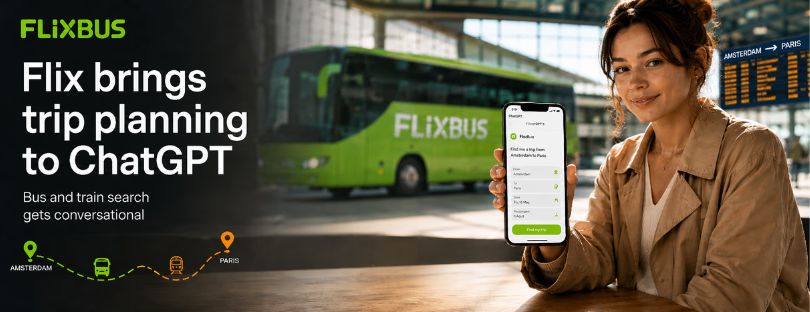
The company behind FlixBus and FlixTrain has launched a ChatGPT app that allows users to search for routes, compare travel options and access Flix connections through natural conversation. Instead of opening a transport app, typing cities, checking dates and adjusting filters, travellers can ask for a trip in plain language and be directed toward relevant Flix options across Europe, North America, Türkiye, South America and Asia-Pacific.
That sounds simple. In travel, simple is usually the hardest thing to build.
Travel planning gets more conversational
The Flix integration works because buses and trains are exactly the kind of product where travellers often do not start with a perfectly formed search. Someone may know they want to get from Zagreb to Munich next Friday, but not whether a night bus, train connection, cheaper departure or nearby stop makes the most sense.
Conversational search is useful in those messy middle moments. A traveller can ask for affordable routes, compare departure times, adjust plans, or narrow the search without jumping between tabs. For students, digital nomads, budget travellers and city hoppers, that is a very natural behaviour.
“As travellers increasingly look for simpler and smarter ways to plan trips, conversational AI is becoming a natural part of the travel experience,” said Daniel Krauss, Co-founder and Chief Information Officer at Flix. “By bringing Flix into ChatGPT, we are making affordable and sustainable collective travel more accessible to millions of users globally.”
The important word here is “accessible”. Flix already has the inventory and the booking platform. ChatGPT gives it another front door.
Why Flix is a strong fit
Flix is not a small mobility experiment. Founded in Munich in 2013, the company has grown into one of the best-known travel-tech players in intercity coach and rail. Its model is asset-light, meaning it does not operate like a traditional transport company with every vehicle sitting on its own balance sheet. Instead, it combines route planning, pricing, booking, passenger information and partner operations through a technology platform.
That structure makes the ChatGPT move logically. Flix is already a software-led transport network. Adding conversational discovery is less about replacing the Flix app and more about meeting travellers earlier in the planning journey.
READ MORE: FlixBus Opens Its First European Lounge in Zagreb
It also fits the sustainability story. Flix says passengers choosing its services over cars or planes helped avoid an estimated 1.5 million tonnes of CO₂ emissions globally in 2025. This claim should still be read carefully, because avoided-emissions calculations depend on assumptions about what travellers would have chosen otherwise. Even so, it gives Flix a useful market position: affordable travel with a lower-carbon argument attached.
 The booking still matters

There is one caveat. AI can make discovery easier, but travel booking remains a high-trust moment. People want the right date, the right station, baggage details, refund rules, delay information and payment security. A nice chat interface does not remove those practical checks.
That is why the best version of this integration is not “book everything blindly inside AI”. It is better seen as an intelligent discovery layer that helps users understand their options before completing the transaction through the correct Flix booking domain.
READ MORE: FlixBus and FlixTrain tickets now available on Omio
This matters because the wider travel industry is still testing where AI actually helps. Expedia, Booking.com, Virgin Australia, ixigo and other travel brands have been experimenting with conversational planning and app integrations inside ChatGPT. The pattern is becoming clearer: AI is strong at inspiration, comparison and route discovery. The final booking step still benefits from specialist platforms, confirmations and customer support.
Not for every trip
For simple city-to-city journeys, this could be genuinely useful. For complex trips with tight transfers, accessibility needs, pets, heavy luggage, group travel or strict refund requirements, travellers should still check the full booking page carefully before paying.
That is not a weakness unique to Flix. It is the reality of travel commerce. A chatbot can reduce friction, but it cannot make a missed connection less annoying. The real breakthrough would be if conversational tools could help with live disruption updates, alternative routes, station changes, refund rules and rebooking flows in a way that feels reliable, not just clever.
Final take
Flix’s ChatGPT app is a smart move because it does not try to turn buses and trains into something glamorous. It makes them easier to find. And in collective transport, that is often the missing piece.
Compared with flight-first platforms and hotel-heavy OTAs, Flix has a different advantage: it owns a focused, practical use case. Travellers are trying to get from one place to another affordably, often across borders, and often with flexible timing. Conversational AI can help there without pretending to reinvent travel.
The bigger trend is clear. Travel brands are starting to treat ChatGPT and similar AI platforms as discovery channels, not just marketing experiments. For Flix, this could bring casual planners into bus and train travel before they default to flights or cars. For travellers, it means one more way to compare options quickly. The winners will not be the companies that shout “AI” the loudest. They will be the ones who make real travel decisions feel less fragmented.


