eSIMs: What It Is, How It Works, and Why It Matters More Than Ever
The eSIM has moved from “nice travel feature” to one of the most important shifts in mobile connectivity. A few years ago, most people still thought of it as something for tech enthusiasts, frequent flyers, or people buying a new iPhone. Today, it is becoming part of the normal mobile experience.
An eSIM, short for embedded SIM, is a digital SIM built into your phone, tablet, smartwatch, laptop, or connected device. Instead of inserting a small plastic SIM card, you download a mobile profile from a carrier or eSIM provider and activate your plan digitally.
That sounds simple. And for users, it usually is. But behind that simplicity sits a much bigger change in how mobile connectivity is sold, activated, managed, and switched.
According to GSMA Intelligence, global eSIM smartphone penetration was expected to reach 5% by the end of 2025 and 10% by the end of 2026, showing that eSIM adoption is still early but moving into the mass market phase. Counterpoint Research also reported that eSIM-capable device shipments crossed the half-billion mark in 2024, which signals that the device side of the market is no longer the bottleneck it once was.
What Is an eSIM?
An eSIM is a programmable SIM built directly into a device. It performs the same basic job as a physical SIM card: it identifies you to a mobile network and allows your device to connect to cellular service.
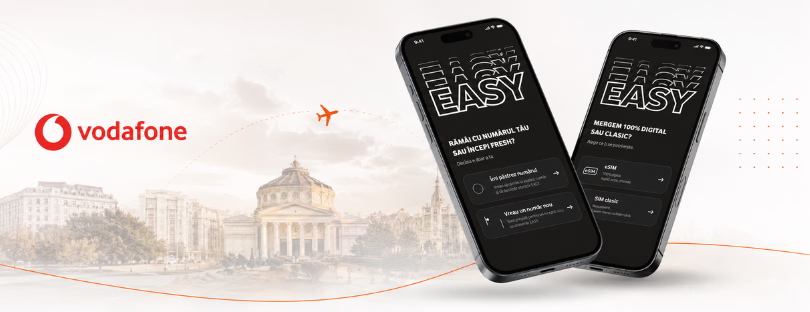
The difference is that an eSIM does not need to be removed, replaced, cut, shipped, or inserted. Your mobile plan is stored as a digital profile. You can usually activate it by scanning a QR code, using a provider app, tapping a carrier activation link, or following your phone’s built-in setup flow.
Apple, for example, supports several eSIM activation methods on iPhone, including eSIM Carrier Activation, eSIM Quick Transfer, QR code setup, and in some markets, activation through a network provider link.
For the average user, this means less plastic, less waiting, and fewer “where is my SIM ejector tool?” moments.
For the mobile industry, it means something bigger: connectivity is becoming software.
How Does an eSIM Work?
An eSIM works through remote SIM provisioning. Instead of giving you a physical SIM card with your mobile identity already written onto it, the carrier or eSIM provider sends a digital profile to your device.
That profile contains the information your phone needs to connect to a mobile network. Once installed, the eSIM behaves much like a traditional SIM card. You can use mobile data, receive service from the network, and in some cases use calls and SMS, depending on the plan.
READ MORE: Explore eSIM Technology with a Free Trial
For travel eSIMs, the process is usually even more straightforward. You choose a destination, buy a data plan, install the eSIM profile, and activate it when you arrive or when instructed by the provider. Some eSIMs activate immediately after installation, while others activate only when they first connect to a supported network.
That detail matters. Many travellers waste part of their plan’s validity because they activate too early, often before leaving home.
Why eSIM Is Useful for Travellers
The travel use case is where eSIM has become especially powerful.
Instead of landing in another country and searching for a local SIM card kiosk, travellers can buy an eSIM before departure and connect shortly after arrival. No queue. No passport scan at a random airport counter. No plastic card to lose. No need to remove your home SIM.
For frequent travellers
For frequent travellers, this is more than convenience. It changes the planning logic.
You can compare data plans before your trip, choose the right amount of data, and avoid
expensive roaming surprises.
For business travellers, nomads, and families
Business travellers benefit as well. They can keep their primary number active while using
a separate eSIM for data abroad. Digital nomads can switch between plans depending on
destination, data needs, and price. Families can set up plans before travelling instead of
dealing with connectivity problems after landing.
This is why eSIM has become such a strong category in travel tech. It solves a problem that is small until the moment it becomes urgent.
Main Benefits of eSIM
The biggest benefit of eSIM is convenience. You can often buy and activate a mobile plan without visiting a store or waiting for a SIM card to arrive by post.
The second benefit is flexibility. Many phones allow several eSIM profiles to be stored, even if only one or two are active at the same time. That makes it easier to keep separate profiles for home, work, and travel.
The third benefit is security. A physical SIM card can be removed from a stolen phone. An eSIM cannot be taken out in the same way, which can make it harder for someone to quickly separate the device from its mobile identity.
READ MORE: 6 Common eSIM Mistakes You Should Avoid
The fourth benefit is space. Device manufacturers can use the room previously reserved for SIM trays for other components, slimmer designs, or better water resistance. This matters especially for smartwatches, IoT devices, tablets, and ultra-thin smartphones.
And finally, eSIM makes global connectivity easier to distribute. A traveller in Europe can buy a data plan for Japan, the United States, Turkey, or the UAE in a few taps. That is why so many travel eSIM providers have grown quickly in recent years.
What Are the Drawbacks?
The eSIM experience is improving, but it is not perfect.
The first issue is device compatibility. Not every phone supports eSIM, especially older models or budget devices. Before buying an eSIM plan, users should always check whether their device is eSIM-compatible and unlocked.
The second issue is carrier support. eSIM may be technically available on a device, but not every mobile operator in every country supports it equally. Some markets are still slow, restricted, or heavily dependent on regulatory approval. China, for example, has seen eSIM-related delays around eSIM-only iPhone models, showing that market support is not just a technical question.
The third issue is transfer friction. Moving an eSIM from one phone to another can be easy with some carriers and annoying with others. Some providers allow self-service transfer. Others require a new QR code, customer support, or manual reactivation.
The fourth issue is plan confusion. Many travel eSIM plans are data-only, meaning they do not include a local phone number, voice calls, or SMS. For many travellers that is fine because WhatsApp, iMessage, Telegram, banking apps, maps, and email run on data. But users who need traditional calls or SMS should check before buying.
The fifth issue is that “unlimited” does not always mean what users think it means. Some eSIM providers offer unlimited plans with fair usage policies, speed reductions, or hidden limitations. Always read the plan details.

Is eSIM More Expensive Than a Physical SIM?
Not always.
This is one of the biggest problems with older eSIM articles. They often say eSIM is more expensive than a traditional SIM card, but the reality depends on the use case.
A local physical SIM may still be cheaper for long stays in one country, especially if you are comfortable buying from a local operator. But for short trips, multi-country travel, business travel, last-minute trips, or people who value convenience, an eSIM can be the smarter choice.
The real comparison is not “eSIM vs SIM card.” It is:
Is this cheaper than roaming?
Is this easier than buying a local SIM?
Does it give me enough data for how I actually travel?
Does it work in all the countries I need?
Does the provider have clear pricing and support?
That is where eSIM becomes interesting. It is not always the cheapest option on paper. But it is often the most practical one.
How to Get an eSIM
Getting an eSIM is usually simple.
First, check that your device supports eSIM. On most modern phones, you can find this in the cellular or mobile network settings. You should also make sure your phone is unlocked if you plan to use a third-party travel eSIM provider.
Second, choose your provider. This could be your home carrier, a local operator, or a travel eSIM provider. Look at coverage, data allowance, validity period, hotspot support, activation rules, and refund policy.
READ MORE: eSIMs for the Frequent Travelers
Third, install the eSIM. You may receive a QR code, activation code, app-based installation flow, or carrier activation prompt.
Fourth, set your mobile data line correctly. This is especially important if you want to keep your main SIM active for calls or messages while using the eSIM only for data.
Finally, test the setup before travelling if the provider allows it, but avoid activating the plan too early if validity starts immediately.
Choosing the Best eSIM Provider
There is no single best eSIM provider for everyone.
Some travellers want the cheapest 1GB plan for a weekend trip. Others need reliable 20GB or 50GB data for remote work. Some want unlimited data. Others care more about hotspot support, app experience, customer service, or regional coverage.
A good eSIM provider should be transparent about:
- Coverage countries or destinations
- Network partners where available
- Plan validity
- Data limits and fair usage rules
- Activation timing
- Hotspot support
- Refund conditions
- Customer support availability
For Alertify readers, this is where comparison matters. The best eSIM is not the one with the loudest marketing. It is the one that fits your trip, your device, and your real data behaviour.
Final thoughts
The eSIM is not just a smaller SIM card. It is a sign that mobile connectivity is becoming more flexible, more digital, and more closely tied to the way people actually move.
For travellers, the value is obvious: faster setup, easier switching, and fewer roaming shocks. For mobile operators and eSIM providers, the change is more complicated. They are no longer just selling connectivity. They are competing on user experience, pricing clarity, activation design, network quality, and trust.
That is why eSIM deserves better coverage than the usual “what is an eSIM?” explainer. The real story is not only that SIM cards are becoming digital. The real story is that connectivity is becoming something users expect to buy, activate, and manage as easily as any other travel service.
And that is exactly why eSIM is becoming one of the most important keywords in travel technology.
The best eSIM providers offer a variety of plans, coverage, and features to meet the needs of different users. Here are some of the top eSIM providers: