EE’s EU Roaming Price Shock: £10 to £25 in Months
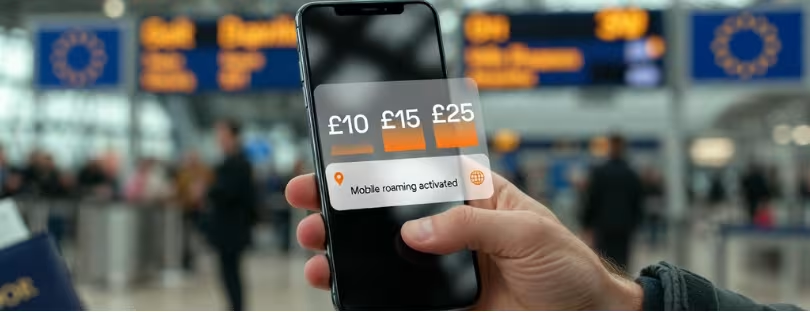
EE customers across the UK are voicing growing frustration after the operator dramatically increased the price of its EU roaming package. In just a few months, the monthly roaming pass jumped from £10 to £25, a sharp 150% increase that many customers say feels difficult to justify.
For travelers who regularly visit mainland Europe, the change has sparked a wave of criticism online, with some users threatening to switch providers altogether.
At the heart of the issue is a simple question that has resurfaced across the UK telecom market since Brexit: how much should it actually cost to stay connected when traveling in Europe?
Roaming Charges Are Back in the UK
Before Brexit, UK mobile users benefited from the EU’s “Roam Like at Home” regulation, which allowed them to use their domestic data plans across the European Union without additional charges.
That era ended quickly.
In the years following the UK’s departure from the EU, several mobile operators began reintroducing roaming fees. Major networks such as EE, Three, and Vodafone started charging customers daily or monthly fees when using their phones abroad in Europe.
For many users, the most common option became a daily roaming fee, typically around £2 per day.
EE currently charges its contract customers £2.29 per day to use their phone abroad as they would at home. Alternatively, users can purchase a monthly roaming pass designed for longer trips.
The issue is that this monthly pass has become significantly more expensive in a very short period of time.
A Price Increase That Caught Customers Off Guard
Until earlier this year, EE’s monthly EU roaming pass cost £10.
In March, the price rose to £15.
Then, by mid-October, the cost increased again to £25.
The result is a 150% price increase in less than a year, and it arrived shortly after EE had already raised contract prices by 14.4% earlier in April.
For customers already dealing with inflation and rising telecom bills, the sudden increase has triggered strong reactions.
One EE customer, Phillip White, contacted Guardian Money to question whether the change was even legal. He had recently signed a new two-year contract when the roaming add-on cost £10, and felt the rapid price hikes undermined the expectations he had when agreeing to the deal.
Many other customers have voiced similar frustrations across forums and social media.
Some have questioned why they should remain with EE when competitors appear to offer better roaming policies.

How EE Justifies the Increase
EE says the price increase reflects the growing cost of providing roaming services.
In a statement to Guardian Money, the company explained that the adjustment accounts for “the increased cost of providing roaming services along with investments into its network and UK customer services.”
This argument highlights an important reality in telecom economics.
Roaming is not free for operators. When customers travel abroad and use their phones, the home operator must pay wholesale fees to the foreign network providing the connectivity.
Those wholesale costs can fluctuate, particularly now that the UK is no longer part of the EU regulatory framework that previously capped roaming prices between operators.
However, while that explanation may make sense from an operational perspective, the comparison with competing providers is what makes EE’s pricing change controversial.
Competitors Are Taking a Different Approach
Some UK operators have decided to absorb those roaming costs rather than pass them directly to customers.
Tesco Mobile recently announced that its customers will continue to enjoy free roaming in mainland Europe until at least 2025.
Meanwhile, O2 and Virgin Mobile have emphasized that inclusive EU roaming remains part of their standard offering.
This positioning allows them to differentiate themselves from competitors who have reintroduced roaming fees.
In practical terms, that means UK travelers now face a fragmented roaming landscape. Some networks still offer seamless European connectivity, while others charge extra for essentially the same service.
For customers, the result is confusion and a growing sense that roaming pricing lacks consistency.
What the Regulator Says
The UK telecom regulator Ofcom has not intervened directly in the pricing decision, but it has reminded operators of their obligations regarding contract transparency.
According to Ofcom, telecom providers must ensure that their terms and conditions are clearly communicated to customers.
If a company changes the terms of a contract, it must provide at least one month’s notice and allow customers to exit the contract penalty-free if the change is not beneficial to them.
This rule exists to protect consumers from unexpected changes during long-term agreements.
However, in practice, many customers remain uncertain about what rights they actually have when pricing changes occur.
Telecom expert Ernest Doku from Uswitch advises customers to carefully review their mobile plans before traveling.
Some EE contracts already include roaming passes as part of their “inclusive extras,” which could help travelers avoid the additional monthly charge.
But for many customers, those benefits are not immediately obvious when signing up for a contract.
A New Reality for UK Travelers
The return of roaming charges is one of the most visible telecom consequences of Brexit.
While EU citizens still benefit from standardized roaming protections across member states, UK users now rely entirely on the pricing strategies of their mobile providers.
That means roaming policies can vary widely depending on the network.
For travelers, the practical impact is clear: staying connected abroad now requires more planning than it did just a few years ago.
Customers must compare roaming policies carefully and understand exactly what their contract includes before boarding a flight.
Conclusion: The Bigger Connectivity Shift
EE’s roaming price increase is not just a customer service controversy. It reflects a deeper transformation happening across the telecom industry.
Roaming used to be heavily regulated in Europe. Today, pricing decisions are once again shaped primarily by market competition rather than regulatory rules.
Operators are now experimenting with different strategies. Some choose to charge extra for roaming to offset costs. Others use free roaming as a competitive advantage to attract and retain customers.
For travelers, that means connectivity is becoming a strategic differentiator among mobile providers.
But there is another trend quietly reshaping the conversation as well.
An increasing number of travelers are bypassing traditional roaming entirely by using travel eSIM services. These digital SIM solutions often offer prepaid data packages that can be significantly cheaper than daily roaming fees from traditional operators.
As the travel connectivity market evolves, the real question may no longer be whether roaming costs £2 or £25 per month.
It may be whether travelers continue using traditional roaming at all.