Data Roaming Meaning: Costs, Risks and Options
Data roaming is what happens when your phone uses mobile data on a network that is not your home operator’s network.
That is the clean definition. But the real-world meaning is a little more interesting.
When you land in another country, your phone does not magically stop needing internet. Maps still want your location. WhatsApp still syncs. Email still refreshes. Instagram still loads videos you did not ask for. If your home mobile operator does not own a network in that country, your phone connects to a partner network instead. That is roaming.
So, when people ask “what does data roaming mean?”, the practical answer is this: your phone is borrowing another operator’s network so you can stay online abroad.
Simple. Useful. And sometimes expensive.
Why does it matter again?
For years, “data roaming” was one of those phone settings people were told to fear. Turn it off before you fly. Never touch it. Wait for hotel Wi-Fi. Pray Google Maps works offline.
That fear came from real bills. International roaming used to be messy, opaque, and often outrageously priced. A few background app updates could turn into a nasty surprise. The FCC still advises travellers to check roaming rates before travelling, switch off automatic downloads, monitor usage, and understand that roaming charges may vary widely by carrier and destination.
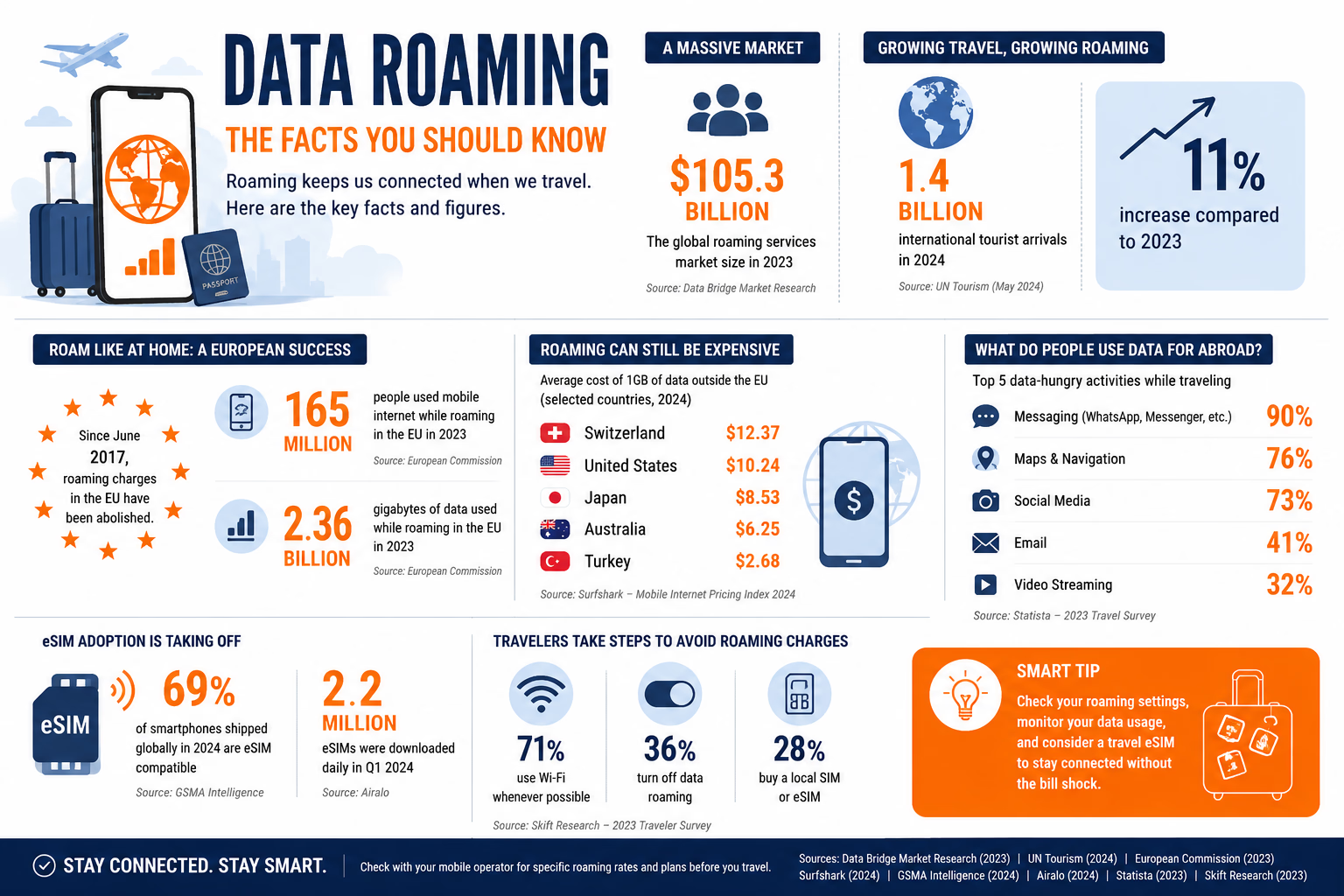
Inside the European Union, the situation is very different. Under the EU’s “Roam Like at Home” rules, travellers moving between EU countries can generally use calls, texts, and mobile data at domestic rates, subject to fair use policies. That is why many Europeans have become relaxed about roaming inside the bloc.
But outside those protected zones, data roaming still matters. A traveller going from Germany to Switzerland, Croatia to Turkey, the UK to the US, or France to Dubai may suddenly move from “nothing to worry about” to “please check the small print.” The phone experience looks the same. The billing logic does not.
What your phone is doing
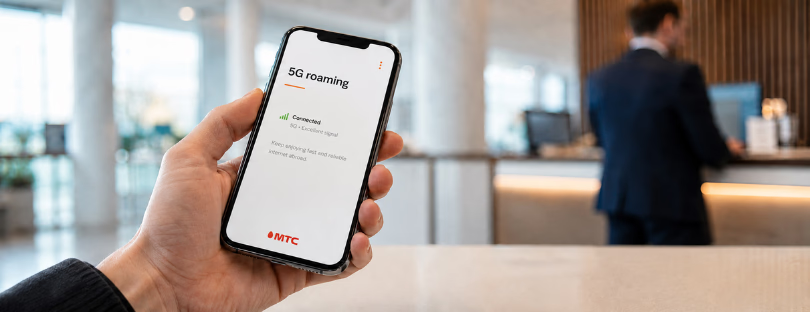
When data roaming is switched on, your phone is allowed to connect to a foreign mobile network for internet access. That could be 4G, 5G, or in some cases a slower fallback network.
Behind the scenes, your home operator and the visited network have commercial agreements. Your phone authenticates through your SIM or eSIM profile, the visited network carries your data traffic, and the billing relationship goes back to your home provider.
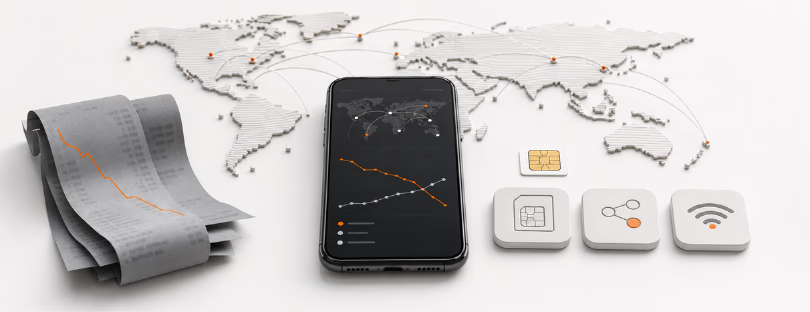
To the traveller, it feels like one service. To the telecom industry, it is a chain of networks, wholesale rates, agreements, authentication, traffic routing, and billing systems. This is why roaming can be smooth in one country and painful in another. It is not just about signal bars. It is about commercial architecture.
This is also why “data roaming” and “mobile data” are not exactly the same thing. Mobile data means your phone uses a cellular network for the internet. Data roaming means it is doing that outside your home network’s normal coverage area.
The setting everyone ignores
Most phones have a data roaming toggle. On iPhone, it sits under cellular settings. On Android, the wording varies slightly by manufacturer, but the logic is the same.
If data roaming is off, your phone should not use mobile data on a roaming network. You may still connect to Wi-Fi, receive some network messages, or make emergency calls, depending on the country and device. But normal mobile internet abroad should be blocked.
READ MORE: EU Roaming Explained: What’s Free, What’s Limited, What Still Costs
If data roaming is on, your phone can use foreign mobile networks when available.
That sounds obvious, but here is the catch: apps do not behave politely just because you crossed a border. Cloud photo backups, app updates, video previews, maps, email attachments, social media feeds, and system services can all consume data in the background. The FCC specifically warns that automatic downloads and background data can create roaming charges if travellers are not careful.
This is why the roaming toggle is not just a technical setting. It is a financial control.
Roaming is not always bad
Here is where the conversation has become more nuanced.
Data roaming is not automatically a rip-off. In many cases, it is the easiest and most reliable option. Business travellers often prefer keeping their regular number active. Families want something that works the second they land. Some operator roaming passes are now much clearer than they used to be, especially for short trips.
The problem is not roaming itself. The problem is unclear pricing.
If your operator offers a transparent daily roaming pass, with a clear allowance and a reasonable cap, roaming can be perfectly acceptable. If your operator charges per megabyte outside a bundle, it can become absurd very quickly.
A traveller does not care whether the data session is routed through a wholesale roaming agreement, an eSIM marketplace, a local prepaid SIM, or a travel connectivity platform. They care about three things: will it work, how much data do I get, and what will it cost?
That is the shift.
How eSIM changed the meaning
The rise of travel eSIMs has changed how people think about roaming.
Before eSIM, your main choices were limited: use your home operator’s roaming, buy a local physical SIM, or hunt for Wi-Fi. eSIM added a fourth option: install a digital data plan before or during the trip, often from a specialist travel eSIM provider.
GSMA Intelligence has described travel eSIM as one of the clearest consumer eSIM use cases, noting that it is expanding mobile connectivity for travellers and helping convert “silent roamers”, people who might otherwise avoid mobile data abroad entirely. Its 2026 analysis also reported that, across 11 major surveyed countries, 12% of consumers who took international trips in the previous 12 months used eSIM while travelling abroad.
That number matters. It shows that eSIM is no longer just a tech feature for early adopters. It is becoming a practical roaming alternative.
But travel eSIMs are not magic either. Some are data-only. Some do not include a phone number. Some routes traffic through distant infrastructure, which can affect latency. Some advertise “unlimited” but apply fair usage or speed management. And some are excellent for light tourist use but not suitable for enterprise teams, remote workers, or heavy hotspot users.
So the better question is no longer “roaming or eSIM?” It is “Which connectivity model fits this trip?”

Roaming, local SIM, or travel eSIM?
Traditional roaming is best when convenience is the top priority and the price is clear. It keeps your home SIM active, often keeps your number fully functional, and avoids setup friction.
A local SIM can be cheaper for long stays, especially if you need a local number or large amounts of data. But it usually means finding a shop, dealing with registration rules, swapping SIMs, and sometimes navigating local-language plans.
READ MORE: eSIMs vs. Local SIM Cards: Which Option Wins?
A travel eSIM sits in the middle. It is fast, digital, and usually cheaper than out-of-bundle roaming. It is especially useful for short trips, multi-country travel, digital nomads, and people who do not want to depend on airport kiosks or hotel Wi-Fi.
The market is now crowded with travel eSIM providers, operator roaming passes, global bundles, regional plans, and app-based connectivity offers. That competition is good for travellers, but it also creates confusion. One plan may be cheaper. Another may have better local network access. Another may offer unlimited data. Another may be better for hotspot use. The headline price rarely tells the full story.
What travellers should check
The smartest thing a traveller can do is decide before landing.
Check whether your destination is covered by your home operator’s roaming plan. Look for the exact cost, not just the phrase “international roaming.” See whether there is a daily cap, a fair use limit, or a reduced-speed threshold. If you are using eSIM, check whether the plan is data-only, whether hotspot is allowed, which countries are included, and when the validity starts.
Also check the boring things. Is your phone unlocked? Does it support eSIM? Do you need your regular number for bank verification codes? Are you travelling through several countries or staying in one place? Will you mostly use maps and messaging, or will you upload videos and work from a laptop?
These small questions decide whether roaming is convenient, expensive, or simply the wrong tool.
Conclusion
Data roaming used to mean one thing: risk. Today, it means choice, but only if the traveller understands the difference.
The old roaming model still has a place, especially when operators make pricing simple and predictable. The EU showed that regulation can turn roaming from a luxury into a normal mobile experience. Outside regulated markets, however, travellers still need to pay attention. The same phone, the same apps, and the same habits can produce very different bills depending on where the network agreement sits.
Travel eSIM providers changed the market by giving users a practical alternative. They made connectivity feel more like buying a digital travel product than negotiating with a telecom tariff sheet. But the best eSIM players are not just selling cheap gigabytes. They are selling clarity: install fast, know the price, understand the limits, stay connected without drama.
That is where the market is going. Roaming will not disappear. It will become one option inside a wider travel connectivity menu. For travellers, the winning move is not to turn data roaming on or off blindly. It is to know what that switch actually allows, what your operator will charge, and whether an eSIM or local plan gives you a better deal for the trip you are actually taking.