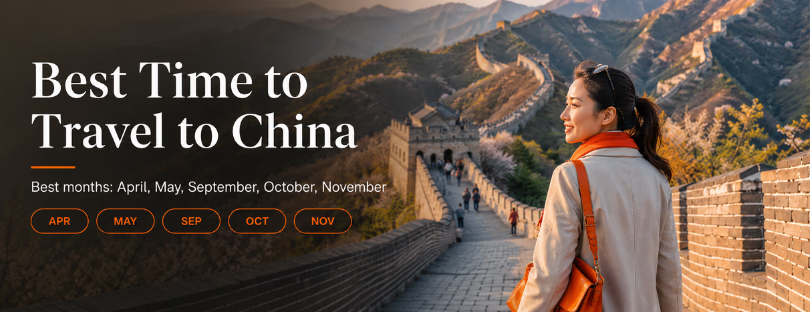
Best Time to Visit China Without Crowds or Weather Regret
The best time to travel to China is no longer just a weather question. It is a crowd question, a price question, and increasingly, a digital-readiness question.
China is seeing renewed interest from international travelers. Visa-free access has widened, and the 240-hour transit visa-free policy has made short stopovers easier for eligible travelers. Shanghai, Beijing, Guangzhou and Chengdu are serious city-break and multi-city options again.
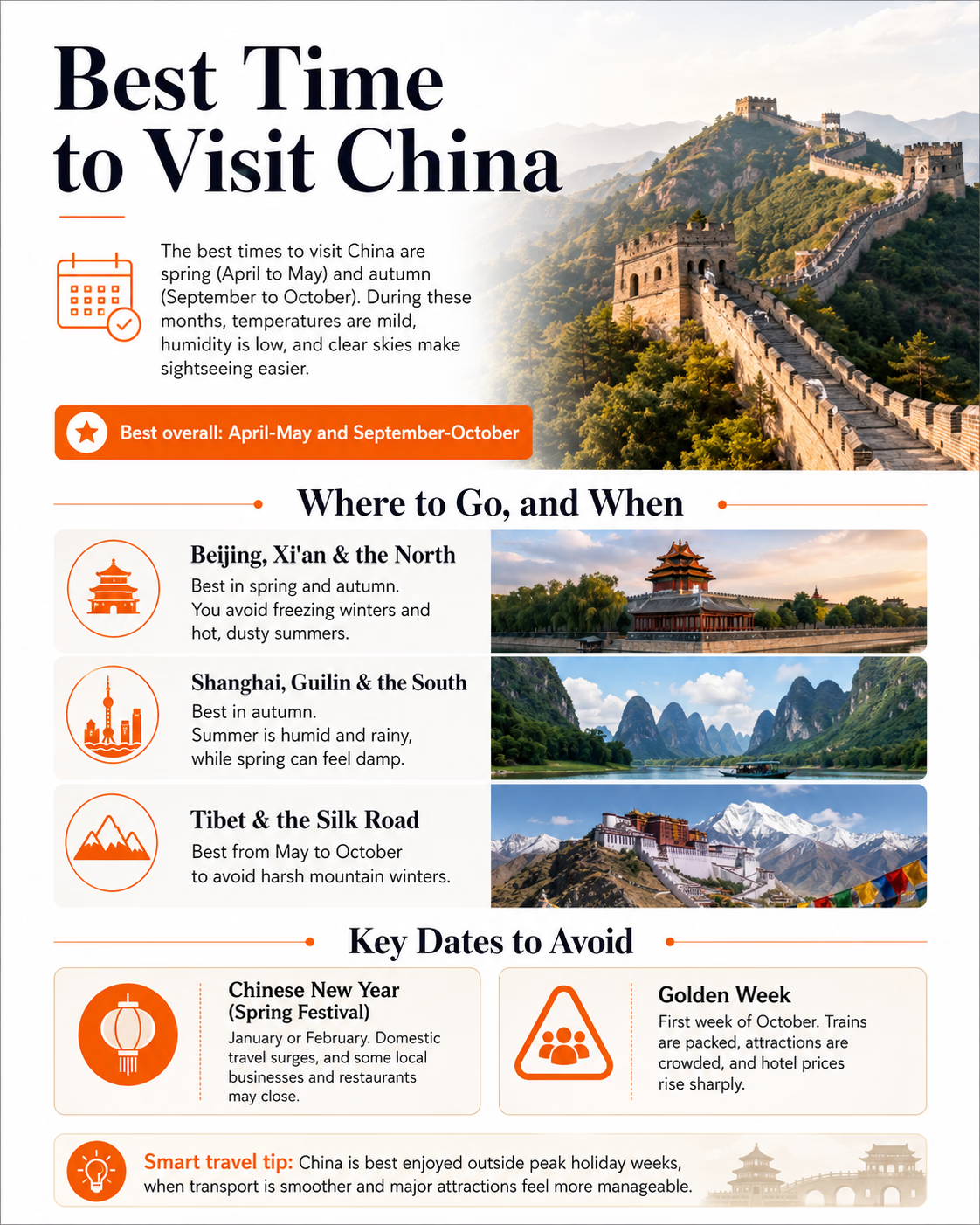
For most travelers, the answer is simple: spring and autumn. April, May, late September, October and early November give you the best mix of comfortable weather, walkable cities and clearer skies. But China is huge, so the “best” month depends on whether you are chasing Shanghai skyline energy, Beijing history, Yunnan scenery, Sichuan food, or a high-speed rail route that links different climates in a trip.
Spring feels easiest
Spring is probably the most forgiving season for a first China trip. In April and May, Beijing is no longer locked in winter, Shanghai is pleasant enough for long walks around the Former French Concession, and cities like Hangzhou, Suzhou and Nanjing feel made for slower travel. You can still get rain, especially further south, but it is usually manageable rather than trip-defining.
It is also a strong season for travelers who do not want China at full volume. Parks are busy, and famous domestic spots never feel empty, but the experience is generally smoother than in summer or during the big national holidays. Hotels feel less strained, flight pricing can be more rational, and sightseeing does not require heat tolerance.
READ MORE: Discover Shanghai in less than 24 hours
The caveat is late April into early May. China’s Labour Day holiday can push domestic travel demand sharply higher. It is not impossible to visit them, but it is not the moment for a relaxed “let’s see what happens” itinerary.
Autumn is the smart money season
If you asked many China specialists to pick one season, autumn would probably win. Late September through early November is when the country often looks its best: mild temperatures, lower humidity, better walking weather and crisp city evenings that make street food, riverfront walks and rooftop views more enjoyable.
READ MORE: Luxury Hotel Parent Brands in China: The Real Battle Is Above the Door
This is especially true for Beijing, Xi’an, Shanghai, Chengdu and much of eastern and central China. The Forbidden City feels easier. The Great Wall is more comfortable. Chengdu hotpot tastes better when the air is not already doing half the cooking.
But avoid the first week of October unless you have a very specific reason to be there. National Day Golden Week is one of China’s biggest travel periods, and in 2026 it falls from October 1 to 7. Trains sell fast, major attractions become intense, and prices can rise.
Summer needs a strategy
Summer in China is not a disaster, but it asks more from you. Shanghai, Guangzhou, Shenzhen, Chongqing and much of the south can be hot, humid and tiring. Families tied to school holidays will still go, and for them China can work with enough planning, air-conditioned hotels and a slower pace.
READ MORE: Shanghai to launch all-in-one app for international travelers
The better summer strategy is to choose regions carefully. Yunnan can be more comfortable than the big eastern cities. Higher-altitude or western routes may be more appealing. What summer is not ideal for is the traveler who wants frictionless sightseeing from morning to night. If you dislike heat, crowds and sudden rain, this is not your season.
Winter has a niche
Winter is underrated, but only for the right traveler. Beijing in winter can be cold and dry, yet there is something powerful about seeing imperial sites with fewer crowds. Harbin is the obvious winter headline, thanks to its ice festival culture. For a first trip, though, shorter days, cold weather in the north and grey conditions in some cities can flatten the mood.
Holidays and apps matter
China’s holiday calendar matters. Spring Festival, also known as Chinese New Year, is the biggest movement of people on the planet in travel terms. In 2026, the official holiday runs from February 15 to 23. It can be fascinating culturally, but transport pressure is real, and some restaurants or small businesses may close.
Connectivity also matters more than many first-time visitors expect. China is highly digital, but the app ecosystem, payments, translation tools and maps require preparation. A reliable roaming setup or travel eSIM can make the difference between a smooth arrival and a stressful taxi queue. China feels similar to Japan and South Korea in infrastructure quality, but different in digital habits.
The real answer
The best time to travel to China is April to May or late September to early November, with one edit: avoid the main national holiday peaks unless the event itself is part of the reason you are going.
Compared with Japan, China still feels less neatly packaged for international tourists. Compared with Thailand or Vietnam, it can feel more system-driven and less casual. But that is also the attraction. China rewards travelers who prepare properly. The scale is bigger, the cities move faster, and the contrast between ancient sites and digital infrastructure is sharper.
Reliable travel sources such as Audley Travel and Responsible Travel broadly point to spring and autumn as the best climate windows, while China’s immigration and holiday updates show why entry rules and public holidays now matter almost as much as temperature. For Alertify readers, that is the real travel-tech takeaway: China is becoming easier to enter, but not necessarily easier to improvise.