The Best eSIM in 2026: How to Actually Choose the One That Works for You
Travel in 2025/26 feels very different from the travel we knew just a few years ago. We’re moving faster, staying longer, visiting more countries in one trip, and relying on our phones for everything—boarding passes, translations, maps, rides, bookings, check-ins, and payments. And all of that depends on one thing: a stable, affordable, headache-free connection the moment you land.
That’s exactly why the “Best eSIM” conversation has exploded. Everyone wants an easy way to stay connected without hunting for SIM cards at airports, fighting with broken Wi-Fi, or getting slapped with roaming charges that cost more than the flight itself. The problem? The internet is full of shallow lists, outdated comparisons, and sponsored “top 10” articles that don’t tell you anything meaningful.
So instead of another bland roundup, let’s talk like real travellers. What does “best eSIM” actually mean today? Which providers consistently work? How do you pick the right one for your travel style without wasting money or time? And why do some eSIMs feel seamless while others feel… well, not seamless at all?
Let’s break it all down — honestly, clearly, and with zero fluff.
First, the truth: There’s no single “Best eSIM”
This might sound disappointing at first, but it’s actually great news: there is no universal best eSIM. And that’s because no one travels the same way. Someone taking a three-day city break in Paris does not need the same plan as someone backpacking through Southeast Asia, and someone working remotely from Spain for a month needs something totally different from someone crossing four countries in a week.
Instead of hunting for one “best eSIM,” think in categories. Some eSIMs are best for short trips, best for heavy data use, best for business travellers, best for multi-country travel, best for long stays, best for low-budget travellers, and best for people who only need a little data. Once you know your style, everything becomes easier.

What actually makes an eSIM “the best”?
Let’s set aside marketing claims and focus on practical solutions. A truly great eSIM consistently excels in three key areas. First, it connects instantly and works reliably. You should land, turn on data roaming, and be online in seconds, without scrolling through forums trying to fix a connection. Second, it offers fair pricing for real-speed data. You shouldn’t have to pay €50 for 3GB unless you want to. And you also shouldn’t buy the cheapest plan on earth if it only loads WhatsApp text messages. Third, customer support actually replies. When something breaks at an airport in Istanbul or Seoul or New York, you want real help, fast. Not a chatbot that tells you to “restart your device.”
The eSIM travellers actually trust in 2026
Now let’s talk about the providers that consistently perform well. Not because they shout the loudest online, but because travellers keep buying them again and again.
Airalo: The universal starter eSIM
Airalo is the gateway eSIM for most travellers. It’s simple, fast to install, and works almost everywhere. It’s the one people recommend to friends because it’s predictable and easy. It is not always the absolute cheapest, but it’s very reliable and has options for almost every country, region, and long-haul itinerary. Find out more about Airalo eSIMs.
Airhub: Best value for performance
Airhub is one of the most balanced choices in the entire market. Their plans usually offer a very strong mix of price, speed, and coverage quality. If you want something that works well in Europe or Asia without paying premium prices, this is one of the go-to picks. Many travellers find Airhub to be the perfect balance between affordability and real performance. Find out more about Airhub eSIMs.
aloSIM: Most flexible for top-ups
aloSIM is the choice for travellers who prefer control. You can top up easily, extend a plan without buying a brand new one, and swap between packages whenever needed. Digital nomads and slow travellers appreciate aloSIM because it adapts easily to changing travel plans. Find out more about AloSIM eSIMs.
Nomad: Ideal for heavy data users
Nomad shines when speed matters. If you rely on hotspotting laptops, uploading photos, doing video calls, or navigating non-stop, Nomad’s local network partners usually deliver stronger speeds than many competing brands. It’s made for people who don’t just check Instagram but actually use their phone as their lifeline. Find out more about Nomad eSIMs.
Ubigi: Reliable premium coverage for major destinations
Ubigi has a reputation for high-quality connections in Europe, Japan, and the US. They also power connectivity in many connected cars, which tells you how stable their tech is. They’re often a bit more premium, but the performance and simplicity make the price worth it for many travellers. Find out more about Ubigi eSIMs.
Yesim: Smooth global travel experience
Yesim focuses on making the experience effortless. The app is polished, activation is simple, and their long-duration and global plans are especially strong for frequent travellers. If you want an eSIM that keeps you connected from country to country without thinking too much, Yesim is a very comfortable option. Find out more about Yesim eSIMs.
Roamless: Perfect for pay-as-you-go travellers
Roamless is unique because you don’t buy fixed packages. You simply pay for the data you use. If you’re a light-data traveller or someone hopping across multiple countries in a short time, this approach can save a lot of money. It’s simple, flexible, and refreshing compared to bundle-based eSIMs. Find out more about Roamless eSIMs.

How to choose the best eSIM for your travel style
Here’s the quickest way to pick smartly. For short city trips of three to five days, go for Airalo, Airhub, or Nomad, depending on price and coverage. For business travel, Yesim, Ubigi, or Airhub offer the best stability. For digital nomads, aloSIM and Yesim offer flexibility and long-term ease. For multi-country travel, Airhub and Yesim are among the smoothest to manage. And if you’re looking purely for the lowest possible price, compare Airalo, Nomad, and Airhub for your specific destination.
One important tip: install your eSIM before the flight
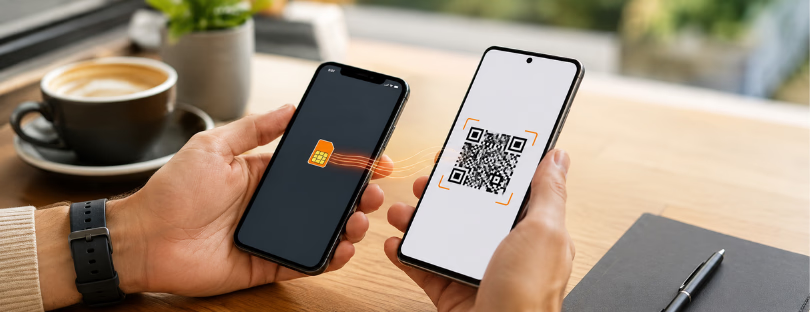
Airport Wi-Fi is unpredictable, overloaded, or locked behind login pages that barely load. Every traveller who says “I’ll install it when I land” ends up regretting it at least once. The smart move is this: download and install the eSIM profile at home, on good Wi-Fi, without activating it. When you land, turn on data roaming, and you’re connected instantly.
The real definition of the best eSIM
The best eSIM isn’t about hype, branding, or who appears first on Google. The best eSIM is the one that quietly works in the background and doesn’t interrupt your trip. It’s the one that loads your boarding pass in two seconds, guides you to your hotel, lets you call your ride, share your photos, and get things done without thinking about your connection at all.