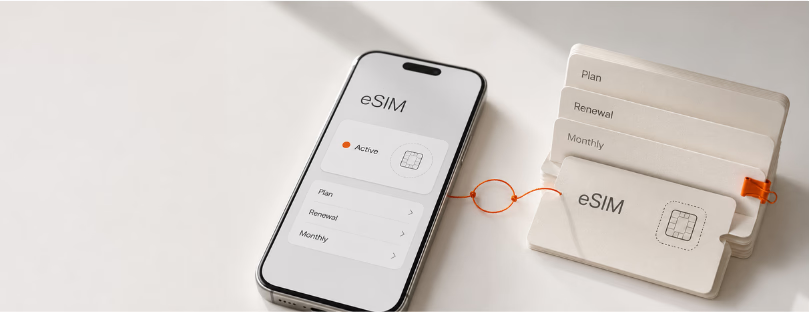
Airlines have become very good at selling everything around the flight. Seats. Bags. Meals. Lounge access. Priority boarding. Even carbon offsets. But one travel pain point still sits wide open, and it happens the moment passengers land and switch their phones on.
For airlines, this is not just a traveler’s headache. It is an untapped revenue stream that fits perfectly into the modern ancillary playbook. eSIMs are not a gimmick, not a trend, and not a nice-to-have. They are a low-friction, high-margin digital product that airlines are uniquely positioned to sell better than almost anyone else.
Let’s talk about why.
Airlines Already Own the Traveler Relationship
If you step back and look at the travel journey, airlines sit at the center of it. Before the trip, during the trip, and often after the trip, too. Airlines already know where the passenger is going, when they are going, how long they are staying, and whether they are flying solo or with family.
That context is gold.
eSIM providers spend millions trying to guess traveler intent through ads and SEO. Airlines already have that data in their booking systems. A passenger flying from Paris to New York does not need a generic connectivity offer. They need a US data plan, starting the moment they land, for a defined length of stay.
That level of relevance is extremely hard to beat.
When an airline offers an eSIM at the right moment, it does not feel like upselling. It feels like solving a problem the traveler knows is coming.
eSIMs Solve a Very Real Passenger Pain Point
Most travelers still do one of three things with connectivity. They pay roaming charges without realizing it. They scramble for airport Wi-Fi. Or they queue for a local SIM card after landing.
None of those experiences are good.
Airlines already invest heavily in improving the passenger experience onboard. Connectivity on the ground is the missing link. Offering an eSIM turns a chaotic arrival moment into a smooth one. The phone works instantly. Maps load. Ride-hailing apps open. Messages go through.
From the passenger’s perspective, this is not a telecom product. It is peace of mind.
And products that remove stress convert extremely well.
Ancillary Revenue Without Operational Headaches
One of the strongest arguments for airline eSIMs is how clean the business model is.
There is no inventory to manage. No logistics. No returns. No physical distribution. No onboard storage. No staff training beyond basic awareness.
Everything is digital.
Once the partnership and technical integration are in place, the airline essentially sells a virtual product that is fulfilled automatically. Margins are attractive, especially compared to traditional onboard retail or commission-based travel products.
For airlines under constant pressure to diversify revenue beyond ticket sales, this matters. Fuel prices fluctuate. Demand cycles shift. Ancillary revenue is where stability lives.
eSIMs slot neatly into that strategy.
Timing Is Everything, and Airlines Control It
Most travel products fail because they are offered at the wrong time. Too early, and the traveler is not thinking about it. Too late, and the problem has already been solved, often badly.
Airlines control timing better than almost anyone.
Before departure, when passengers are thinking about trip prep. During online check-in, when attention is close. In the app, push notifications already exist. Post-booking emails, where upsells are expected.
An eSIM offer placed naturally into these touchpoints feels logical, not intrusive.
Compare that to a random ad for a travel eSIM on social media, shown to someone who may not even be traveling yet. The conversion difference is not subtle.
eSIMs Fit Perfectly With Digital-First Airline Strategies
Airlines have been investing heavily in digital transformation. Apps. Personalization. Loyalty ecosystems. Dynamic pricing. Data-driven upsells.
eSIMs fit right into that mindset.
They can be personalized by destination, duration, cabin class, or loyalty tier. They can be bundled with tickets, sold as part of a fare family, or offered as a loyalty reward. They can even be included in premium cabins or long-haul fares as a value add.
Suddenly, connectivity becomes part of the airline’s digital ecosystem, not an external service passengers figure out on their own.
Loyalty Programs Gain a New Use Case
Airline loyalty programs are always looking for ways to stay relevant beyond flights.
eSIMs open interesting possibilities here.
Miles or points can be redeemed for data plans. Elite members can receive complimentary connectivity at destination. Corporate travelers can be offered bundled connectivity across multiple trips.
Unlike lounge access or upgrades, eSIM rewards are globally scalable. A traveler flying to Tokyo and another flying to Rome can both benefit, without capacity constraints.
That is rare in airline loyalty economics.
The Market Is Ready, and Passenger Awareness Is Growing
A few years ago, airlines offering eSIMs would have required heavy education. Today, awareness is much higher. Smartphones support eSIM by default. Travelers have heard of Airalo, Nomad, and similar brands. Many have already used an eSIM at least once.
That changes the sales dynamic.
Instead of explaining what an eSIM is, airlines can focus on why their eSIM is convenient. Pre-installed. Trusted. Integrated. One less thing to worry about.
The barrier to adoption keeps dropping, and airlines are well-positioned to benefit from that momentum.
Competitive Differentiation in a Crowded Market
Let’s be honest. Many airline products look similar. Seat pitch differences are minor. Meal quality is subjective. Fare rules are confusing.
Connectivity is tangible.
An airline that helps passengers stay connected the moment they land stands out. It signals modern thinking. It signals care. It signals that the airline understands how people actually travel today.
For low-cost carriers, eSIMs can be a smart add-on product. For full-service airlines, they can be a premium experience enhancer. Either way, they create differentiation without touching the core flight product.
Why This Works Better as a Partnership Than a Build
Most airlines do not need to become telecom operators. That would be a mistake.
The smart approach is partnership. Leverage established eSIM platforms that already have global coverage, local agreements, and operational know-how. Airlines bring distribution, trust, and customer relationships. eSIM providers bring the infrastructure.
When done right, this is a win-win.
Airlines avoid complexity. Providers gain scale. Passengers get a better experience.
The Bigger Picture: Airlines as Travel Platforms
The airline industry has been slowly shifting from transport provider to travel platform. Selling hotels, cars, insurance, and experiences.
Connectivity belongs in that ecosystem.
Travel today is digital by default. Maps, boarding passes, payments, translation, messaging, work, and entertainment. None of it works without data.
By offering eSIMs, airlines are not just adding another ancillary. They are acknowledging a fundamental truth about modern travel.
People expect to be connected everywhere.
Final Thought
The business case for airlines offering eSIMs is not about chasing trends. It is about aligning with how people travel today and how airlines already make money tomorrow.
Low operational cost. Strong margins. High relevance. Clear passenger value.
That combination is rare.
Airlines that move early and do it well will not just unlock a new revenue stream. They will quietly remove one of the most frustrating parts of travel for millions of passengers.
Driven by wanderlust and a passion for tech, Sandra is the creative force behind Alertify. Love for exploration and discovery is what sparked the idea for Alertify, a product that likely combines Sandra’s technological expertise with the desire to simplify or enhance travel experiences in some way.