Airline Pet Fees Explained: Costs, Rules and Smart Tips
Flying with a pet used to feel like a small side note in the booking process. A box to tick. A phone call to make. Maybe a carrier bought two days before departure.
That has changed. Pet travel is now one of those quiet airline revenue lines travellers notice only when the final trip cost stops looking so neat. A return ticket can suddenly carry another $200 or $300 once a small dog or cat joins the journey. Unlike seat selection, pet fees come with emotional pressure attached. You are paying because your animal is family.
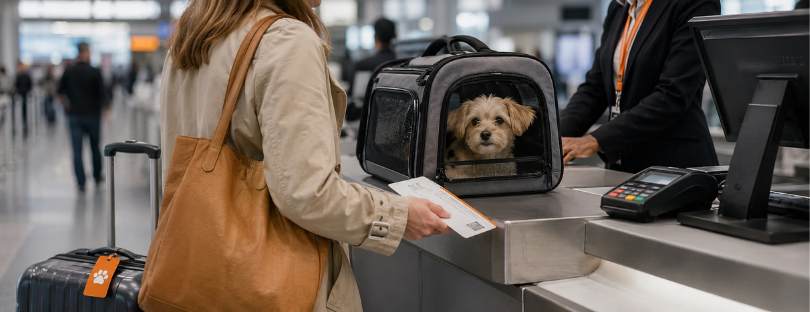
The market is under-discussed. Airlines publish the rules, yes. But the passenger experience still depends on aircraft type, under-seat space, route restrictions, cabin limits and the check-in desk’s interpretation of a carrier that looks slightly too tall.
The new price of bringing your pet
Across major U.S. airlines, the in-cabin pet fee has settled into a surprisingly similar range. United lists pet tickets at $150 each way for cats and dogs. JetBlue also charges $150 each way and limits the number of pets per flight. Delta’s fee for the U.S., Canada, Puerto Rico and the U.S. Virgin Islands moved to $150 for tickets issued on or after April 8, 2025. American Airlines frames pets as a carry-on option, so the carrier replaces part of the normal cabin baggage logic.
That is what many travellers miss. The pet fee is not simply a fee for the animal. It often changes what you can bring on board. Your carrier usually counts as a personal item or carry-on, so the “cheap” fare can become less cheap once you add a second bag, a seat assignment and the animal itself.
READ MORE: Traveling with Pets: A “Paws-itive” Summer Adventure Guide
Some airlines remain more competitive. Alaska Airlines lists an in-cabin pet fee of $100. Europe is less tidy. KLM gives a wide pet fee range, from €70 to €500 one-way, depending on route. Lufthansa charges by route and flight direction. British Airways is stricter: pets generally do not travel in the passenger cabin, apart from recognised assistance dogs.

The fee is only half the story
The real cost of flying with a pet is bigger than the airline charge. There may be a vet certificate, vaccinations, an approved carrier, destination paperwork, import rules, cargo handling and, for some routes, a specialist pet transport company. Travellers moving between the EU, the UK and the U.S. quickly learn that the pet fee is the simplest number in the whole process.
There is also a safety angle. U.S. Department of Transportation reporting shows animal incidents are rare, but not imaginary. For full-year 2024, carriers reported 13 incidents involving animals during air transport, including 10 deaths and three injuries. That does not mean flying with pets is broadly unsafe. It explains why airlines are cautious and some owners should be, too.
This is not for every pet. A calm, small dog used to a carrier may handle a two-hour cabin flight well. A nervous, flat-faced dog on a hot-weather connection is different. In those cases, the best deal may be the trip that avoids flying completely, or at least avoids cargo, long layovers and summer afternoon departures.
The service animal reset
Pet fees also feel more visible because emotional support animals are no longer the broad grey zone they once were. In the U.S., service animals for air travel are dogs individually trained to work or perform tasks for a person with a disability. For ordinary pet owners, the paid pet route is now the normal route. Cleaner, but also more expensive.
What airlines still need to fix
The weakest part of airline pet travel is not always the price. It is transparency. Travellers need to know earlier whether pets are allowed on that exact aircraft, in that cabin, on that route. A $150 pet fee sounds straightforward until a connection turns the trip into something more expensive.
Airlines could also show pet capacity in real time, the same way they show seats. If only six pets are allowed on a flight, passengers should not have to discover availability through a separate call, chat or airport surprise.
READ MORE: VistaJet Reports Rising Demand in Pet Travel
For some travellers, the better alternative will be an airline with a lower fixed fee and clearer domestic rules, such as Alaska. For complex international moves, a specialist pet relocation company may be safer. For short regional trips, train or car travel can be kinder and cheaper.
The real direction of travel
Airline pet fees are not going away. They are becoming more structured, more strictly enforced and more closely tied to the wider unbundling of air travel. Pets now sit in the same commercial universe as bags, seats and priority boarding, but with higher emotional stakes.
The winners will not simply be the airlines with the lowest pet fee. They will be the ones who make the rules obvious before payment, price the service honestly, and treat pet travel as an operational product rather than an awkward exception. Travellers can accept paying for a real service. What they dislike is paying late, guessing at the rules, and hoping the check-in desk interprets them kindly.
For pet owners, the smarter question is no longer, “Which airline allows pets?” It is, “Which airline makes the whole pet journey predictable?” That is where the market is heading, and frankly, not fast enough.