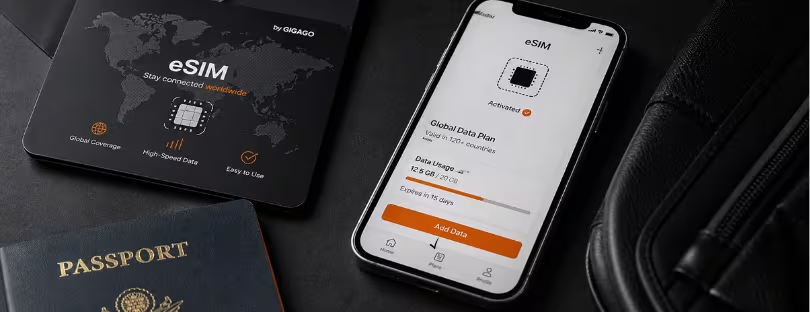
Worldwide eSIM: How Global Connectivity Really Works
There’s a quiet shift happening in travel tech right now. Not the flashy kind, not a new app or device. Something more fundamental.
Connectivity is becoming borderless.
The phrase “worldwide eSIM” gets thrown around a lot, but what it actually represents is bigger than just another data plan. It’s the closest thing we’ve seen to a single, global telecom layer that follows you everywhere. No swapping SIM cards. No thinking about local operators. No real friction.
And for the first time, it’s starting to feel… real.
What “worldwide eSIM” actually means
At its core, a worldwide eSIM is just a digital SIM profile that works across multiple countries, sometimes hundreds, without needing to change anything on your phone.
Technically, it’s powered by something fairly simple but powerful: roaming agreements. Your eSIM provider negotiates access to networks around the world, so when you land somewhere new, your phone connects automatically to a local carrier.
No store. No plastic. No “which SIM should I buy at the airport?” moment.
That’s the promise.
But here’s where it gets interesting. Not all “worldwide” eSIMs are actually global in the same way.
Some cover 70 countries. Others claim 160+. A few are trying to build true single-SIM global products with subscriptions and even phone numbers included.
That difference matters more than most people realize.
Why travelers are moving toward global plans
If you talk to frequent travelers or digital nomads, you’ll notice a pattern. They don’t want country-based plans anymore.
They want continuity.
A worldwide eSIM removes one specific type of friction that used to be completely normal. Crossing a border used to mean losing signal, switching SIMs, or dealing with roaming charges. Now it just… doesn’t.
You land, your phone connects, and that’s it.
There’s also a financial angle. Traditional roaming is still unpredictable and often expensive, with hidden charges and inconsistent performance.
Global eSIMs flip that model. You buy a plan upfront, you know what you’re getting, and you move.
Simple, at least on the surface.
The reality behind “global coverage”
Here’s the part that rarely makes it into marketing pages.
A worldwide eSIM doesn’t mean one network. It means many networks stitched together.
Your experience depends entirely on which local partners your provider uses. The best providers connect to Tier-1 networks in each country, which directly affects speed, latency, and reliability.
That’s why two “global” eSIMs can feel completely different on the ground.
One works flawlessly across Europe and Asia. Another struggles the moment you leave major cities.
Same concept. Very different execution.
It’s less about coverage maps and more about network quality.
The product evolution nobody talks about
What’s happening now in 2026 is a shift from regional bundles to something closer to a telecom subscription.
Some providers are experimenting with single global eSIMs that stay installed permanently. You don’t buy “France” or “USA” anymore. You just have connectivity, everywhere, with a monthly fee.
That’s a big change.
It mirrors what happened with streaming. You don’t buy DVDs per country. You subscribe and access content globally.
Telecom is moving in the same direction.
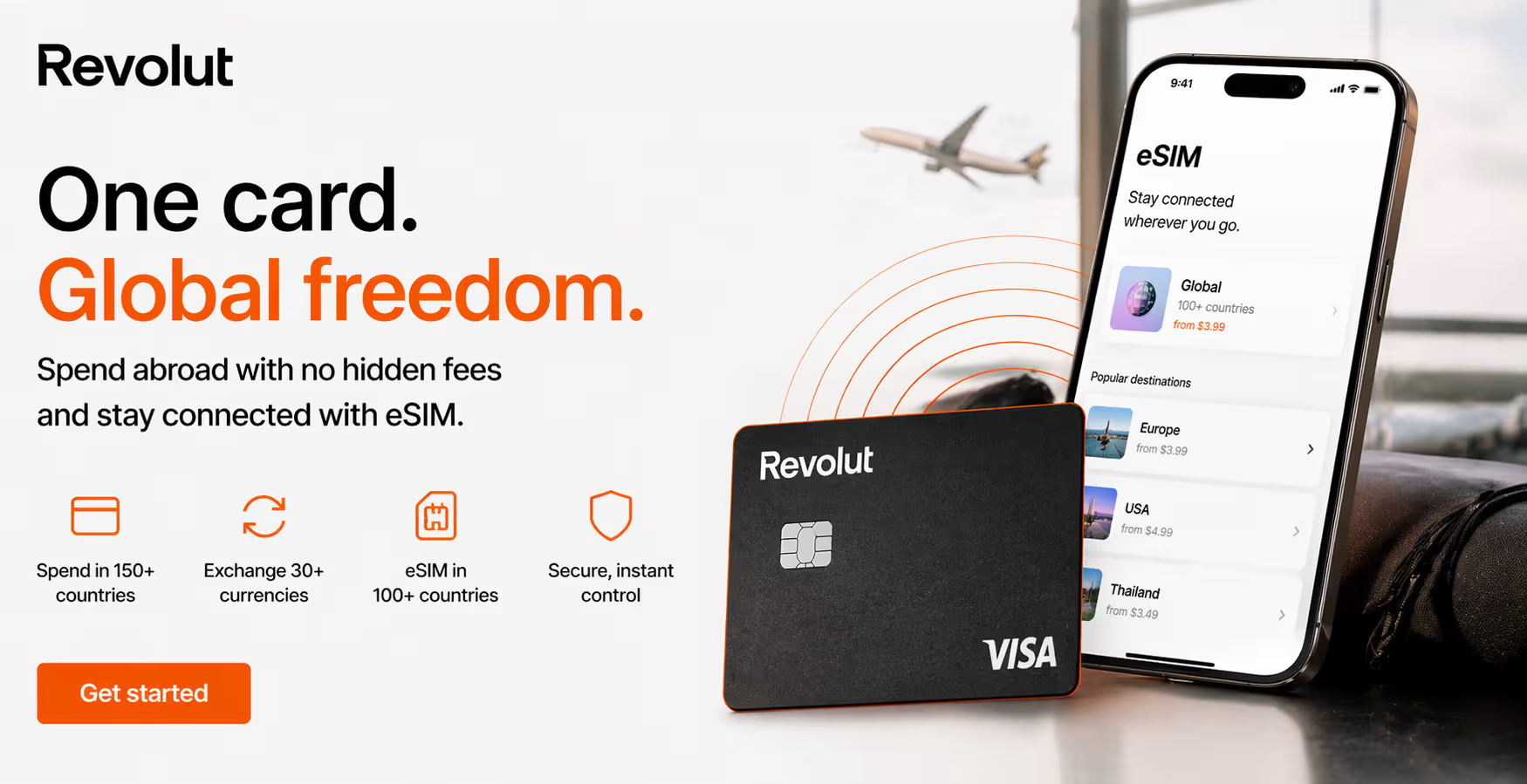
And it’s not just startups. Larger platforms, fintech apps, and even travel companies are starting to embed eSIM directly into their products.
Connectivity is becoming a feature, not a separate purchase.
Where things still break
Let’s be honest. Worldwide eSIM is not perfect.
There are still a few friction points that show up consistently:
Data vs. telecom realityMost global eSIMs are still data-only. No local number. No traditional voice or SMS. That works fine until you hit something like bank verification or local bookings. |
“Unlimited” isn’t universalA lot of global plans advertise unlimited data, but throttle speeds after certain thresholds. The definition varies widely and rarely in your favor. |
Device compatibilityNot every phone supports eSIM yet. The gap is closing fast, but it still creates friction depending on your device and region. |
Support matters abroadWhen your connection drops in a foreign country, support quality suddenly matters more than price. Not all providers handle that well. |
So… is worldwide eSIM actually worth it?
If you travel occasionally, maybe not.
A regional plan or even a country-specific eSIM can still be more cost-efficient.
But if you move frequently between countries, or if your work depends on being connected, worldwide eSIM starts to make a lot of sense.
It removes decisions. And that’s the real value.
No planning. No comparing plans mid-trip. No worrying about connectivity before landing.
Just one less thing to think about.
The real shift: from roaming to infrastructure
Here’s the bigger picture.
Worldwide eSIM isn’t just competing with roaming or local SIM cards. It’s replacing the idea of telecom as something tied to geography.
And that changes who controls it.
Traditionally, connectivity belonged to mobile operators. Now it’s moving toward platforms, APIs, and embedded services.
You’re already seeing it:
- Travel apps bundling eSIM at checkout
- Fintechs offering connectivity inside banking apps
- Airlines experimenting with in-app data plans
The providers winning right now are the ones building infrastructure, not just selling data packages.
Some focus on simplicity and consumer UX. Others focus on API-driven distribution and partnerships.
And that’s where the market splits.
On one side, you have consumer-first brands pushing global plans and unlimited usage.
On the other, you have infrastructure players enabling those experiences behind the scenes.
Both are necessary. But they’re playing completely different games.
If you’re just buying an eSIM, you’re seeing the surface.
If you’re building with eSIM, you’re looking at the layer underneath.
That’s where the real shift is happening.
And if the current trajectory continues, “worldwide eSIM” won’t even be a category in a few years.
It’ll just be… connectivity.